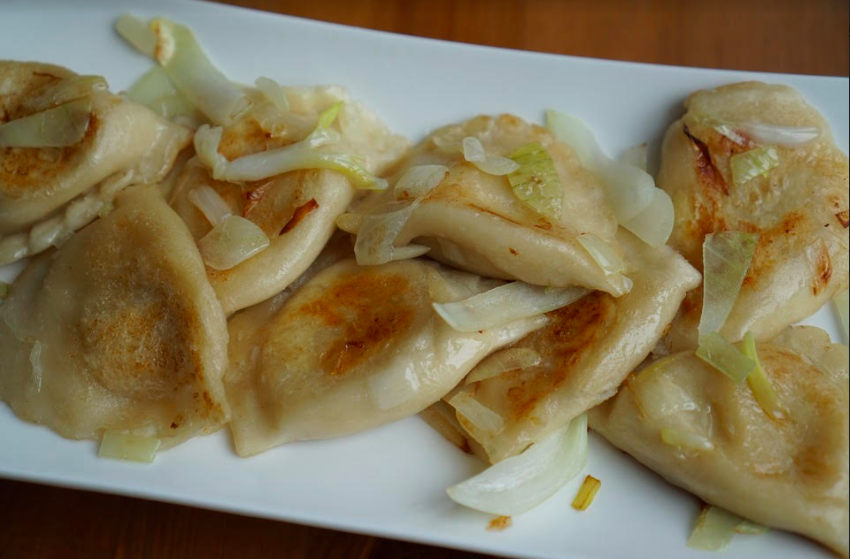
Dumplings (pierogi) are by far one of the most popular Polish national dishes across the globe. The ones filled with quark, potatoes and cheese are called “pierogi ruskie” in Polish. However, due to an awful mistake in translation, this name has been translated in English as “Russian dumplings”.
https://twitter.com/Jan_Pawlicki/status/1497540638501396484?s=20&t=NpCU03R353_wsnpF2MNBUw
One may wonder: what is wrong in such a translation? Well, in the Polish language, the word “ruski” has been referring to the population living in modern-day Belarus and Ukraine for centuries. In other words, it is important to differentiate “ruski” (Ukrainian, Belarussian) from “rosyjski” (Russian).
Between the 14th and the 18th century, the territories of modern-day Belarus and Ukraine were part of the Polish-Lithuanian Commonwealth.
The local populations of these large territories were called “Rusini” while the ancestors of what we know today as Russians were rather referred to as “Moskale” (in reference to their capital, Moscow).
The Russian occupation of Poland followed by the Soviet dictatorship imposed in the 20th century on this country caused additional confusion. The Russian elites have been using the slogan of gathering all the “ruskie” territories from Eastern Europe, associating them with Russia.
As a result, many continue to call the dumplings which are a speciality of today’s western Ukraine “Russian” despite the fact that the latter are virtually unknown in Russia. What’s more, if they happen to be known, Russians would rather call them… Polish-style dumplings.
Image: Pixabay
Author: Sébastien Meuwissen