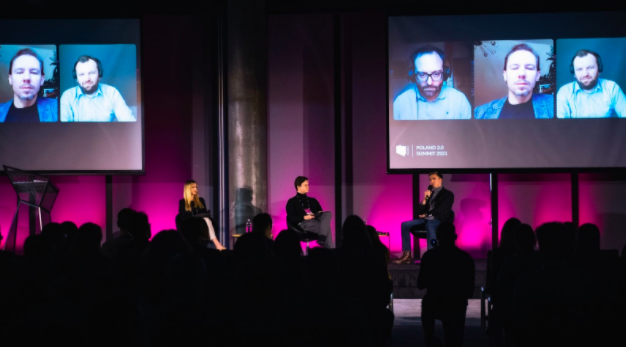
This Saturday, June 25, POLAND 2.0 foundation will be holding the biggest solely student-led conference in Warsaw, the Warsaw 2.0 Summit: At The Forefront of Neuro Innovation. The organisation, famous for its annual November summits in London, will tackle the role of technological advancements in the treatment of neurological issues and patients’ rehabilitation by inviting to the panel four Polish start-up owners such as Elżbieta Włodarska from BioMinds, Tomasz Rudolf from Doctor One as well as Neuromedical and Neurodevice representatives.
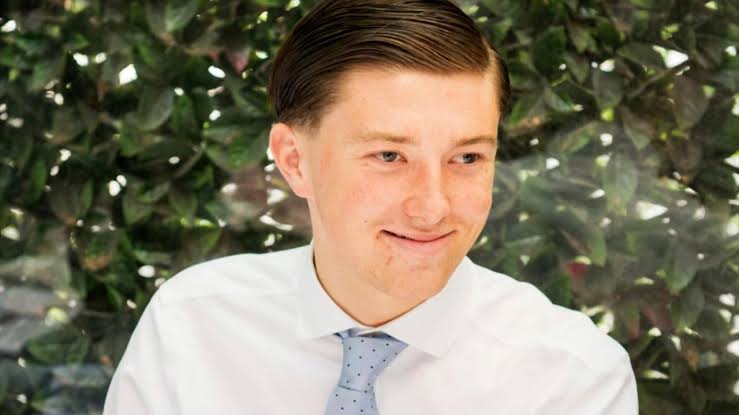
I asked Stanisław Kopyta, the head of the programme about the reason for such a topic and guests, to discover his motivation for joining the POLAND 2.0 team and his experience in managing the conference.
Anna Gocławska, British Poles: Hi Stanisław!
Stanisław Kopyta: Hi Anna!
AG: Could you briefly introduce yourself to us?
SK: My name is Stanisław, as you have already mentioned, I study Philosophy, Politics and Economics and for this edition of the Poland 2.0 conference I will be the head of the programme team. One thing to understand about me is that I really enjoy interdisciplinary activities, putting together things from originally different fields. My degree also relies on interdisciplinarity, where I have gotten to choose various modules from very theoretical and philosophical to the numerical and economic ones and, everything that is in between. I’m passionate about a lot of things at once, which is both fun and tricky. That’s why putting up an agenda for an interdisciplinary subject is something I feel confident doing. To answer your question fully, I do not know to what extent it is related to my degree, but I think that technology, especially these start-ups, is from young people’s perspective has a large impact on society. And that’s what I’m taken by how this system works.
AG: You’re this year’s summit head of the team programme, how does it make you feel and why did you decide to join the team?
SK: Well, let’s start from the beginning. Why have I decided to apply to POLAND 2.0? Essentially, I am very keen on the topic of the impact of advanced technologies on society. I used to run an association that popularized knowledge about this relationship and this is how I found the whole initiative of POLAND 2.0. Driven to apply, I became a moderator of POLAND 2.0 last year’s panel about artificial intelligence in cybersecurity, banking and the protection of personal finances by artificial intelligence. Since I liked the conference and the people who organized it, I wanted to extend my project participation and play a stronger role in the structure design. When it comes to programme management, I curated the agenda for the 14th Congress of Polish Student Societies Conference and heavily enjoyed establishing long-lasting relationships with the speakers, setting up the agenda, and summit topics. These simply are the things that keep me going the most and since I have some experience in it and love observing how other people think, I decided to apply for the head of programme position whilst happily succeeding.
AG: And what could you reveal about the Warsaw 2.0 Summit? Something that our guests or even other team members might not be aware of.
SK: So, Warsaw 2.0 Summit is our pilot program, a bit different to what we have been doing for the last years in London. We did it completely intuitively. In the beginning, I put together three versions of the agenda. The first version presumed no strategic partnership, the second, more optimistic version considered one serious partnership but, for example, the lack of workshops. The third, optimal version was where we have a perfect place for the conference and workshops, fantastic speakers and moderators, and this is happily the scenario we are anticipating and implementing.
AG: Why exactly Neuro Innovation? Why such a topic in 2022. I mean, it is a brilliant idea but I guess there are many more other relevant themes which could perfectly fit the demands of 2022?
SK: There were several reasons for that, the first being that neurodegenerative diseases are becoming a bigger issue in the rampantly ageing Europe including Poland. One could therefore say that it is a very promising sector. Secondly, a large part of our target audience is interested in public-private healthcare relationships. For instance, a lot of our speakers are qualified doctors who worked in public healthcare or the academics who simultaneously run their businesses and are still working as academics or are mentors in their discipline. This way we want to show to our audience the change in the public sector which allows for more innovations and cooperation with the commercial high-tech industries as well as invite such specialists who, not only know the Polish start-up market inside out but also will once-and-for-all give our viewers’ the answer to the question: a full-time job or a start-up?
Last but not least, the theme of neuro-innovation also includes the creative sector by incorporating VR, graphic or audio solutions, thus providing room for those interested in the creative pathway. What also should be mentioned is that the start-ups in Poland are a quickly emerging market, a whole different ecosystem we could say, and it gave us another reason for exploring this topic with the support of such intriguing people!
AG: What would you say to anyone who does not feel convicted to join Warsaw 2.0 Summit?*
SK: I could think of a thousand reasons why one should come or at least stay in touch with our POLAND 2.0 – community! The event will not be strictly tech-orientated nor incomprehensible to someone who is not a fan of this industry while allowing the high-tech freaks to discover the field more broadly! Warsaw 2.0 Summit is not just another small conference. This is a preview of a large conference in London which will expand on each of the topics tackled during the Warsaw conference in more depth. Also, it is the beginning of the EDU 2.0 program facilitating high school students’ journey in applying to Western European universities. The event will also give you a snippet of functioning in various industries, seemingly unrelated to the high-tech industry, such as the creative field, traditional finance or banking. The event is simply for everyone, those willing to meet interesting people, learn something about the technology solutions in neurology and psychology or prospective international students, start-up owners or full-time job occupants. There will be something interesting for everyone, so I encourage you to participate.
AG: Thank you so much for your time Stanisław! I hope that everyone feels convinced to take part in and/or follow POLAND 2.0’s activity on social media or in the newsletter!
SK: Thank you so much, Anna.
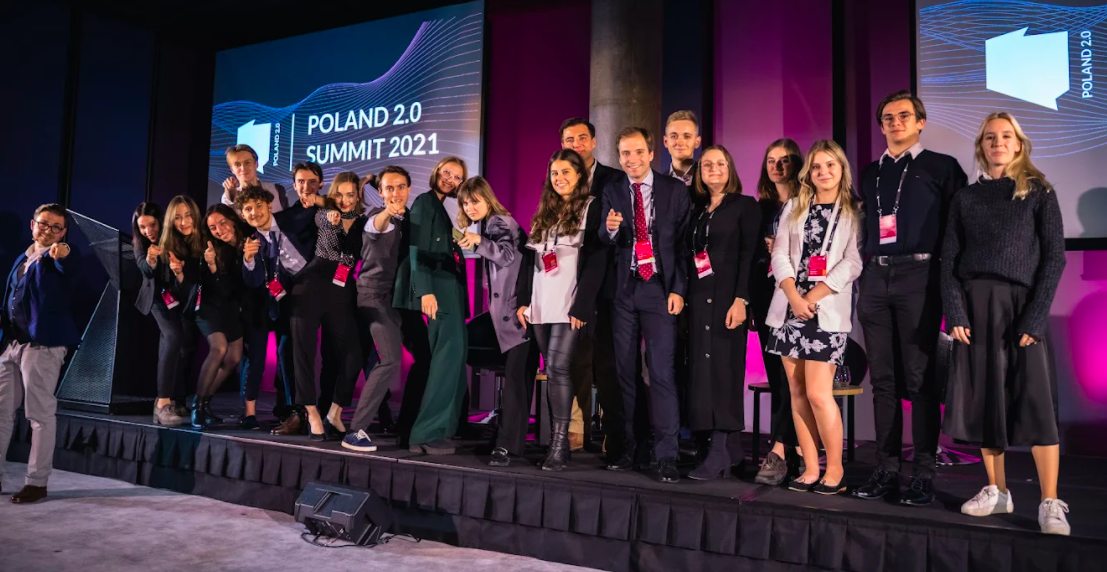
The POLAND 2.0 foundation is an organisation associating young and ambitious Polish students fascinated by new technologies and non-standard solutions. Since 2015 they have been bringing together current and prospective students, professionals and entrepreneurs at the annual POLAND 2.0 Summit centred around start-ups, technology and entrepreneurship. Since the first edition of the event, the conference’s strategic partner has been the Boston Consulting Group. Another conference is planned for November, in London. To find out more about the organisation’s initiatives such as the WORK 2.0 internship, EDU 2.0 studying programme or #NOMAD podcast, sign up for the organisation’s newsletter today or follow POLAND 2.0 on their social media channels.
Anna Gocławska
*As for the publication day of this article one may join the event’s waiting list.