With the recent Russian invasion of Ukraine, there is increased pressure on the North Atlantic Treaty Organization (NATO) to guarantee military security, especially at the Eastern Flank. At present, NATO has 30 members, but only a fraction follows the defence spending guidelines. The United States, the United Kingdom and Poland are currently among the top ten contributors to NATO.
NATO’s collaboration is founded on the idea of ensuring Transatlantic security through the collective defence and collaborative crisis management. The 2014 NATO summit was finalised with an agreement of all the members to set defence spending at a minimum of 2% of the GDP by 2025. The agreement is a result of the pressure from the United States to create a fairer contribution structure.
Defence expenditure of NATO countries as a share of GDP (in%)
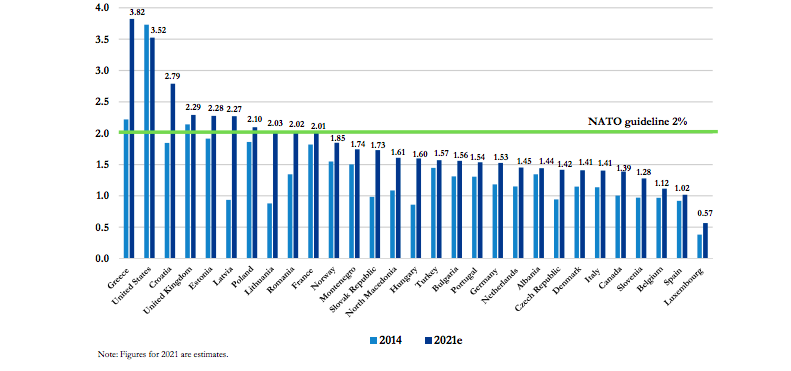
The US spends much more on defence than other members, outspending all fellow NATO contributors combined, according to 2020 data. In June 2021, the US Senate Armed Services Committee approved a $45 billion increase to the defence spending budget suggested by Joe Biden, which sets the US defence budget at $847 billion, compared to $363 billion spent by remaining NATO members.
The United Kingdom and Poland remain committed to European security
The 2021 NATO Defence Expenditure report indicated that many NATO members are not predicted to meet the defence spending guidelines. Poland has been reaching the threshold since 2017 when it was among four countries to do so. In 2021, only 1/3 of the members fulfilled the 2% GDP spending requirement. Poland has been in the top ten contributors in terms of GDP and absolute expenditure, currently contributing over 11 billion pounds.
https://twitter.com/NATOBrazeB/status/1403418271634821123?s=20&t=s0r453oRmbdTxjkvmPPbCg
During a House of Commons debate (4.07) on “CHOGM, G7 and NATO Summits”, Marco Longhi MP questioned the commitment of NATO members, saying that his constituents “want to know that [UK’s] NATO allies and immediate neighbours are playing their part in equal measure”.
Prime Minster Boris Johnson responded by stating:
“On the table of expenditure, the US is way out in front. I really congratulate Joe Biden on his leadership. Joe Biden and the Americans have really stepped up to the plate—a fantastic effort. We are spending the second biggest amount, and I think that the Poles are in third place. There is then a long tail of others, but everybody is now spending more and more. We agreed that we are in it for the long haul; that is the most important thing.” (PM Boris Johnson, 4.07.22)
While the Covid19 Pandemic and Trump’s NATO policy decreased defence spending in some member states in 2020 and 2021, the war in Ukraine served as a reminder of NATO’s significance. According to the NATO website, “since Russia’s invasion of Ukraine in February 2022, a majority of Allies have committed to investing more, and more quickly, in defence”.
According to the Homeland Defence Act, passed in March 2022, Poland will increase its defence spending to 3% of the GDP and expand its armed forces more than twofold. In fact, Poland aims to increase its defence spending to 5% in the upcoming years, according to Jarosław Kaczyński, Chairman of the Law and Justice Party. Should this pledge become a reality, Poland would have the highest defence spending in NATO (according to % of GDP).
Military drills in Poland serve as an example of NATO spending
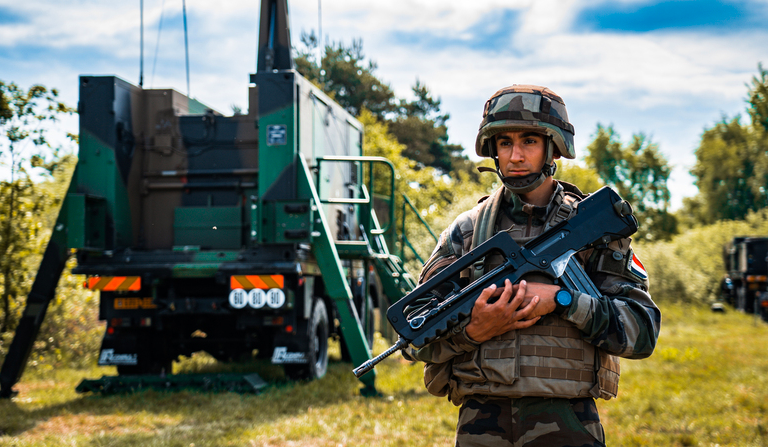
Even before the Russian attack on Ukraine, enhancing the security of the NATO Eastern Flank has become a primary goal of the Alliance. Over the past months, additional military resources have been deployed to Poland and the Baltic states.
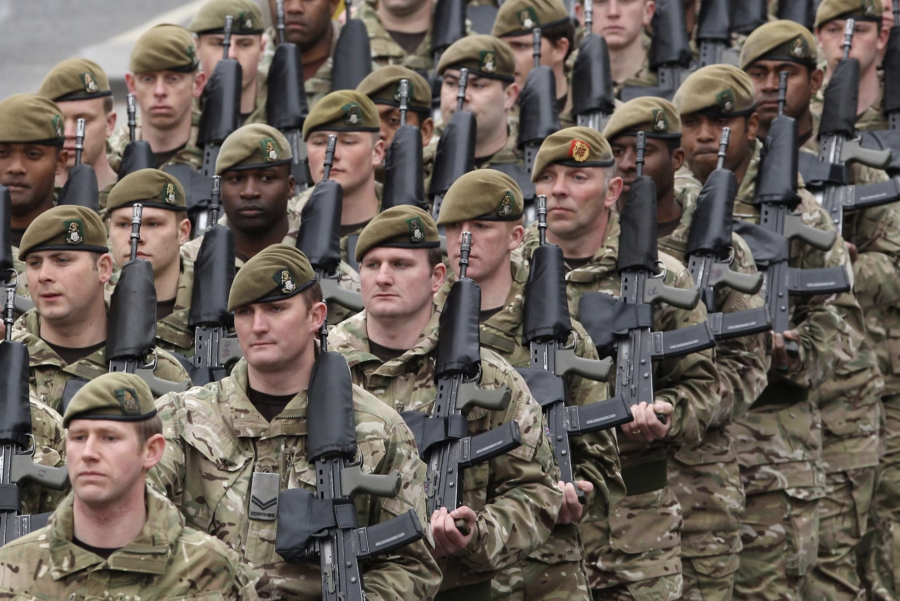
Poland was one of the host countries of NATO’s DEFENDER EUROPE 2022 (DE22) and SWIFT RESPONSE 2022 (SR22) exercises, which took place from 1 until 27 May. According to the Ministry of National Defence, “the portion of the exercises on Polish soil [saw] some 7 000 troops and 3 000 pieces of equipment”.
On 6-10 June, NATO tested its surface-to-air defence systems as part of Poland’s Ramstein Legacy 22 exercises. Approximately 100 UK soldiers from Britain’s 7th Air Defence Group participated in the exercises. Although the exercise was planned before the war in Ukraine, General Jeff Harrigian, Commander of Allied Air Command, said that “given the current security situation following the Russian invasion of Ukraine, large-scale training exercises like this are, now, more important to NATO than ever”.
On 8 July, fourteen British Challenger 2 main battle tanks arrived in Poland. The tanks, which will remain in the country for six months, are meant to be integrated into the Polish 21st Podhale Rifles Brigade. Polish Minister of National Defence, Mariusz Błaszczak, commented, „this is yet another, strong proof of support provided to the Eastern Flank by the British”.
Author: Marta Kakol
Picture: NATO Website
Marta has recently graduated from Utrecht University, obtaining a Bachelor of Science in Philosophy, Politics and Economics. Her interdisciplinary education allows her to apply multiple perspectives to complex political issues. She vocalizes her interest in public affairs in a multitude of ways, from journalistic writing to organising speaker events. She hopes to gain funding for her Master’s in Politics Research at the University of Oxford in 2022.