Maria Skłodowska-Curie was one of a kind. Her outstanding achievements made her one of the most famous Polish women in history.
Maria grew up in Warsaw in the late 19th century, under Russian occupation. From a very young age, she displayed unusual intellectual abilities. Her school years must have been boring for her, given her outstanding potential in most subjects.
As a young adult, she moved to France along with her sister to study in Paris. There, she earned her higher degrees and conducted her subsequent scientific work.
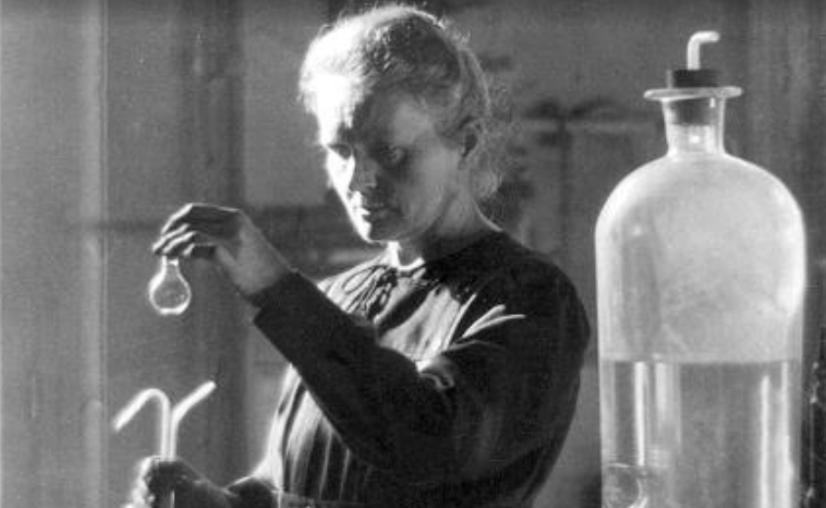
It was in the French capital that Skłodowska started to work as a physicist and chemist. She conducted pioneering research on radioactivity together with her husband, Pierre.
In 1903, she became the first woman to be awarded the Nobel Prize in Physics for her work developing the theory of „radioactivity”, a term she popularized. She shared the award with her husband and Henri Becquerel.
A few years after Pierre’s accidental death, in 1911, Skłodowska-Curie won yet another Nobel Prize, this time in Chemistry, for her discovery of polonium and radium.
During WWI, she developed mobile radiography units to provide X-ray services to field hospitals. In the aftermath of the Great War, she established the Curie Institute in Paris and the Curie Institute in Warsaw. Both remain major centres of medical research up until this day.
Today, Maria Skłodowska-Curie is viewed as a legendary figure in the field of science. Her achievements are all the more impressive, given that she was confronted with various forms of misogyny throughout her successful career. Many tried in vain to downplay her pioneering work because she was a woman.
The Polish scientist was voted the most influential woman in history in the British BBC History poll of 2018. Skłodowska-Curie topped the poll, ahead of Afro-American human rights activist Rose Parks and British suffragette movement leader Emmeline Pankhurst.
“Curie boasts an extraordinary array of achievements. She was the first woman to win a Nobel Prize, the first female professor at the University of Paris, and the first person – note the use of person there, not woman – to win a second Nobel Prize” – said Patricia Fara, president of the British Society for the History of Science, who nominated the Polish-born scientist.
Fara emphasised that Curie-Skłodowska had the odds always stacked against her as she “was regarded with suspicion as a foreigner – and of course, wherever she went, she was discriminated against as a woman”. According to the poll results, “Maria Curie was a woman of action as well as enormous intellect”.
Although she was naturalised French, Maria remained proud of her Polish identity. She took her daughters on visits to Poland and taught them the Polish language. She even named the first chemical element she discovered, polonium, after her native country.
Every 7 November, Poland and France commemorate the birth anniversary of this remarkable woman who change the world for the better.
Image: IPN
Author: Sébastien Meuwissen