Russia’s invasion of Ukraine on 24 February encouraged the Polish government to complete the country’s transition to non-Russian sources as soon as possible.
Like most of its neighbours in Central and Eastern Europe, Poland has been highly dependent on Russian hydrocarbons even after the dismantling of the Iron Curtain. The year 2022 represented a turning point in this regard, as the Russian Federation is no longer Poland’s main supplier of hydrocarbons for the first time since 1989.
Moscow’s share in Polish hydrocarbon imports was as high as 80% a decade ago and dropped to 53% by 2019. This favourable tendency continued in the following years. As of the summer of 2022, this percentage shrank under the symbolic threshold of 20%.
It’s worth stressing that Warsaw does not consider any potential return to “business as usual” with Russia if a (so far unlikely) peace agreement happened to be reached between Moscow and Kyiv. This can’t be said of other important European actors, such as Germany, whose chancellor suggested that such a reset was possible from Berlin’s point of view.
For years, Russia has been taking advantage of its dominant position to impose prices on Poland that were much higher than those offered to Western European states. The use of political and economic blackmail on Poland by the Kremlin in this regard had been the norm up until now. Without surprise, Soviet-style methods of corruption and intimidation were efficiently put to use to put Poland in a situation of total dependence on Russian gas.
Let’s remember that in 2010, the European Commission prevented Poland from signing an unfavourable contract forcing Warsaw to buy at least 11 billion cubic metres per year from Gazprom until 2037 at high prices while leaving Moscow in control of the Polish section of the Yamal pipeline. The European Commission’s intervention led to the contract’s expiration date from 2037 to 2022.
Poland’s electricity production remains based by 70% on coal and renewable energy. Nevertheless, a rising number of households are replacing coal with gas as the main heating source. Poland consumed only 18 billion cubic metres of gas in 2015. In 2021 this figure rose to 23.5 billion.
In September 2020, Gaz-System, the Gdynia Sea Office, and the Port of Gdańsk announced the construction of a floating LNG terminal to import 6.1 billion cubic metres of gas per year by 2026.
In the meantime, the Świnoujście liquefied natural gas (LNG) terminal launched in late 2015 on the Baltic Sea is now being further expanded, and its capacity increased. Polish authorities assure that the terminal will allow the import of up to 8.3 billion cubic metres of gas per year by 2024.
The recently opened Baltic Pipe represents another major source of gas imports. Its maximum capacity reaches about 10 billion cubic metres per year. It became fully operational on 30 November. The same day, Polish oil giant Orlen announced signing a contract with Saudi Arabia’s Aramco, under which the latter became a shareholder in the Gdańsk refinery and committed to supplying nearly half (45%) of Orlen’s oil needs.
It’s also worth emphasising that the share of Russian oil in Polish imports was 90% when Law and Justice took power in 2015. This number dropped to 60% in 2021.
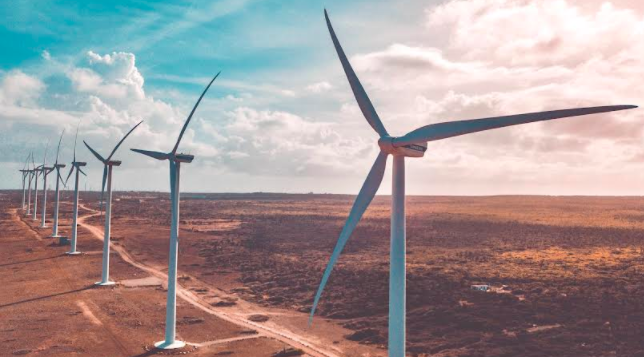
Regarding electricity, Poland’s long-term goal is to close down all the country’s mines by 2049. Orlen is considering the construction of a park of almost 80 offshore wind turbines in the Baltic Sea. Poland has also signed its first contracts with American and South Korean companies to construct two nuclear power plants, which are expected to start producing electricity by 2033. In the meantime, Poland’s first offshore Baltic Power wind farm will start producing electricity in 2026.
Image: Unsplash
Author: Sébastien Meuwissen