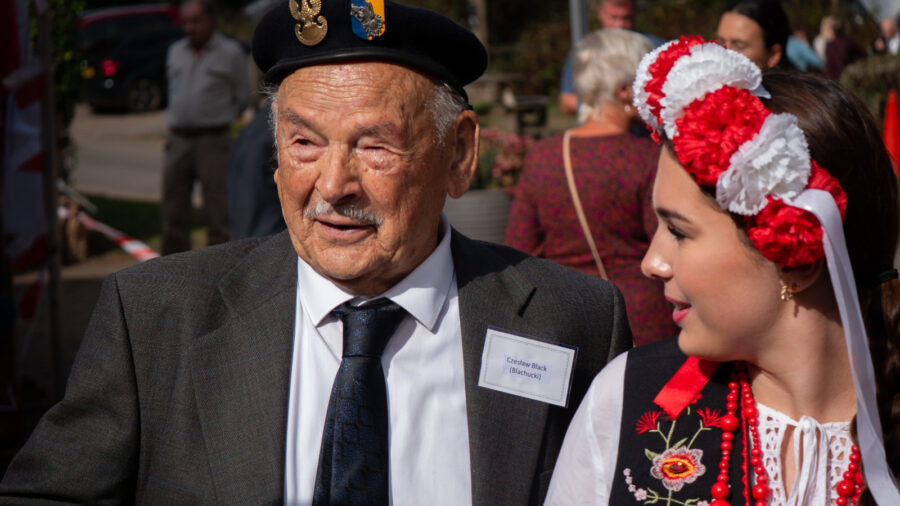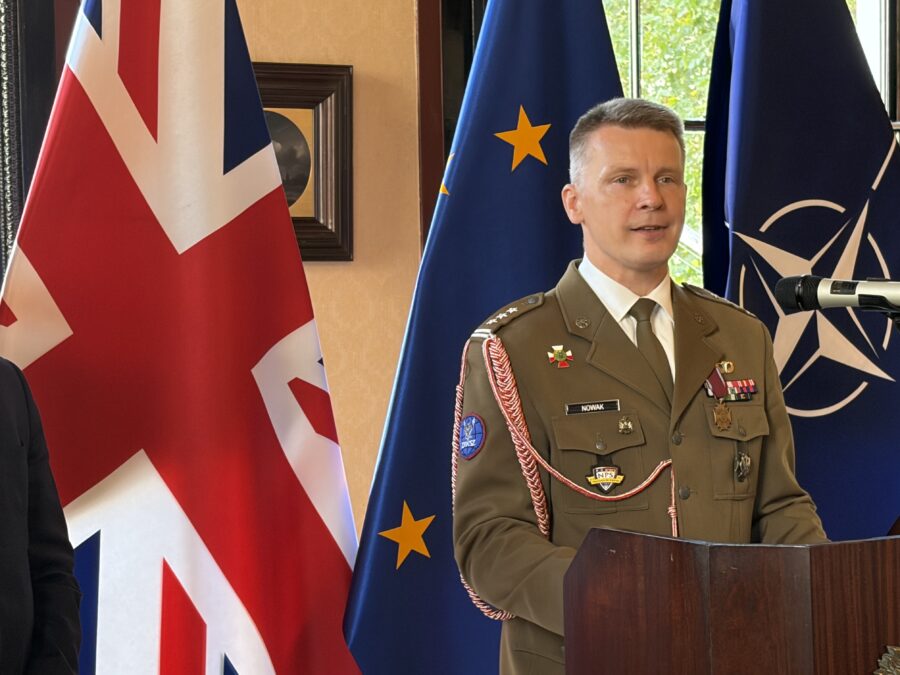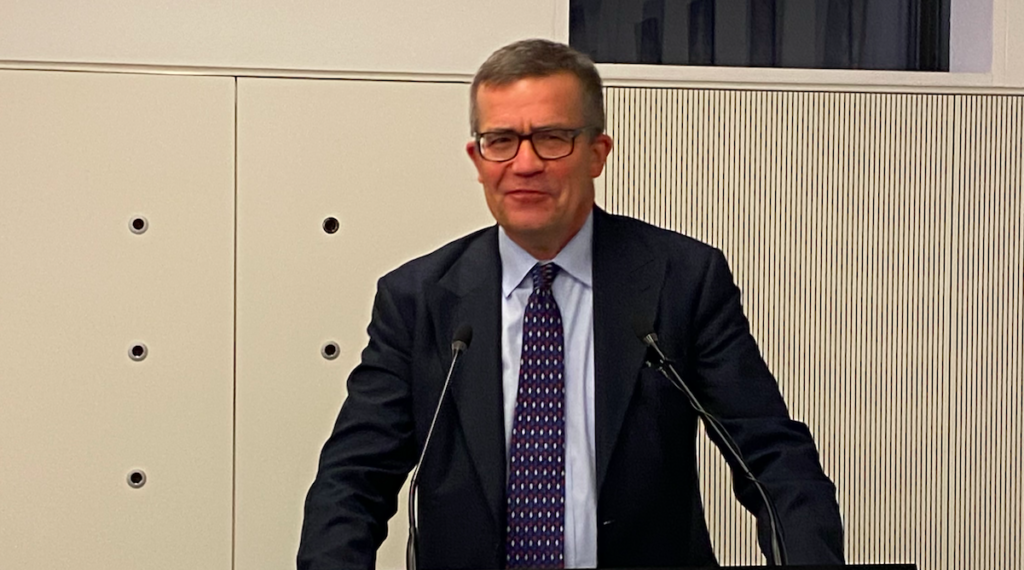
The Polish Ambassador to the UK, Piotr Wilczek, spoke at the conference „Poland and Britain. Partnership in Culture and Combat: Yesterday and Today”, organised by British Poles at the National Army Museum on 17 December 2022.
Below is the entire text of the speech.
„National Army Museum Director,
The Polish Institute and Sikorski Museum Vice-Chairman,
Distinguished guests,
Ladies and gentlemen,
It is a great pleasure to welcome you all today at this conference devoted to the partnership between Poland and Britain in the spheres of culture and combat, both in the days gone by and today. It is no secret that our two countries share much military history and cultural heritage, but just how much is something which is still not that widely known.
From Frederic Chopin’s last hurrah in London, through Joseph Conrad’s outstanding literary work, to Prince Philip-backed art of Feliks Topolski, Polish-British cultural links reach far and wide. Indeed, they are getting ever stronger, with such initiatives as Jan Matejko’s Copernicus at the National Gallery, the Young Poland arts and crafts movement at the William Morris Gallery, and the Granville-Skarbek Anglo-Polish Cultural Exchange Festival sparking British interest in Polish culture lately. Importantly, not only do we celebrate creativity, but also help those who at this time need our support the most. As part of its world tour, the Ukrainian Freedom Orchestra – assembled by a Canadian conductor, New York’s Metropolitan Opera and the Polish National Opera – has performed in such places as Warsaw, the Royal Albert Hall and the Edinburgh International Festival, with all proceeds from the tour going to aid Ukrainian artists.
Of course, the Polish-British partnership related to Ukraine is best visible in terms of politico-diplomatic, technical, humanitarian and, crucially, military assistance. Thanks to this, we are alleviating – if only a little bit – the suffering of the Ukrainian people and thwarting Vladimir Putin’s imperial ambitions. Our spirit of camaraderie, however, is not new – it was forged in the heat of the Second World War.
When some of the Polish Armed Forces arrived in the UK from their occupied homeland, our people found themselves fighting together in the Battle of Britain, which turned the tide of the war. The Polish 303 Squadron, serving under British command, became the most effective Fighter Command unit in the battle, and over 18,000 Polish airmen and airwomen served in 14 Polish Air Force squadrons in Britain. Meanwhile, Polish mathematicians cracked the Enigma code first 90 years ago and passed on their work to Alan Turing and the Brits, which laid the foundations for the mass-scale codebreaking effort of Bletchley Park. Our wartime cooperation has also helped produce such key units as the Silent Unseen, the Polish 1st Armoured Division, the 1st Polish Independent Parachute Brigade and the 2nd Polish Corps – the leader of which, General Władysław Anders, is so beautifully immortalised in this museum.
Polish-British military cooperation has become even stronger in modern times. After Poland toppled the communist regime and regained its sovereignty, it soon joined Nato, signing bilateral defence deals with the UK – including the 2017 treaty, at the time only the second such treaty that Britain had with a European Union member state. Our two countries also served together in military missions in Iraq and Afghanistan and as part of Nato’s Enhanced Forward Presence.
The strength of our bilateral alliance has perhaps been demonstrated best over the past two years, with the UK deploying military personnel to Poland – first to help stop the migration crisis orchestrated by Putin’s accomplice Alexander Lukashenko and then to shore up Nato’s eastern flank against Russian aggression. And since February, a new chapter in our relationship has been unfolding. Although we are not in Ukraine, we stand firmly in solidarity with the besieged, heroic country, which is fighting not only for its freedom but also for the freedom of Europe.
Ladies and gentlemen,
When I think of the foundations of our bilateral relations, a quote comes to mind by my predecessor, the first Polish envoy to England Ioannes Dantiscus (Jan Dantyszek), who was first sent here 500 years ago in 1522. In one of his letters, he wrote: “A rich Island, very dear to me for the great kindness which I have experienced on it.” Many centuries on, I know that, culturally and militarily, Polish feelings towards Britain have not changed – and I’m sure that feeling is mutual.
Thank you.
Picture: British Poles