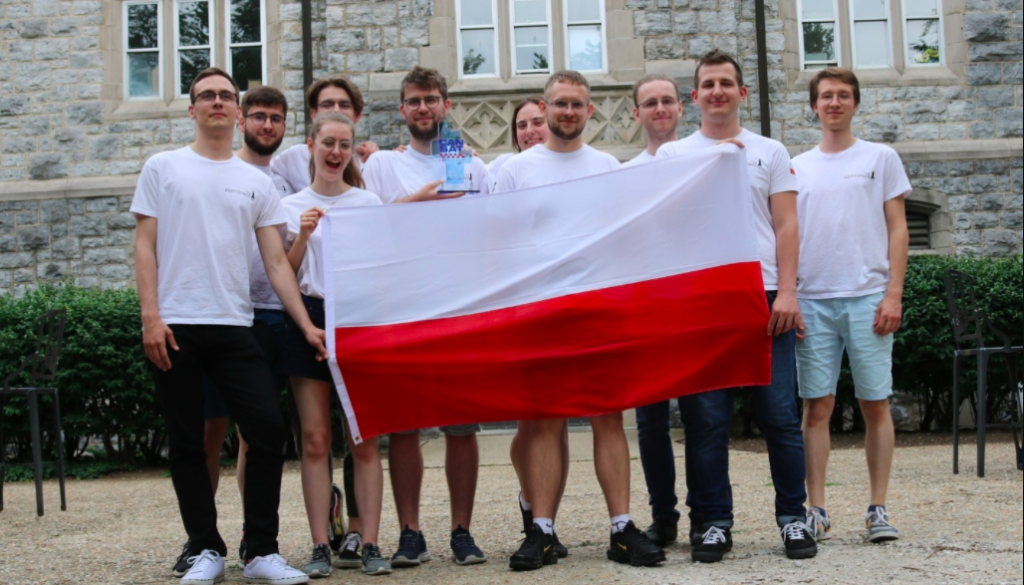
A team of young Polish students from Wrocław University of Science and Technology emerged victorious in a global competition, namely the CanSat Competition United States 2023, organised by the American Astronautical Society in collaboration with NASA.
Participating in the CanSat Competition United States for the fourth consecutive time, the WUST Aerospace team displayed unparalleled excellence and left no room for their competitors to shine, securing a well-deserved 1st place position.
Their exceptional creation, a space probe, achieved an impressive score of 92.20%. The Polish team clinched the first position with a remarkable lead of nearly five percentage points over the second-ranked team from Indonesia.
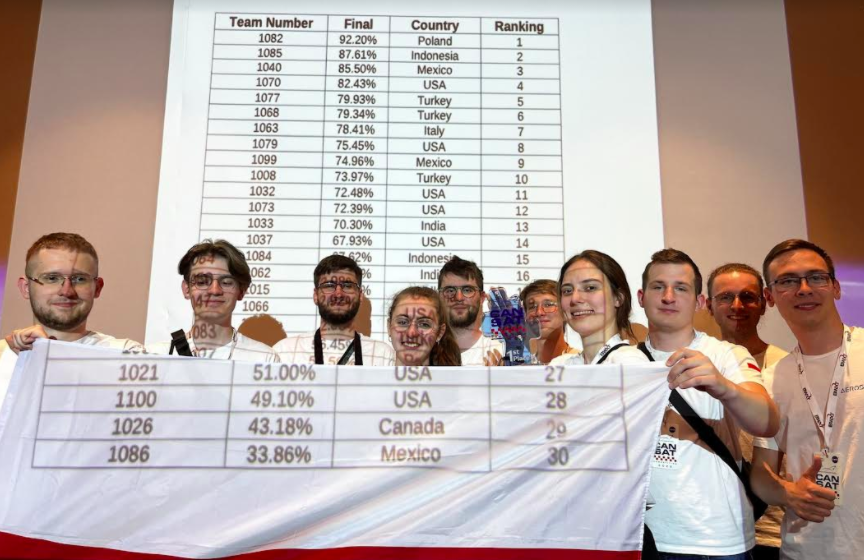
In addition to their overall performance, the teams underwent evaluation in pre-launch tests and delivered a final presentation showcasing the environmental data collected by their respective probes. The students were also awarded separate points for their technical documentation and presentation skills. The cumulative tally of these scores determined the final ranking of each team.
„We are extremely happy, excited and proud of the work of the whole team. Today we start celebrating, and after returning to Poland, passing all tests and exams, we get to work and prepare for the next edition. Thank you all for your support. See you in Poland!” – the WUST Aerospace team wrote on its Facebook page.
https://twitter.com/PWr_Wroclaw/status/1668243852203900928?s=20
Over the course of several months, students embarked on a seamless journey of designing, constructing, and programming their probe, successfully advancing through the subsequent stages of the competition, including the Primary Design Review and Critical Design Review contests.
„The dimensions of our this year’s probe are similar to the size of an ordinary can, 35 cm high and 15 cm wide. The whole thing weighs over 500 g.” – says Tymoteusz Puślecki from WUST Aerospace.
Even prior to the culmination of the competition, held in Blacksburg, Virginia, the WUST team had already achieved remarkable standing. „We are currently ranked second in the general classification” – informed Tymoteusz Puślecki just before the flight to the USA.
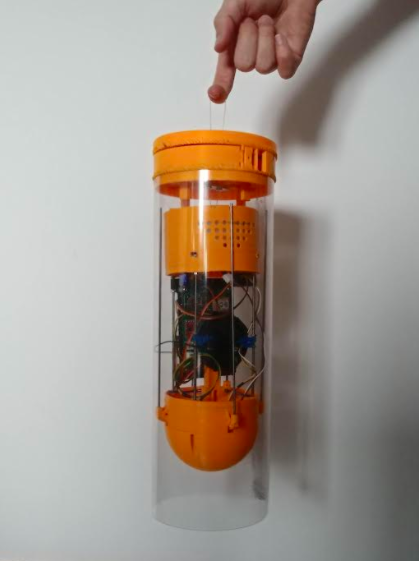
In the United States, the teams’ meticulously constructed probes were subjected to a simulated space mission conducted in controlled environments. As part of this year’s challenge, the probes were dropped from a height of 750 meters, with specific objectives to accomplish. These included tasks such as deploying the thermal cover mid-flight and subsequently raising the mast, adorned with a flag, to a height of 50 cm after landing.
The WUST Aerospace scientific club functions within the Faculty of Electronics, Photonics, and Microsystems. Since 2016, the club’s dedicated members have been actively engaged in stratospheric missions and the construction of CanSat rockets and probes for global competitions. Moreover, they are enthusiastic about spreading awareness and knowledge, as they organise workshops and lectures open to individuals of all ages who are interested in the field of space engineering.
Author: Patrycja Bodzek-Kurzyńska
Photo: WUST Aerospace