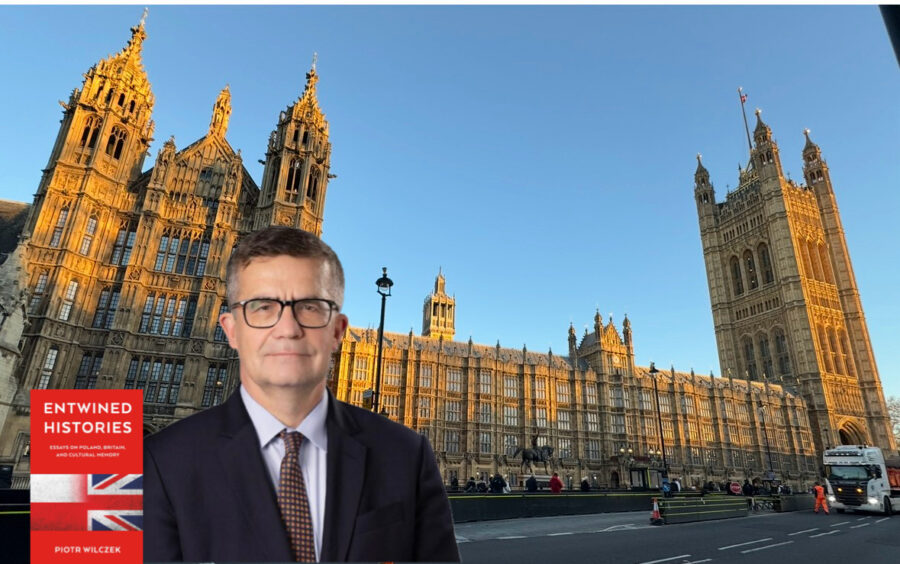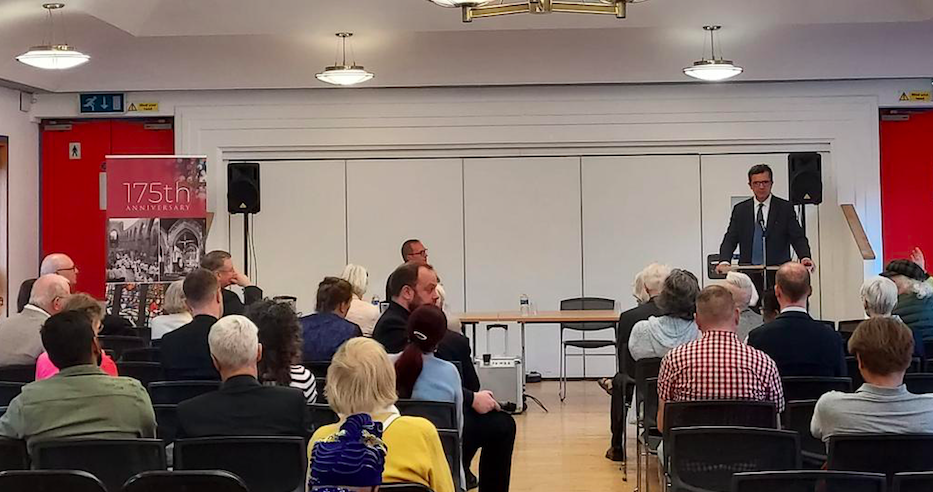
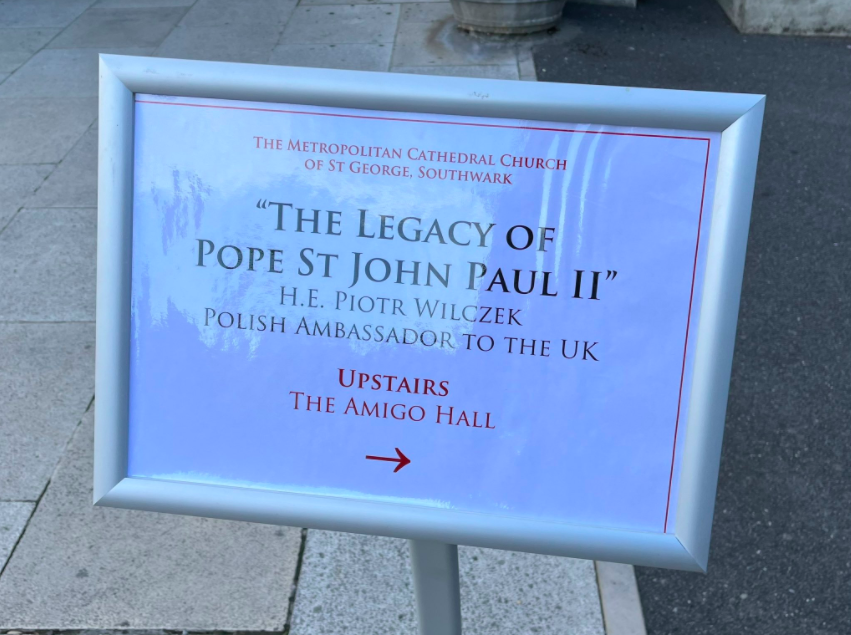
On 6 July 2023, the Ambassador of the Republic of Poland to the UK, Piotr Wilczek, delivered a speech on the remarkable legacy of Pope John Paul II at St George’s Cathedral. The talk was organised as part of celebrations of the 175th anniversary of the cathedral coming into existence.
The lecture focused on the leadership of the Pope and his significant contributions to the downfall of communism and the restoration of freedom in Poland. It highlighted the impact of three pilgrimages to Poland in 1979, 1983, and 1987, showcasing the transformative influence the Pope had on the nation’s trajectory. Additionally, the lecture discussed the collaborative efforts between the Pope, PM Margaret Thatcher, and President Ronald Reagan in their shared goal of bringing about political change in Poland. It delved into the specificities of Polish Catholicism, examining how historical and political conditions following World War II shaped its development and its role as a source of strength and resilience for the Polish people.
Read the full speech by Ambassador Wilczek below.
„It is with great honour and privilege that I stand before you today as the Ambassador of Poland to the Court of St James’s. I am here to address you on the legacy of Pope St John Paul II, a topic of immense importance and significance.
In 1982, Pope John Paul II embarked on a historic visit to the United Kingdom, leaving an indelible mark on the nation. During his visit, the Pope met with Queen Elizabeth II, marking the first encounter between a reigning British monarch and the head of the Roman Catholic Church since the Reformation. The visit was an opportunity for the Pope to extend a message of peace, unity, and dialogue, promoting understanding and reconciliation between different faith traditions. His presence and speeches resonated deeply with the British people, fostering a spirit of interfaith dialogue and promoting religious tolerance. Pope John Paul II’s visit to the United Kingdom in 1982 served as a significant milestone in the journey towards greater ecumenism and understanding among diverse religious communities.
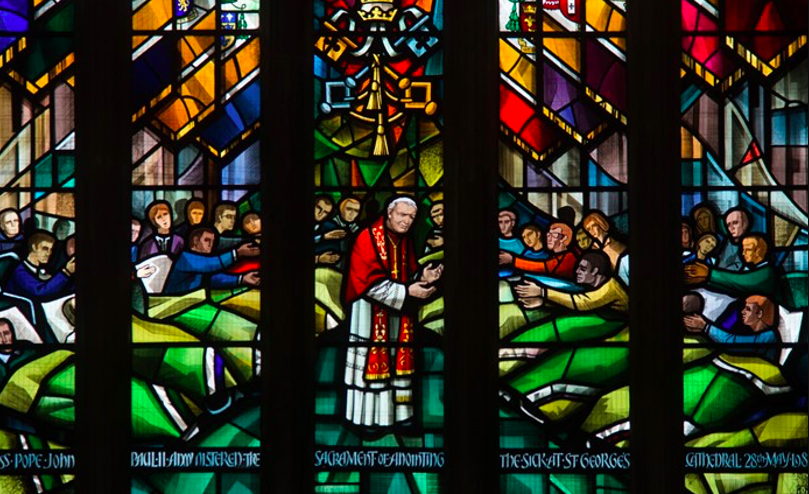
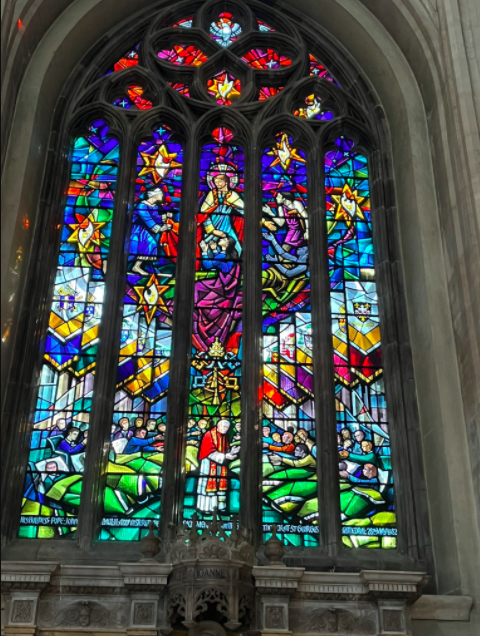
One of the most significant moments in the history of St George’s Cathedral was the visit of the late pontiff on the 28th of May 1982. In an address he preached to a congregation gathered in this very Cathedral forty years ago, the Pope spoke on human dignity and the transcendent value of human suffering from a particularly personal perspective, having endured pain and suffering following the assassination attempt on his own life. Speaking on the value of human life, he spoke of the inherent moral values “rooted in the nature of man himself”. Values which he calls “the precious heritage of civilization”. For, as he continues, “if society begins to deny the worth of any individual or to subordinate the human person to pragmatic or utilitarian considerations, it begins to destroy the defences that safeguard its own fundamental values”. And the Pope, it is worth adding, is speaking here as one who had personally experienced totalitarian regimes that used people for their own means, hence the urgent call to respect every man and woman owing to their inherent human dignity. This extraordinary visit is immortalized in the Cathedral’s memorial window, serving as a lasting tribute to the profound impact of Pope John Paul II on this community.
As I deliver this lecture, I am deeply aware of the opportunity it presents to further our knowledge and appreciation of the legacy left behind by this world- 2 changing saint. Pope John Paul, through his unwavering dedication and visionary leadership, transformed the course of history and touched the lives of millions. I invite each of you to join me in reflecting upon the remarkable contributions of Pope John Paul II and the values he espoused – values that continue to shape our world today.
Describing a man who has had such a profound impact on history and the lives of millions is no small task. As both an intellectual and a world leader, he stands out as the first Pope in at least five hundred years to exert a consequential influence on the politics of his time, and perhaps even alter the course of history. However, it is ironic that political protagonism was of lesser concern to him. His primary focus was pastoral service, and he embraced his role as the pilgrim pope who tirelessly met people of goodwill.
Throughout his remarkable 27-year reign as Pope and head of the Vatican State, he embarked on 104 international journeys and held in Rome and abroad more than 1000 audiences with heads of state and prime ministers. Moreover, he undertook 146 pastoral visits within the borders of Italy, demonstrating his commitment to not only presiding from Rome but also immersing himself as a pilgrim among the people.
Pope John Paul II was a beacon of hope and freedom for Poland. He played a pivotal role in the struggle against the Communist regime and contributed significantly to the collapse of the Iron Curtain. His visits to Poland in 1979, 1983, and 1987 marked significant turning points in our nation’s history. Despite defying national and international political opinions on numerous occasions, the Pope’s visits served as inspiration for generations of Poles, encouraging them to assert their rights and strive for a brighter future.
Pope John Paul II was a staunch advocate for human rights and social justice. He recognized the significance of the Solidarity movement in Poland, which emerged as the first and largest trade union within any Warsaw Pact country. His support extended beyond mere symbolism. He actively engaged in bringing about transformative change in Poland and the wider region. Utilizing his influence, he fostered dialogue between the Polish Communist government and various sectors of society, including the Catholic Church and the Solidarity trade union. This crucial moral support acted as a catalyst for change, and his message of freedom and democracy resonated deeply with people throughout the region.
A pivotal moment for Poland occurred in June 1979, during Pope John Paul II’s first visit to his homeland. The purpose of the visit was to commemorate the millennial anniversary of Polish Christianity, an occasion that Pope Paul VI had intended to personally attend. It also served as a remembrance of the ninth centenary of the martyrdom of St Stanislaus (in Polish: Stanisław), who was martyred in 1079. The Pope’s arrival, it must be added, was received with an immense outpouring of emotion and enthusiasm. Time Magazine called it a ‘carnival, a political campaign, a crusade and a wedding all in one’. Whilst the Polish pope’s biographer, George Weigel, observed that “No hero in Polish history, not King Jan Sobieski III, not Tadeusz Kosciuszko, not Józef Piłsudski, had ever entered Warsaw as John Paul II on June 2, 1979”. For the Polish nation, this first pilgrimage ushered in a new era of hope and change, enkindling a faith in the possibility of a better future.
On the 2nd of June 1979, a momentous occasion unfolded in Victory Square, Warsaw. It was the Pope’s inaugural public Mass, coinciding with the Feast of Pentecost Sunday, and it drew an awe-inspiring crowd of over a million devoted Poles. The entire city, along with the other cities visited during his nine-day tour, erupted into a jubilant celebration to welcome him.
The Mass attracted a sea of over a million faithful souls. Not only were representatives from the Warsaw Diplomatic Corps present, but members from various Christian denominations, including Lutheran, Reformed, Orthodox, Methodist, and Baptist, also joined in this sacred gathering. During his homily on this occasion, the Pope shed light on Poland’s rich Christian heritage, emphasizing that his papal pilgrimage was a continuation of the momentous 1966 celebrations that commemorated Poland’s baptism in 966. Moreover, the Pope underscored the significance of the visit coinciding with the ninth centenary of St Stanislaus’s heroic martyrdom in 1079. St Stanislaus, who valiantly defended his right to religious freedom against the oppressive grip of autocratic state power, served as a poignant symbol in the pilgrimage of Polish history. The Pope regarded his resistance as a special sign, a beacon of hope for the Polish people. He fervently emphasized that, just like St Stanislaus, every Pole embarks on their own spiritual journey towards the cherished goal of religious freedom.
In a thought-provoking moment, the Pope posed a question that lingered in the hearts and minds of the Polish people: Why was a Pole chosen to lead the Church in Rome? He proposed that perhaps Poland, known for its responsible witnesses, had a vital role to play in this divine appointment. The legacy of St. 4 Stanisław, one of Poland’s revered Christian martyrs, served as a powerful reminder of the significance of faith and belief in an individual’s life, and consequently, the utmost importance of religious freedom.
By publicly advocating for this fundamental moral right, the Pope stirred the Polish people to recognize the profound value of spiritual and religious principles that transcend the material and immediate. This resonated deeply in a country deeply rooted in Christian culture and belief, yet oppressed by a Communist regime that sought to suppress religion and propagate atheism.
During his inaugural papal visit to Poland, Pope John Paul II reminded the nation of its profound Christian heritage, which had historically sustained and nurtured the Polish people and their culture from within.
“The history of the nation – he said – deserves to be adequately appraised in the light of its contribution to the development of man and humanity, to intellect, heart and conscience. This is the deepest stream of culture. It is culture’s firmest support, its core, its strength. It is impossible without Christ to understand and appraise the contribution of the Polish nation to the development of man and his humanity in the past and its contribution today.”
It is with special emphasis that the Pope spoke about the primacy of the person here and his capacity to transcend himself, but also to draw from the spiritual resources he has from within through Christ. Those words pronounced then in the context of a political regime that did not treat its citizens as persons but as objects, sources of capital that were subservient to the political needs of the state resonated deeply not only with those gathered in that Square but also with the generations that would follow.
The final words of the Holy Father’s sermon during that sacred Mass held immense significance. It was a momentous event, occurring during the Pentecost season, where the Pope openly called upon the Holy Spirit, urging for a profound spiritual metamorphosis. These words, spoken with unwavering conviction, have since become an indelible rallying cry of the inaugural pilgrimage to Poland:
„I cry – I who am a Son of the land of Poland and who am also Pope John Paul II.
I cry from all the depths of this Millennium, I cry on the vigil of Pentecost:
Let your Spirit descend.
Let your Spirit descend
and renew the face of the earth,
the face of this land.”
One significant outcome of that initial public Mass was the infusion of hope, optimism and moral revitalization into Polish society. Throughout the nine-day Papal visit, experts estimated that approximately 10 million people, roughly one-third of the country’s population, attended the public gatherings to meet the Pope. This staggering percentage of society taking to the streets to welcome and listen to the Pope instilled a collective sense of strength in numbers. The Communist government, known for suppressing any form of civic gatherings or assemblies that did not directly serve the State’s objectives, faced a peaceful expression of support for the Pope. This not only conveyed a clear message to the government but also served as a unifying force among the people, emphasizing their deep national unity.
The papal pilgrimage drew millions of individuals who sought solace and inspiration in the holy masses he celebrated. This gathering not only rejuvenated a nation weary of the communist regime but also instilled a profound realization of their collective strength. The sheer magnitude of this mass gathering served as a testament to the power that lay within them, capable of transforming the world with the spiritual guidance emanating from the Pope, the Catholic faith, and the church.
A year later, in the summer of 1980, the embers of change ignited in various parts of Poland, particularly in the Gdańsk shipyard. Strikes erupted, marking the birth of „Solidarity,” the first independent trade union in the Eastern Bloc. The millions who had witnessed their own potency during the Pope’s visit in 1979 now came together to form Solidarity – a trade union that transcended its trade roots and evolved into a formidable social movement. Its impact reverberated not only within Poland but also throughout Eastern Europe, ultimately leaving an indelible mark on the world.
The genesis of Solidarity, emerging from a deeply Catholic nation like Poland, elucidates the profound connection between this trade union and the Church. The holy masses conducted amidst the strikes served as a powerful symbol of solidarity and resilience, further strengthening the bond between the Church and the Solidarity movement. Additionally, the pivotal role played by Solidarity’s chaplain, Father Jerzy Popiełuszko, cannot be understated. In the face of martial law imposed in 1981, Father Popiełuszko provided unwavering support to Solidarity members, becoming a beacon of hope in their darkest 6 hours. Tragically, his unwavering dedication led to his brutal murder at the hands of communist secret police henchmen in 1984.
The papal pilgrimage of 1979 and the subsequent birth of Solidarity forever altered the course of Poland’s history. It awakened a nation to its own strength, inspiring them to challenge the oppressive regime and fight for their rights. The unbreakable bond between Solidarity and the Church exemplified the power of unity and faith in the face of adversity. Through their unwavering determination, the people of Poland not only transformed their own nation but also left an enduring legacy that resonated far beyond the borders of their country.
Pope John Paul II also addressed a topic that had long concerned him intellectually – the importance of solidarity, where individual freedom is harnessed for the common good and the service of a community in which every member supports and sustains one another. This theme occupied his philosophical and later works. In this regard, the Pope’s eight-day visit to Poland in June 1983, on the occasion of the six-hundredth anniversary of the founding of the Jasna Góra Monastery in Częstochowa, held particular significance. The Communist authorities, fearing the potential consequences, sought to indefinitely postpone the visit. Only two years prior, Martial Law had been imposed on December 13, 1981, and the memory of its oppressive nature still lingered among the people. Solidarity had been rendered illegal, and tanks patrolled the streets under the pretext of maintaining public order. Yet, the Pope was not to be cowed by the then political climate. In his distinctly unconventional manner, he travelled to Poland at that precise moment, when it was thought the least convenient.
Nevertheless, in a resolute yet serene manner, the Holy Father spoke with unwavering conviction, stressing the vital significance of upholding civil rights as a fundamental manifestation of human dignity. Standing before the delegates of Communist authorities within the grand halls of the Belvedere Palace, he underscored the utmost value of pursuing peaceful avenues to surmount conflicts. Against the backdrop of Poland’s tumultuous history marred by countless wars, the plea for peace resonated with an even more pressing urgency. Quoting a poignant excerpt from his address, it is crucial to highlight the Holy Father’s fearless candor as he fearlessly confronted the realities at hand, while simultaneously appealing to the goodwill of the nation’s leaders and underscoring the imperative need to seek peaceful resolutions, sparing the nation and its people from further anguish and hardship.
“And even if life in the homeland since 13 December 1981 has been subjected to the severe rigour of the state of war [martial law], which from the beginning of the present year was suspended – nevertheless, I do not stop hoping that that social reform, announced on many occasions, according to the principles so painstakingly worked out in the critical days of August 1980, and contained in the agreements, will gradually be put into effect. This renewal is indispensable for maintaining the good name of Poland in the world, as well as in order to find a way out of the internal crisis and spare the sufferings of so many sons and daughters of the nation, my compatriots.
The Pope’s unwavering trust in the potential for social renewal, based on the agreements and principles formulated during the August 1980 breakthrough, conveyed his belief in Poland’s ability to overcome its challenges and restore its standing in the world. He recognized that this renewal was essential not only for the nation’s reputation but also for alleviating the suffering endured by countless Polish citizens.
Here we witness the Holy Father asserting his leadership through peaceful means, speaking clearly to Poland’s political leaders about the consequences of their decisions. Importantly, he does not diminish their agency but rather emphasizes their vital role in bringing about much-needed social renewal.
Finally, the Pope’s resolute plea for the recognition of each individual’s inherent human worth remains profoundly significant. This concept had long captivated his intellectual pursuits, as evidenced by his earlier scholarly work, „Person and Act”. To Karol Wojtyła, both as an individual and later as Pope John Paul II, a person was not merely a chaotic amalgamation of emotions and sensations, nor were they solely defined by their thoughts and consciousness. Human beings possessed the power to make choices and rise above their own limitations, all in pursuit of goodness and truth.
One particular sermon stands out in this regard, delivered during the Pope’s third visit to Poland for the Eucharistic Congress in Warsaw in 1987. This address was given to a gathering of young people, with whom John Paul II shared a special bond. Speaking to the young men and women at Westerplatte, the peninsula in Gdańsk, Northern Poland, Pope John Paul II emphasized the importance of inner truth, which is revealed through one’s conscience and reflected in their actions. He reminded the youth of their responsibility, drawing inspiration from the courageous Polish soldiers who fought in the Battle of 8 Westerplatte during World War II. He urged them to take charge of their own destiny as a nation, to seize control of their future and shape it according to their own aspirations.
„The future of Poland depends on you and must depend on you. This is our homeland – this is our „to be” and our „to have.” And no one can deprive us of the right, so that the future of our „being” and „having” does not depend on us. Every generation of Poles, especially over the last two hundred years, but also earlier, for the entire millennium, has faced the same problem. It can be called the problem of working on oneself, and – it must be said – if not all, then at least many did not run away from responding to the challenge of their time. For a Christian, the situation is never hopeless. A Christian is a person of hope.”
The moral support and inspiration provided by the Holy Father’s words played a crucial role in sustaining individuals, families, and communities throughout the subsequent years. More importantly, these visits infused Polish society with hope, reminding them that despite the dire and desperate circumstances, change and renewal were possible.
Pope John Paul II, a masterful global leader, utilized his influential position to engage with world leaders and advocate for peace and international collaboration. His efforts were particularly noteworthy during the tense period of the Cold War. In a historic meeting on 7th of June, 1982, the Pope met with American President Ronald Reagan, a meeting that lasted nearly an hour. While the details of their conversation remain undisclosed, numerous historians and scholars believe that this encounter played a crucial role in the eventual transformation of the Eastern Bloc, which occurred six years later.
Similarly, it is highly probable that John Paul II’s initial meeting with British Prime Minister Margaret Thatcher served as a catalyst for her momentous visit to Poland in 1988. Experts argue that this visit, during which Thatcher met with Lech Wałęsa, the leader of the Solidarity Union, and paid respects at the grave of Father Jerzy Popiełuszko, significantly contributed to the downfall of the Communist regime. These powerful gestures conveyed a message of hope and inspired the Polish public, reigniting their faith in a brighter future.
Undoubtedly, John Paul II’s silent diplomacy and commitment to peaceful dialogue played a pivotal role in motivating these two influential world leaders to collaborate in dismantling the Iron Curtain. While the fall of Communism can be attributed to various actors and factors, including Reagan’s resolute stance against Communism and the inherent unsustainability of the Soviet regime, the Pope’s impact on the demise of totalitarian regimes, particularly in Poland and Central and Eastern Europe, cannot be overlooked.
https://twitter.com/StGeorgesCath/status/1677068197877501953?s=20
Through his deft use of dialogue in encounters with world leaders and his unwavering call for peace and respect for human dignity, Pope John Paul II not only galvanized oppressed communities but also instilled in them a sense of dignity and agency in their fight for civil rights and freedom. His influence helped empower these communities and fostered a collective determination to secure their rights and pursue freedom.
As the ambassador of Poland to the United Kingdom, discussing Pope John Paul II’s legacy in St George’s Cathedral in London holds great significance for me. His impact on Poland and the wider region as a beacon of hope and freedom cannot be overstated. His visits to Poland inspired generations of Poles to assert their rights and strive for a brighter future, playing a pivotal role in the struggle against totalitarian regimes and the collapse of the Iron Curtain.
Pope John Paul II’s advocacy for human rights and social justice went beyond symbolic gestures. He actively engaged in fostering dialogue and promoting transformative change, working with various sectors of society, including the Catholic Church and the Solidarity trade union.
Moreover, the Pope’s emphasis on solidarity and the importance of individual freedom for the common good resonated deeply. His calls for peaceful solutions, respect for civil rights, and belief in the potential for social renewal in Poland inspired millions. His unwavering commitment to truth and the responsibility of each individual for shaping the future instilled a sense of hope and motivation within the Polish people, spurring them towards positive change.
In essence, Pope John Paul II’s legacy encompasses his tireless efforts to promote peace, understanding, and respect for human dignity. His visits and speeches in both the United Kingdom and Poland have left an indelible mark on history, continuing to shape our world today. As we reflect on his remarkable contributions, let us be reminded of his unwavering belief in the power of dialogue, solidarity, and the agency of individuals to create a better world. Pope John Paul II’s legacy serves as an enduring reminder of the transformative impact that one person can have in shaping history and inspiring generations to strive for a brighter future.”
Source: Polish Embassy UK Press Office