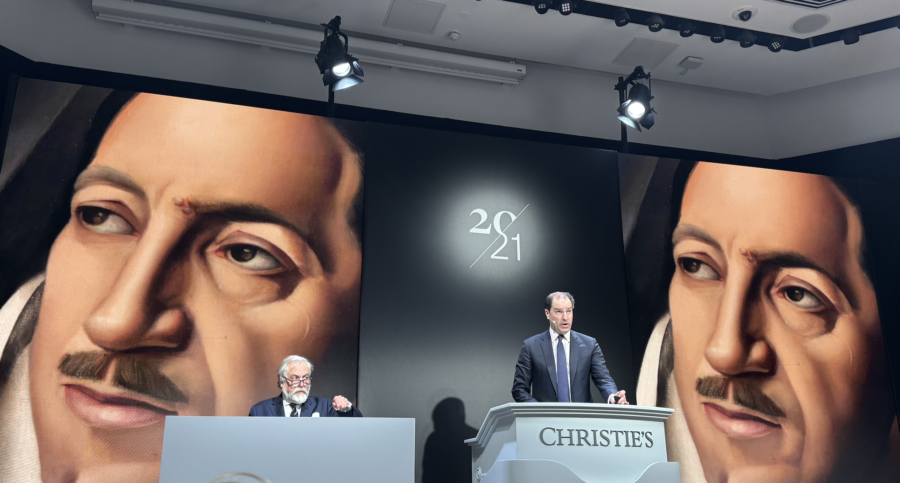
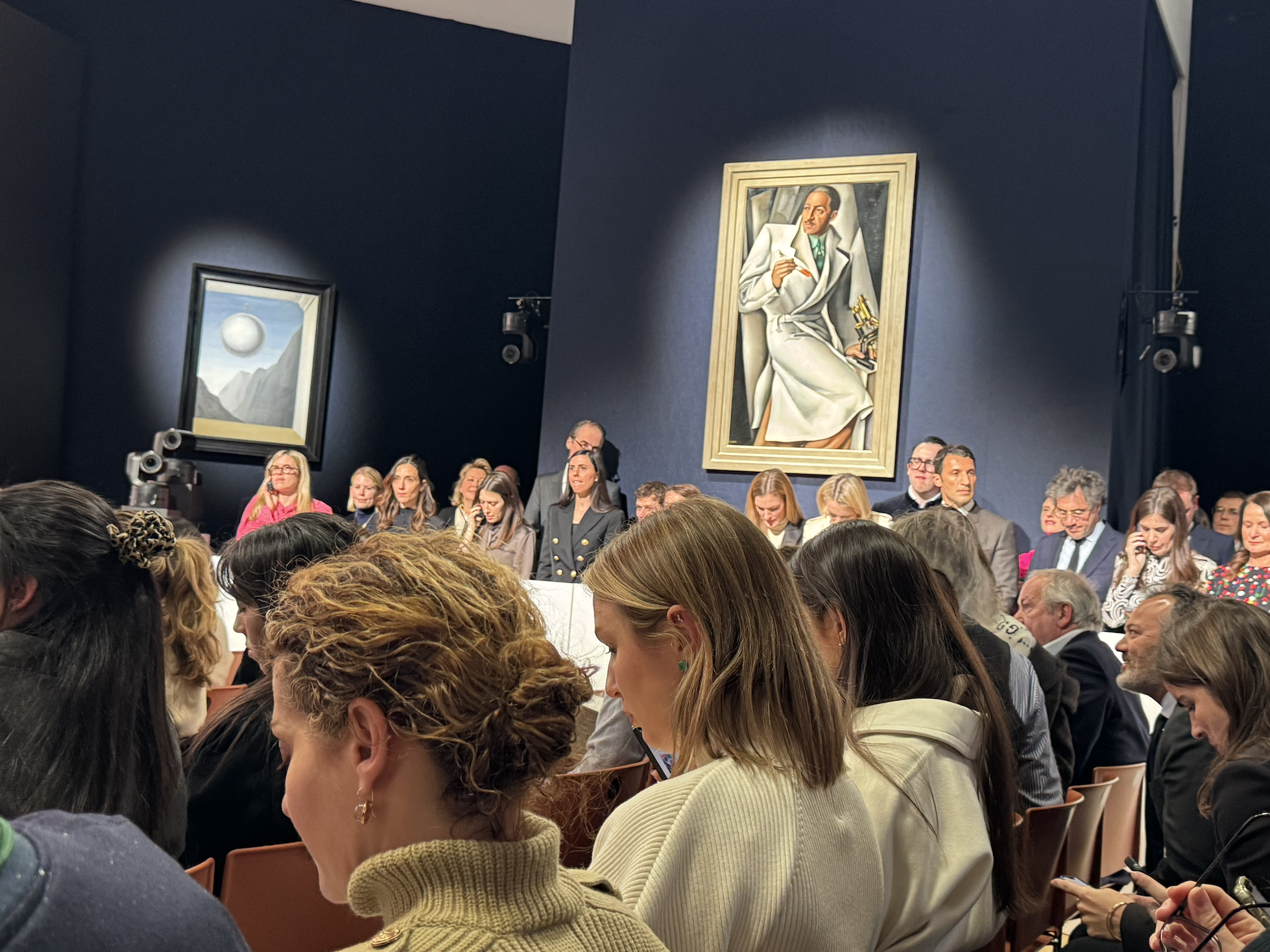
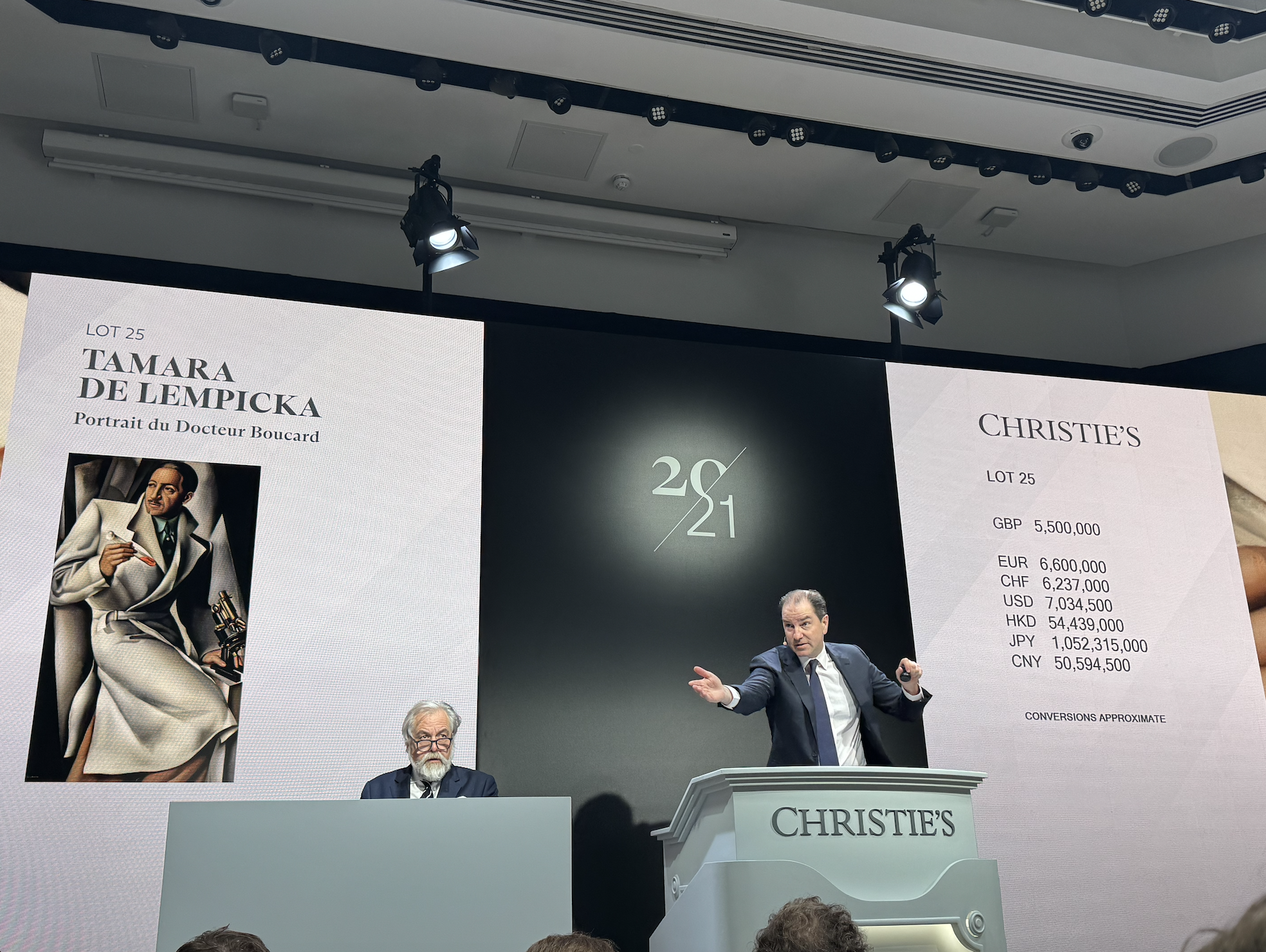
London’s Christie’s witnessed a marquee moment in the art world as it auctioned Portrait du Docteur Boucard (1928), a striking work by the renowned Polish artist Tamara Łempicka. The painting, which had remained unseen in private hands for four decades, went under the hammer on 5 March 2025, during the prestigious 20th/21st Century: London Evening Sale. Following a lively bidding battle, it was ultimately sold for £6,635,000.
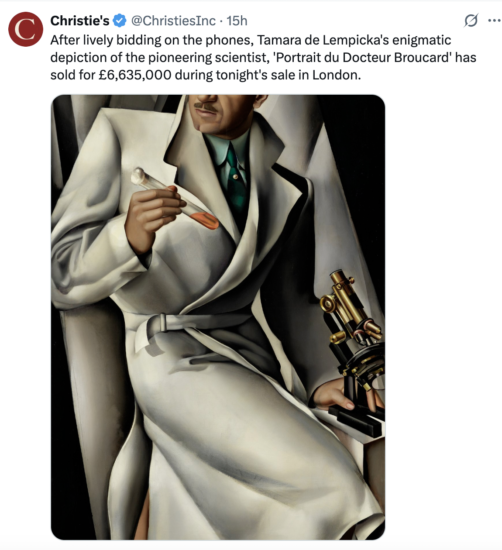
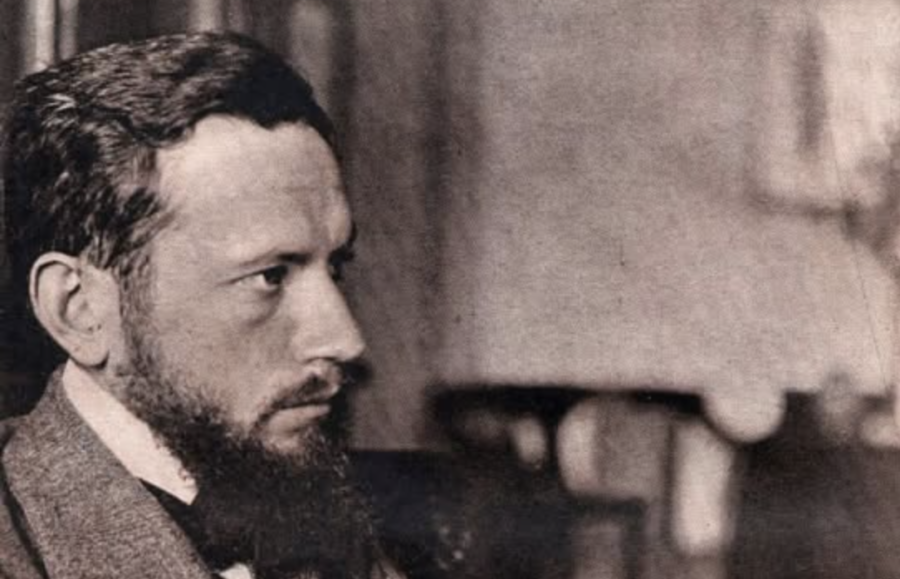
The portrait’s subject, Dr. Pierre Boucard, was not only a respected medical scientist but also a key patron of Łempicka’s work. He was a trailblazing medical scientist who, alongside his groundbreaking work in bacteriology, was a dedicated art collector and a a key patron of Łempicka’s work. He is depicted in a white trench coat, a microscope in one hand, and a test tube in the other, indicating his contributions to medical science. It is a quintessential example of Lempicka’s geometric style of Art Deco and modernist precision.
An avid enthusiast of modern art, Boucard already possessed several of Łempicka’s paintings when he encountered the artist in 1927, at a time when her international reputation was soaring. His major scientific breakthrough occurred in the early 20th century—specifically in 1907—when he developed the probiotic pharmaceutical Lactéol. His professional achievements allowed him to cultivate his passion for art, and by the late 1920s, he commissioned Lempicka to create a series of portraits featuring his family. The first in this series, Portrait d’Arlette Boucard (1928), depicts his daughter reclining against the backdrop of Cannes harbour. Among the moored boats, Boucard’s yacht can be seen, bearing the name Lactéol in honour of his landmark discovery.

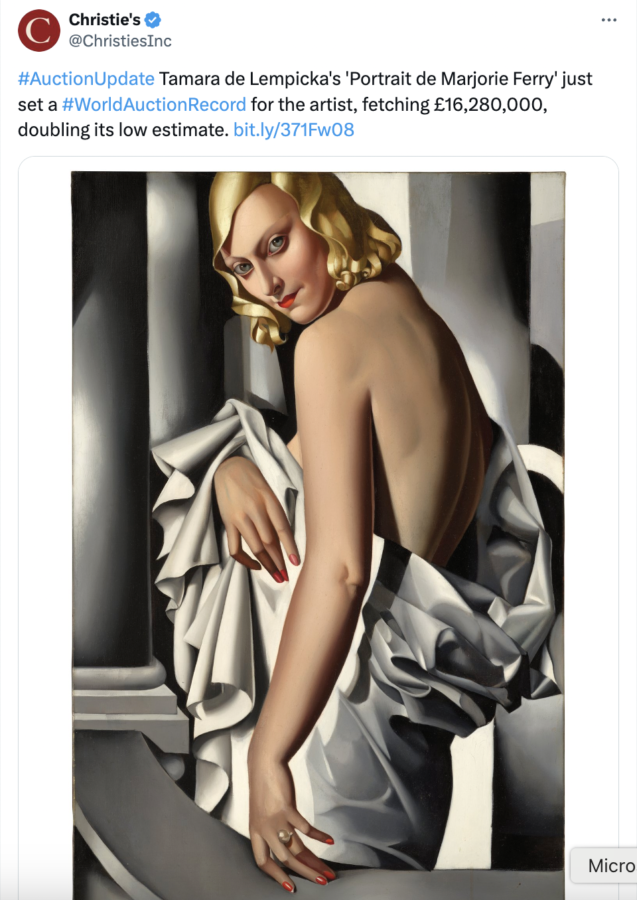
This highly anticipated sale came on the heels of a record-breaking moment for Łempicka’s market. In February 2020, her Portrait de Marjorie Ferry (1932) stunned the art world by selling for £16.28 million at Christie’s London, setting a new auction record for the artist.
Born in Warsaw in 1898, Tamara Łempicka (or de Lempicka) rose to fame in the roaring 1920s, establishing herself as the ultimate painter of the era’s aristocrats, celebrities, and socialites.
After honing her signature style in Paris—with a blend of Cubism, neoclassicism, and avant-garde glamour—she later moved to the United States, where her popularity briefly waned before experiencing a spectacular revival in the late XX century.

Throughout her life, Łempicka maintained a strong connection to her Polish heritage, despite spending much of her career in France and the United States. Coming from a well-off Polish family, she was influenced by the cultural and artistic traditions of her homeland, which later shaped her distinctive Art Deco style.

Though she left Poland after World War I, fleeing the Russian Revolution with her husband, she remained proud of her roots and identified strongly as Polish. Her aristocratic background and European sensibilities played a significant role in her art, which often reflected a blend of modernity and classicism. Even as she gained international fame, she continued to associate with Polish expatriate circles and expressed admiration for Poland’s artistic and historical legacy.
In the final years of her life, Tamara Łempicka withdrew from the public eye, spending much of her time in Mexico, where she moved in 1978 following the death of her second husband, Baron Raoul Kuffner.
Tamara Łempicka passed away on 18 March 1980, at the age of 81. According to her wishes, her ashes were scattered over the Popocatépetl volcano.
Source: Christie’s
Photos: British Poles
Tomasz Modrzejewski, Maria Byczynski