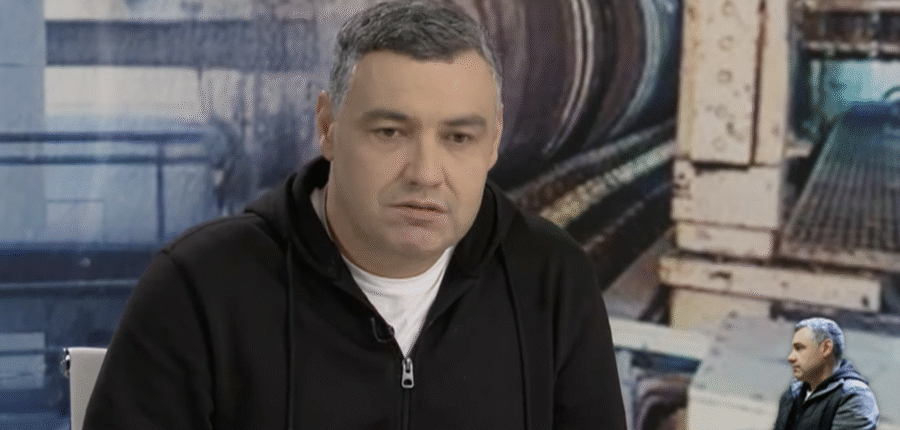
A Warsaw district court has rejected a German request to extradite Volodymyr Zhuravlov, a Ukrainian national accused of involvement in the 2022 sabotage of the Nord Stream gas pipelines in the Baltic Sea. The court also ordered his immediate release from custody, where he had been held since his arrest on 30 September in Pruszków, near Warsaw.
The German Federal Court of Justice in Karlsruhe had issued a European Arrest Warrant for Zhuravlov, suspecting him of “constitutional sabotage,” destruction of property and the deliberate explosion of the Nord Stream 2 pipeline. Zhuravlov, 49, has consistently denied any involvement, claiming that he was in Ukraine at the time of the blasts.
In a decision that has already stirred political reactions across Europe, Judge Dariusz Łubowski ruled that even if Zhuravlov had participated in the operation, his actions could not be considered criminal.
“These were not unlawful acts,” the judge said in court. “On the contrary, they were justified, rational and fair. Attacks on the critical infrastructure of an aggressor state, carried out by military or special forces during wartime, are not sabotage but acts of diversion and therefore cannot constitute crimes.”
Łubowski added that the alleged offence took place amid “Russia’s bloody and genocidal aggression against Ukraine, ongoing since 2014.” Responsibility for such an act, he argued, could only rest with a state, possibly the Ukrainian state itself, not with an individual.
He also questioned Germany’s legal classification of the incident, noting that the explosions occurred in international waters and that the pipeline was not German property.
The decision drew praise in Poland but condemnation abroad. Polish politicians across party lines welcomed the ruling, describing it as an affirmation of national sovereignty and judicial independence.
In contrast, Hungary’s foreign minister, Péter Szijjártó, called the verdict “scandalous.” Writing on X, he accused Warsaw of “giving a green light to terrorist attacks in Europe,” adding:
“According to Poland, if you dislike some infrastructure in Europe, you can blow it up. Poland has not only released a terrorist but is celebrating him—so much for the rule of law in Europe.”
Germany’s foreign minister, Johann Wadephul, speaking in Ankara, adopted a more measured tone:
“I respect the ruling of the Polish court. In our system, the separation of powers is fundamental. The executive must not interfere with judicial decisions.”
Zhuravlov’s lawyer, Tymoteusz Paprocki, said from the outset that his client was being targeted for political reasons. “No citizen of Ukraine can be prosecuted or sentenced within the European Union for actions directed against the Russian Federation,” he argued.
Following his release, Zhuravlov thanked his supporters in both Poland and Ukraine:
“I believed the court would be on my side,” he said in an interview with Telewizja Republika.
Legal scholars described the ruling as unprecedented. Professor Piotr Kruszyński, a prominent criminal lawyer, noted that European Arrest Warrants (EAWs) are almost always executed automatically between EU member states.
“The EAW system is built on mutual trust,” he told the Polish Press Agency. “When one EU state requests extradition, another typically complies without questioning the case’s political context. This decision breaks with that tradition and may provoke a diplomatic response from Germany.”
The controversy comes amid ongoing investigations into the September 2022 explosions that crippled three of the four Nord Stream 1 and 2 pipelines, designed to transport natural gas from Russia to Germany. The blasts occurred some 80 metres below the Baltic Sea’s surface, just seven months after Russia launched its full-scale invasion of Ukraine.
German prosecutors believe that a group of Ukrainians used a yacht hired in Rostock under false identities to carry out the mission, allegedly placing at least four explosive charges on the pipeline before escaping via intermediaries back to Ukraine.
A similar case in Italy also remains unresolved: in September, an appeals court in Bologna approved the extradition of another Ukrainian, Serhii K., accused of participating in the same attack. However, Italy’s Supreme Court overturned that decision earlier this week, sending the case back for further review.
The Warsaw court’s decision sets a potentially far-reaching precedent, blurring the lines between criminal prosecution and acts of war within the European legal framework.
As appeals are likely and political tensions rise, the Zhuravlov case could become a defining moment in how the EU handles wartime actions carried out by Ukrainian nationals against Russian targets, testing not only mutual trust within the Union but also the boundaries of justice in wartime Europe.
Source: PAP
Photo: @RepublikaTV/X
Tomasz Modrzejewski