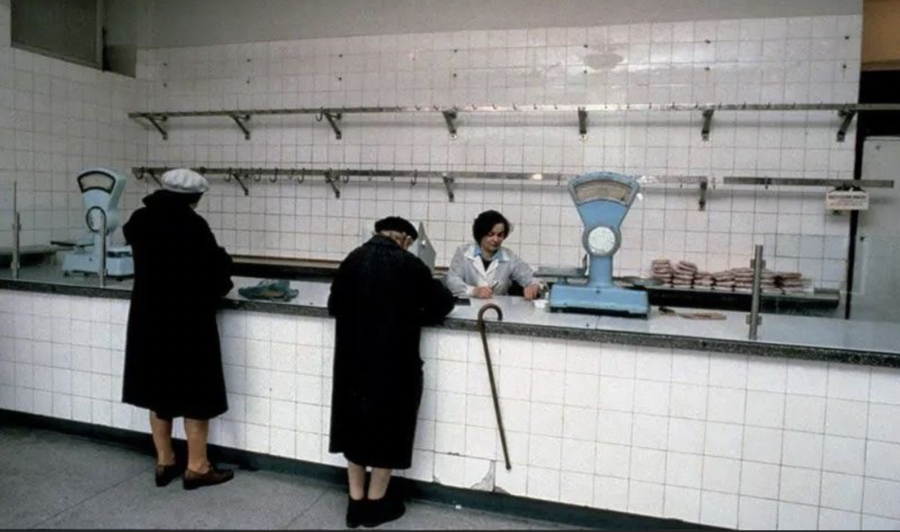
In early February, amid yet another round of Westminster turbulence, Kemi Badenoch remarked at a press conference that “the country does not cry out for socialism.” The line was meant as a political jab, but it struck a deeper chord for those who have experienced socialism not as a slogan, but as a system. Few captured that perspective more sharply than former Polish ambassador to the UK, Piotr Wilczek, whose reflections offer a bracing corrective to the airy romanticism with which socialism is sometimes treated in Britain.
Wilczek speaks not as an ideologue, but as a witness. He grew up in Poland, a state that officially called itself socialist and enforced that identity with queues, shortages, and fear. When he writes that socialism was not something people “cried out for” but something they “whispered about, afraid of the secret police overhearing,” he punctures the illusion that socialism is merely a kinder moral choice waiting to be rediscovered.
In lived reality, it was a system that taught citizens to lower their voices, their expectations, and their ambitions.

His metaphors are devastating precisely because they are mundane. Socialism, he suggests, is not the answer a country cries out for any more than a garden cries out for weeds or a refrigerator cries out for mould.
These images work because they strip ideology of its rhetorical glamour. They remind us that political systems are judged not by intentions but by outcomes and that scarcity, delay, and coercion are outcomes no society actively desires.
What Wilczek describes is not an abstract failure but a daily erosion of dignity. Equality existed, yes, but it was an equality of misery. Employment was universal, but productivity was a charade: workers pretended to work, and managers pretended to pay them.
Plans were always five years long and never finished on time. The earth’s abundance passed through the machinery of the state and emerged as a chronic shortage. This was not a deviation from socialism; it was its normal operating condition.
And yet, in contemporary Britain, socialism is often discussed as if it were a misunderstood ex-partner, an idealistic, principled, perhaps unfairly maligned. Wilczek recalls his first visits to Britain in the 1980s, when Poland was still trapped behind the Iron Curtain.
To him, Oxford’s full shop windows and unpoliced purchases looked like a capitalist fever dream. Britain, for all its labour disputes and industrial malaise, still functioned without ration cards or whispered conversations. It was not begging for Marxism; it was negotiating the balance between state and market, authority and liberty.
Fast forward to today, and the idea that Britain is somehow yearning for socialism seems, as Wilczek dryly puts it, as plausible as a vegan fox hunt. The frustrations that animate British politics, crumbling infrastructure, unreliable transport, and NHS waiting lists are real. But they are not demands for collective farms, central planning, or surveillance-heavy states. They are complaints about inefficiency, not pleas for ideological overhaul.
From a Central European vantage point, this debate can appear faintly absurd. Poland did not abandon socialism in 1989 out of boredom or fashion. It rejected it with the urgency of someone leaving a disastrous blind date, and with good reason.
Since then, Poland has built a dynamic economy, integrated into European supply chains, and developed infrastructure that, in many cases, now outpaces older Western systems. Whatever its current political struggles, it is not nostalgic for the queues.
Wilczek’s most pointed observation may be that socialism, in Britain, is sometimes treated like a fad diet: “low on calories, high on moral superiority”.
Those who have tested it, however, tend to remember not justice but inconvenience, not solidarity but surveillance. They remember the peculiar humiliation of waiting hours for basic goods and the quiet dread of saying the wrong thing aloud.
Wilczek ends with a fairy-tale image: socialism as the Polish stork that brings babies charming in stories, catastrophic in reality. It is a fitting conclusion. Myths are comforting; systems are not. Britain, with its imperfect institutions and stubborn liberties, does not need to relearn a lesson others paid dearly to learn first.
Source: Piotr Wilczek/LinkedIn
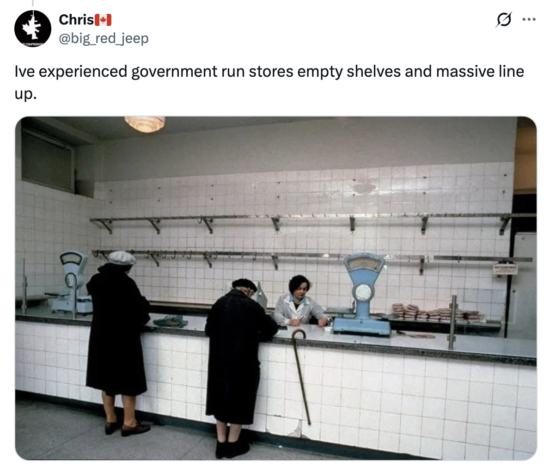
Photo: X/@big_red_jeep
Tomasz Modrzejewski