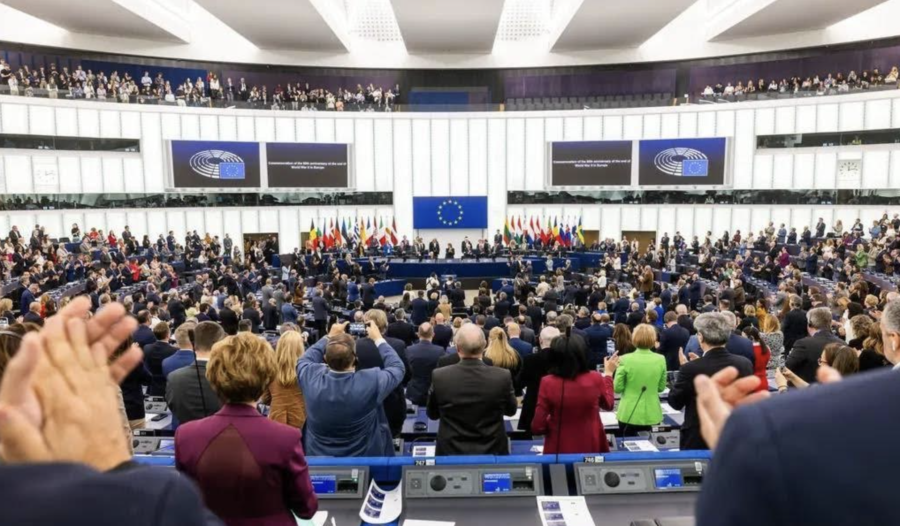
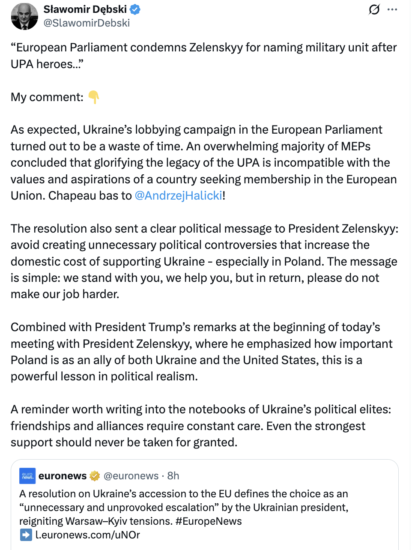
The European Parliament has adopted a resolution expressing regret over Ukrainian President Volodymyr Zelensky’s decision to name an elite Ukrainian Armed Forces unit after the „Heroes of the UPA”, describing the move as an unnecessary and unprovoked escalation that risks damaging relations between Ukraine and one of its closest European allies, Poland.
The wording was included in a broader resolution on Ukraine’s EU accession process after lawmakers approved an amendment submitted by the European People’s Party (EPP). The amendment passed comfortably, with the final section receiving 592 votes in favour, 42 against and 11 abstentions. It drew support from Polish MEPs across the political spectrum, including representatives from Civic Coalition (KO), Law and Justice (PiS), the Polish People’s Party (PSL), The Left and Confederation.
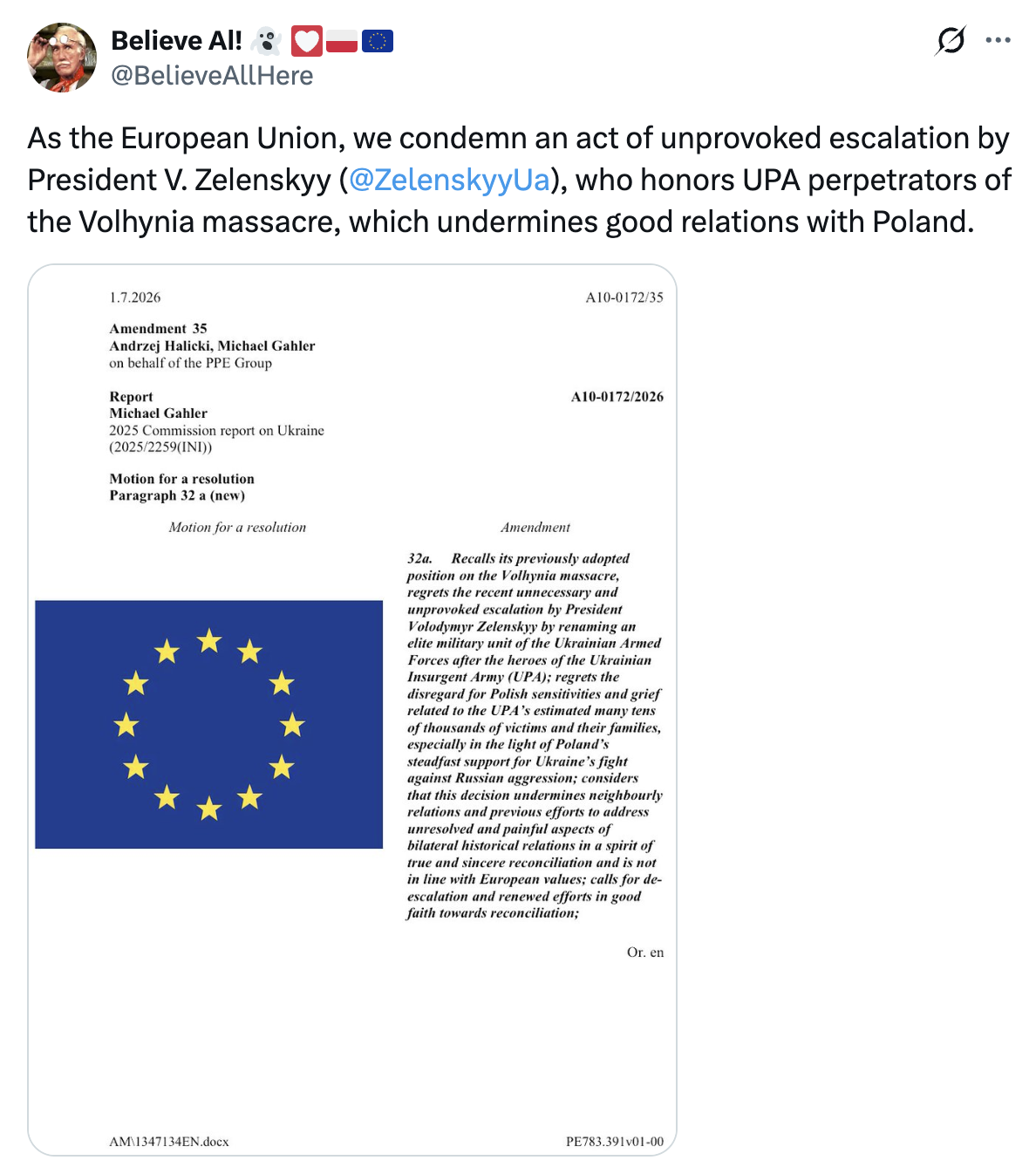
In the adopted text, MEPs expressed concern that the decision ignored the sensitivity of the issue for Polish society, particularly given Poland’s unwavering support for Ukraine since Russia’s full-scale invasion. The resolution noted that the legacy of the Ukrainian Insurgent Army (UPA) remains deeply painful for many Poles because of the large number of civilians killed during the massacres in Volhynia and Eastern Galicia during the Second World War.
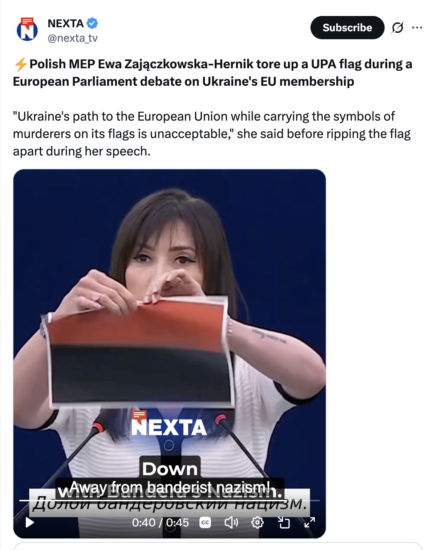
Parliament also argued that honouring the UPA in this way undermines efforts to resolve longstanding historical disputes through genuine reconciliation and harms good neighbourly relations between Poland and Ukraine. It called for de-escalation and renewed dialogue aimed at addressing unresolved historical grievances in a spirit of mutual understanding and European values.
The resolution itself, focused primarily on Ukraine’s path towards EU membership, was approved by 460 votes to 136, with 59 abstentions. It received backing from most members of the Civic Coalition, PSL, The Left and the majority of PiS MEPs, although several PiS representatives voted against. Confederation MEPs also opposed the resolution.
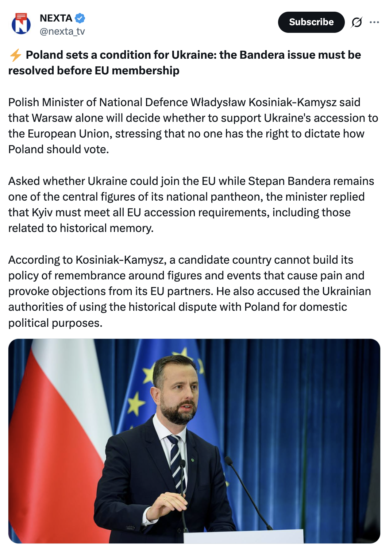
The debate surrounding the vote proved contentious. PiS MEP Jacek Ozdoba attempted to introduce an oral amendment calling for the condemnation of what he described as „Banderism”, but the proposal was rejected. The exchange sparked heated reactions in the chamber, with accusations of inappropriate behaviour and inflammatory language traded between lawmakers from different political groups.
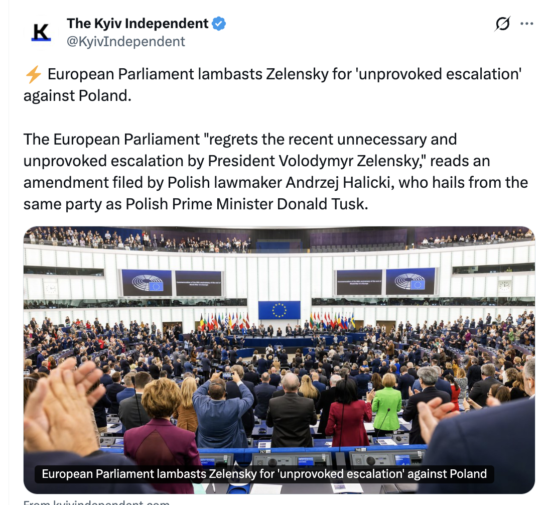
Another amendment proposed by the European Conservatives and Reformists (ECR) group failed to secure sufficient support. It sought to make further progress in Ukraine’s accession negotiations conditional on Kyiv formally recognising the ethnic cleansing campaign carried out against Poles by the UPA, condemning the organisation’s ideology and symbols, acknowledging crimes committed against both Polish and Jewish civilians, and completing the exhumation and dignified burial of victims.
The European Parliament also recalled its 2025 resolution encouraging continued efforts by Ukraine and EU member states to address unresolved historical issues, including the Volhynia massacres, through sincere reconciliation.
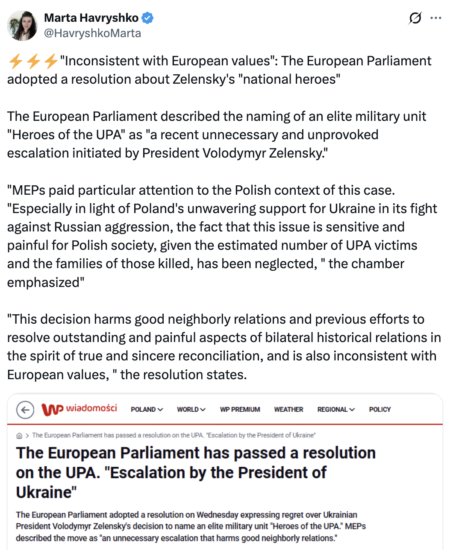
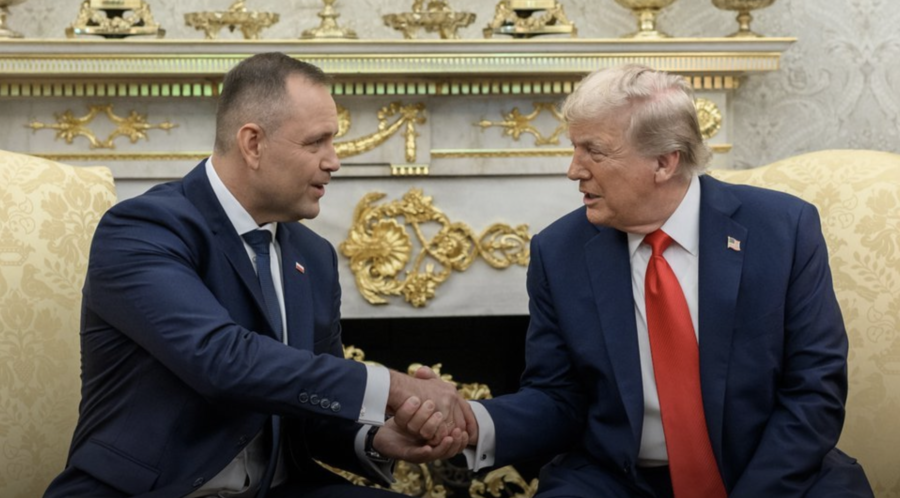
The latest vote comes amid heightened tensions between Warsaw and Kyiv following President Zelensky’s decision in late May to grant the honorary „Heroes of the UPA” designation to a Ukrainian military unit. The move prompted criticism across much of Poland’s political establishment, including Prime Minister Donald Tusk, Deputy Prime Minister and Defence Minister Władysław Kosiniak-Kamysz, and the Polish Foreign Ministry.
The dispute escalated further after Polish President Karol Nawrocki announced in June that he had revoked the Order of the White Eagle previously awarded to Zelensky. The Ukrainian president subsequently returned the decoration to Warsaw. Several former Ukrainian presidents and senior officials later returned Polish state honours, while leading PiS politicians announced they would return Ukrainian decorations awarded to them in previous years.
The UPA remains one of the most contentious issues in Polish-Ukrainian historical relations. Polish historians estimate that more than 100,000 Polish civilians were killed in Volhynia and Eastern Galicia between 1943 and 1945 during attacks carried out by the UPA and members of the Organisation of Ukrainian Nationalists (OUN-B), events that Poland officially recognises as genocide.
Photo: X @KyivIndependent
Tomasz Modrzejewski