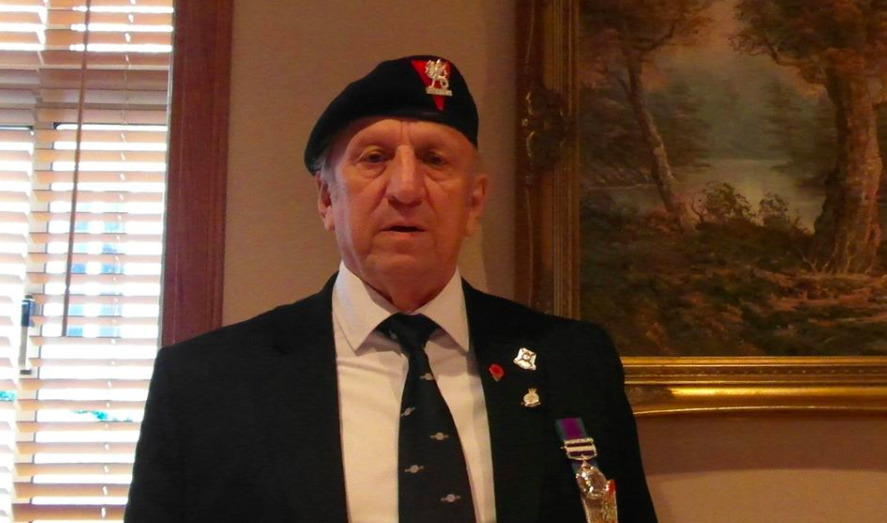
Most individuals, like myself, will often drift and recall memories of their youth and life in general, and ask themselves ‘What are my most memorable moment’ and ‘What would I change if I had my time over again?’.
Memorable moments? Too many to contemplate. What would I change if I had my time over again? The first thing would be to have heeded the advice given to me by my father and learned the Polish Language as a child. This might sound strange and it is? It’s only now, since the publication of my book, that I have come to the realisation of how much I have missed out on not really knowing and understanding my Polish ‘Roots’.
As a youngster born in Scotland and growing up in Scotland, Holland and England, I was always considered as the odd one out among the local children. Not that I looked different but because of my surname of ZAWADZKI. Trying to integrate with other children was hard as I was always seen as an outsider, a foreigner. It was only after getting into fights or scrapes and proving myself to the surrounding kids that I was accepted into their folds and finally being accepted as a friend. The same was also experienced by all my brothers and sisters even though none of them really spoke Polish.
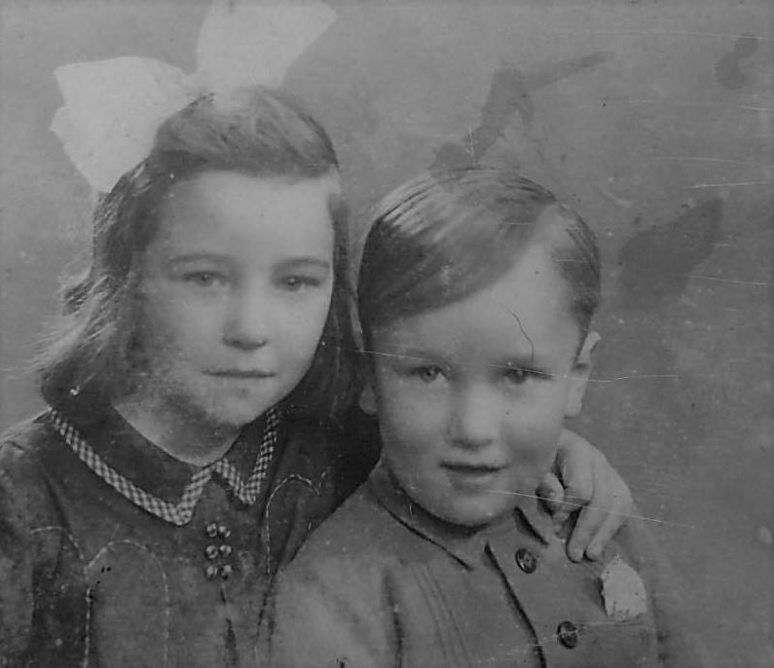
I never saw myself as being Polish as being born in Scotland of a Scottish mother, I always considered myself as a Scot. But mention my surname? I automatically became Polish even if I never really spoke the language or even set foot on Polish soil. Throughout my life, even to today, this dilemma has haunted me with quite a few daunting outcomes.
Over the past few months, I have had a yearning to get to know my Polish roots and to get a better understanding of myself, which has led me to read up on a lot of Polish history especially covering WW2 and my father’s contribution to this war. My father seldom spoke of his wartime experiences, but from what I am reading, HE went through HELL as did many who were in the same situation as himself. It is only now that I am starting to understand my background. I met many of my fathers Polish friends as a youngster, but much to my dismay now, I never really paid them any attention. I was too interested in going out and playing with my local friends.
It was only when I first started working in a factory at the age of fifteen that I started to feel a certain bonding with the local Polish workers, who had a tendency to look out for your personal safety and to teach you the working practises of the workers. This continued to the time I joined the British Army, where If I had only known what I know today, I met what I can only describe as ‘My Hero’.
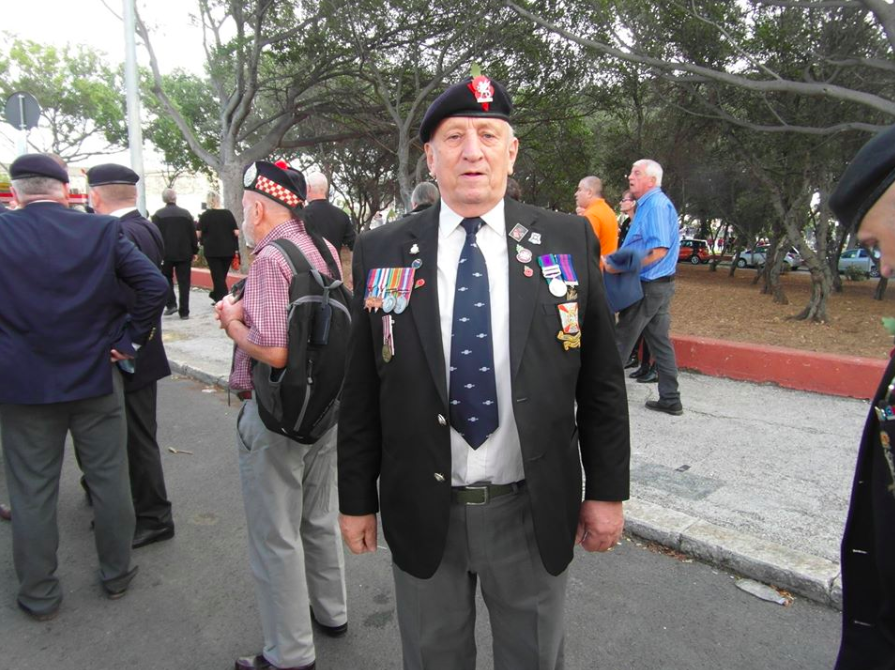
In March of 1963, having just completed my recruits training, I was posted to Malta to join my regiment. The 1st Bn The Duke of Edinburgh’s Royal Regiment (Berkshire & Wiltshire). Within minutes of being shown my accommodation in St Patrick’s Barracks, a Company Sergeant Major, came charging into the room shouting out at the top of his voice, Where is Pte Zawadzki, Where is Pte Zawadzki? I shouted out in reply and stated that I was Pte Zawadzki. He charged over to me, grabbed my arm and then started shaking my hand while speaking in Polish. At the time I had no knowledge of what he was saying and only once that I had explained that I did not really understand Polish, did he calm down. He then welcomed me to the regiment and explained that I was the first Pole to have joined the regiment since it amalgamation. It was only later that I learned that the Sgt Maj was Polish and I knew straight away he ‘Had my Back’ and would look after me whenever possible.
It is only now, when I think of this, that I can see this Sgt Maj in a completely new light. Over a period of time, I found out that the Sgt Maj had served in the 2nd Polish Army and took part in the Battle of Monte Cassino. I was also told that he had earned the Iron Cross 3rd Class while serving in the German Army. Like most Polish soldiers, he was very reluctant to talk of his wartime experiences but I believe that with the knowledge that I have gained through my studies, I can fill in a lot of blind spots.
Hitler, always claimed that both Silesia and Poznań in Poland were part of Germany. When these areas were overrun by the German forces at the start of WW2. The Poles were classified as being German and were coerced into joining the German Army or being sent to concentration camps along with threats to families. As a result, many thousands joined, seeing it as the better of two evils.
During the Italian Campaign, many members of the German Army were captured and taken as POW including Poles. Most of these Poles were given the opportunity to join and reinforce the Polish Army which allowed them to take part in Monte Cassino. I believe that my Sgt Maj was one of these individuals who initially joined the German Army under duress. Taken POW which allowed him to join the Polish Army, which was disbanded in 1947. With no chance of returning to Poland, he joined the British Army until his discharge on reaching retirement age. I have no idea what happened to him after his discharge, but I will try to find out.
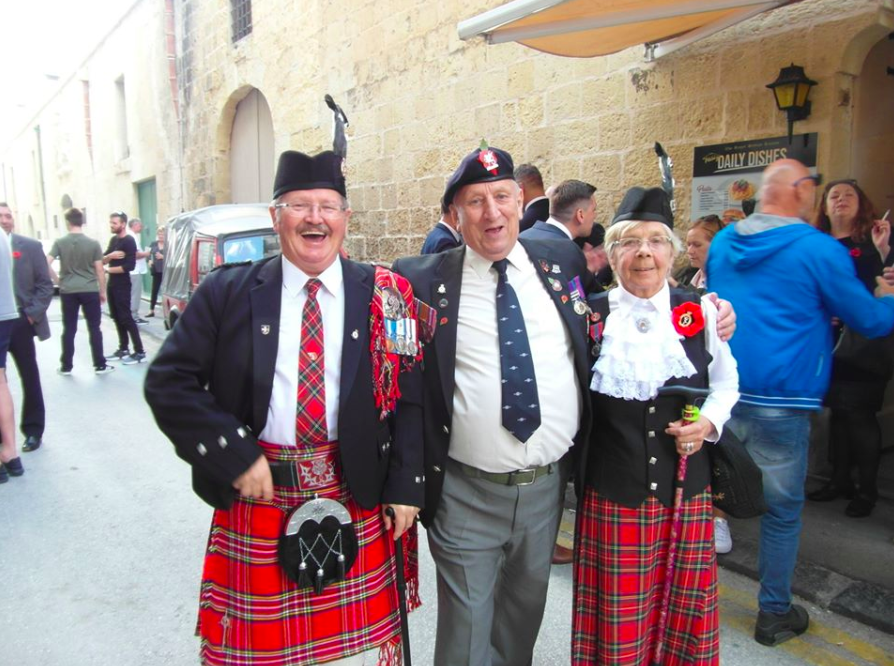
As a youngster in the fifties, my father often took me to his Polish Club in Kensington were I met some very prominent members of the Polish Army including Gen Stanislaw Maczek and General Wladyslaw Anders. At the time, I don’t think I was really interested in meeting these Polish Dignatories although I recall the time that Gen Maczek grabbed me and held me in his arms and told me that he had held me in his arms when I was only a few days old. Its only many years later, that you realise the full impact of the meaning of that first meeting.
I was born on the 29th May 1944. One week before the Invasion of Normandy on the 6th June 1944. The Polish Army did not take part in the initial invasion. Later in June, the Polish Army was moved from Scotland to England. Prior to taking part in the invasion, the Polish Army was gathered and addressed by General Maczek. During his speech, he took me in his arms and held me aloft and shouted out “To jest to, o co my walczymy” or in English “This is what we are fighting for”. I was only a few days old at the time and I obviously have no understanding or memory of the event or its true meaning.
Today, I know and understand the true meaning of why I was held in the arms of the General. He knew that the Polish Army was never going to return to their Motherland in his lifetime and that the only thing worth fighting for was for the youngsters of tomorrow. I was held up as an inspiration to the Polish Forces, to encourage them to fight on and for that, I am forever grateful.
I believe that I am the youngest ever person, throughout the world to have participated and contributed to the overthrow of Nazi Germany.
Somewhere there must have been a photo taken of me in the arms of General Maczek on that occasion?
Author: Leon Zawadzki
Pictures: Leon Zawadzki’s Facebook
Leon Zawadzki is a retired soldier (he served at the Duke of Edinburghs Royal Regiment). In May 2019 he published his autobiography ’Son of a reluctant immigrant’