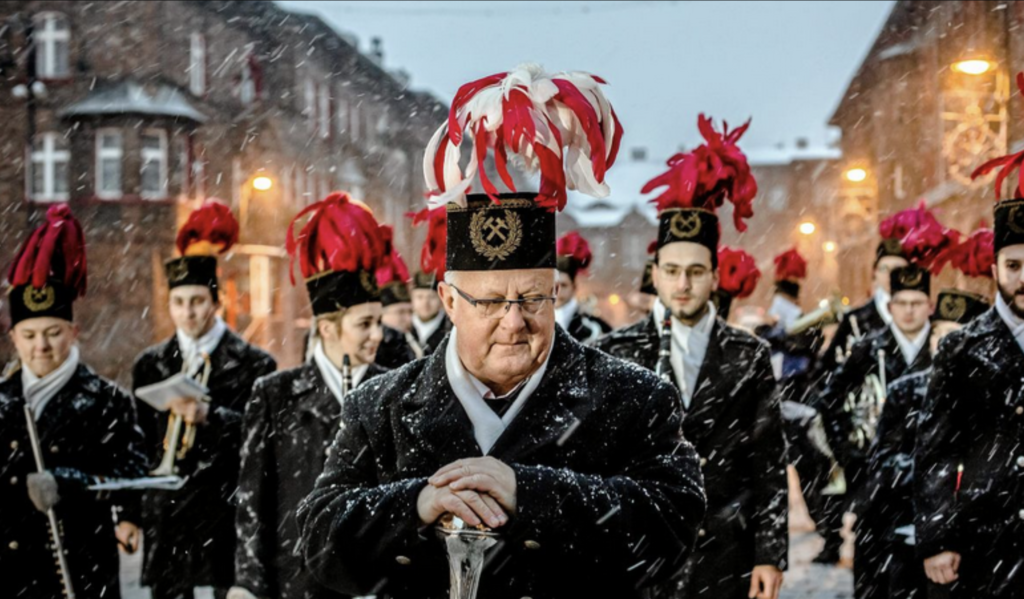
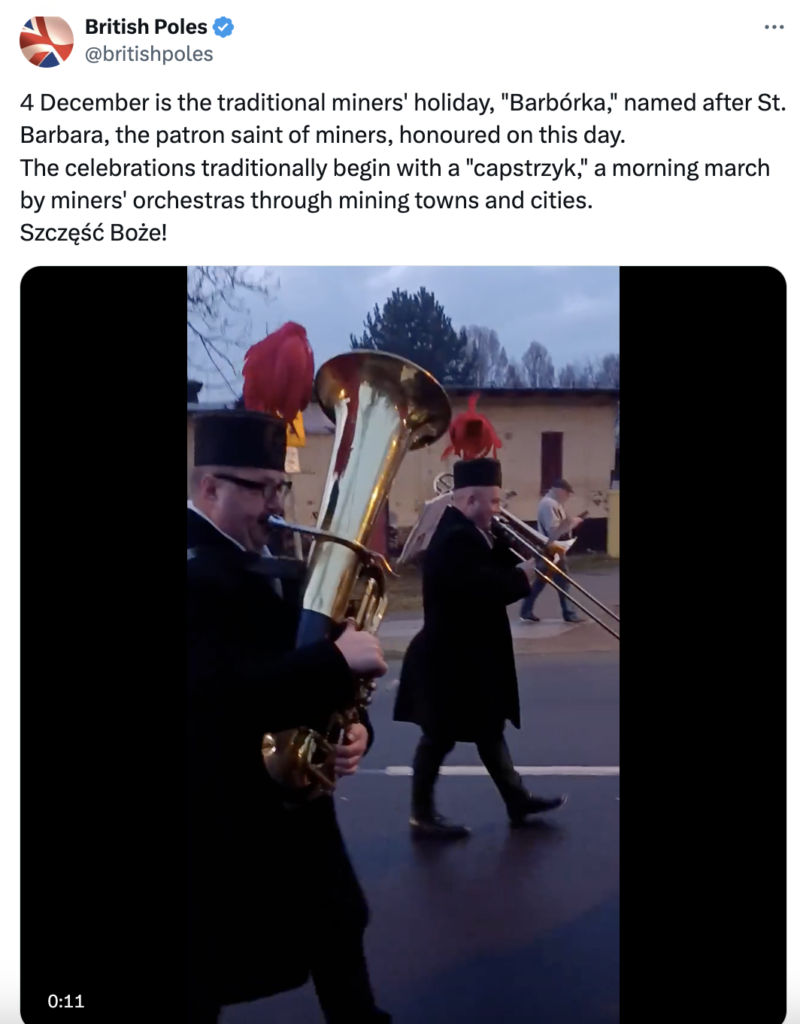
The Feast of Saint Barbara is especially celebrated in Silesia and other parts of southern Poland where miners perceive Barbara as a guardian of their work, protecting them from many daily threats to their lives. The traditional parties that day begin with a morning walk of miner orchestras across miner settlements and city centres. The culmination of the celebrations is a special party exclusively for miners.
On 4 December the Catholic Church commemorates St Barbara. Coming from a pagan family from Heliopolis (located in today’s Lebanon), she was sent to study in Nicomedia in Anatolia. While in that city, she came into contact with Christianity. She was soon baptised and became a devout follower of the new religion. Upon hearing of these events, her father, angered, handed her to be punished by the Roman soldiers.
Barbara was thrown into prison, but she did not renounce her faith. She paid for it with her life: she was executed by beheading with a sword.
In Polish folk customs, Barbara was the protector of a good death. On that day, churches held a special service in her honour, which was part of the solemn character of Advent.
4 December is the traditional miners’ holiday called Barbórka. The name of the holiday comes from the name of St. Barbara.
The traditional parties that day begin with a morning walk of miner orchestras across miner settlements and city centres.
The celebrations feature many traditions brought to Poland by students who had a chance to study at German technical universities. Such parties include a traditional Kneipe, or Knajpa in Polish, a beer party usually reserved exclusively for men in which the gathered sing traditional songs connected to their everyday work or the time of their studies abroad.
Interestingly among those songs are also traditional student songs such as Gaudeamus. The culture of singing is derived from the German-style patriotic student fraternities that were also established by Poles in the XIX century across partitioned Poland and Germany.
One of the party games is called a “jump over the skin” which was a competition for miners to jump over a traditional leather apron that used to be a compulsory part of miners’ everyday protective clothing.
The party usually ends with the proclamation of a so-called “beer anarchy status” which means the official part of the celebration is over and now all present can talk to each other and change seats as they please.
Nowadays in the Polish Silesia the local governments and activists, as well as trade unions discuss a way of preserving those traditions and especially the miner orchestras that are a unique part of such celebrations for Central Europe.
Photo:@poliprztyczek
Source: Polskie Radio
Tomasz Modrzejewski