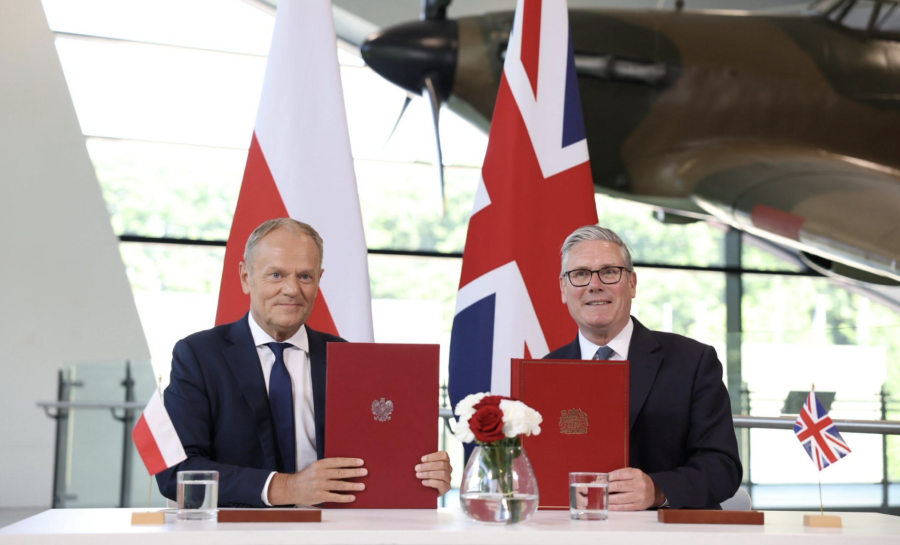
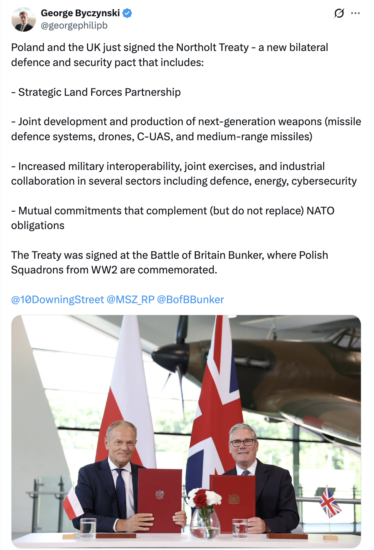
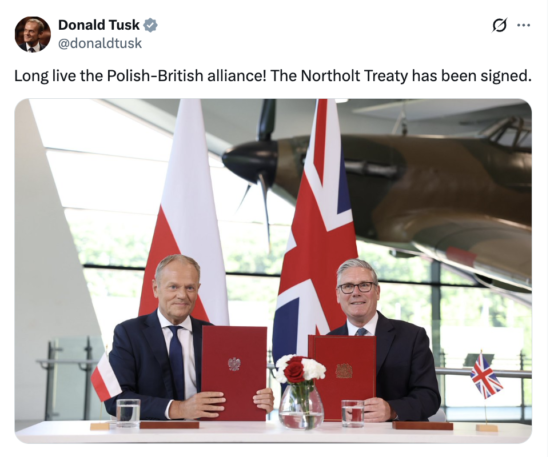
Prime Minister Keir Starmer and Polish Prime Minister Donald Tusk signed a landmark security and defence partnership treaty in west London on Wednesday, marking what both leaders described as a historic new chapter in relations between the United Kingdom and Poland.
The agreement, signed at the historic Battle of Britain Bunker museum, reflects a significant strengthening of military, technological and strategic cooperation between the two NATO allies at a time of growing geopolitical instability across Europe.
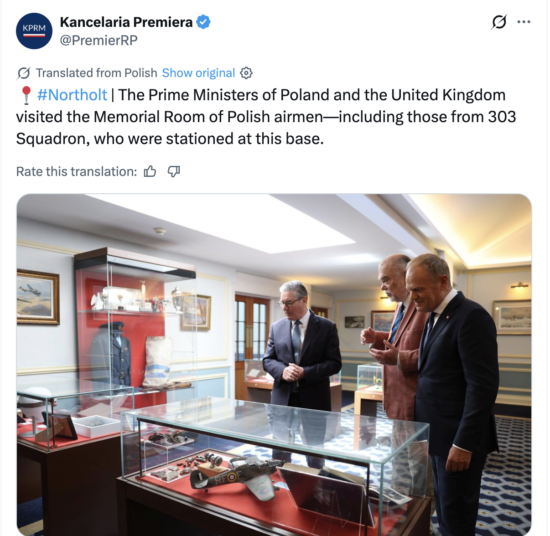
The location of the ceremony carried a strong symbolic meaning. The museum commemorates the Battle of Britain and honours the contribution of Polish fighter pilots who fought alongside British forces during the Second World War. Both leaders referred to this shared history as a foundation for deeper cooperation in the present day.

Speaking after the signing, Starmer described the treaty as a “generational upgrade” in bilateral relations. He emphasised that the United Kingdom and Poland have long stood together in defence of common principles and now face similar security threats in an increasingly uncertain world.
According to the British Prime Minister, the greatest challenge confronting both nations remains the aggressive posture of Russia and the broader instability affecting Europe’s eastern flank. He argued that the new agreement sends a strong international signal about the unity and resilience of democratic allies.
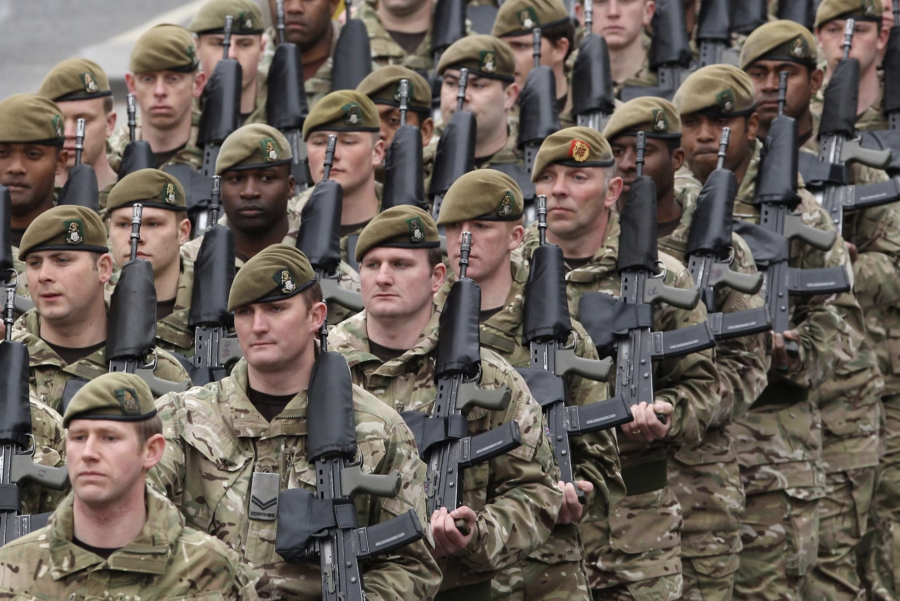
Under the treaty, Britain and Poland are expected to expand joint military training exercises, deepen cooperation in defence manufacturing and increase investment in advanced military technologies. Starmer highlighted plans for closer industrial collaboration, including the development of next-generation defence capabilities and enhanced coordination between the armed forces of both countries.
The agreement also addresses non-traditional security threats, including illegal migration, cyberattacks and disinformation campaigns. British officials stressed that modern security challenges extend far beyond conventional warfare and require close cooperation between trusted partners.
Tusk said the treaty reflects the need for the highest level of cooperation between governments, institutions and societies. He explained that the document clearly defines its core objectives: protecting the territorial security of both countries, defending borders and strengthening resilience against modern threats.
The Polish leader placed particular emphasis on cybersecurity, arguing that technological developments have fundamentally altered the nature of national security. He stated that no country can effectively defend itself against cyber threats alone and that international coordination is now essential.
Tusk also underlined the broader strategic purpose of the agreement, presenting it as a contribution to strengthening NATO and reinforcing European solidarity. He said both governments wanted the alliance to become more practical, more responsive and faster in reacting to emerging crises.
At the same time, he stressed that the treaty was not only about military cooperation, but also about defending shared democratic values, including the rule of law, human rights and democratic governance.
The partnership extends across several sectors beyond defence. Planned initiatives include cooperation against hybrid threats, protection of critical infrastructure, maritime security, energy resilience and health security. Both governments also intend to intensify efforts to combat disinformation and foreign interference operations.
According to a statement from Downing Street, one of the most ambitious aspects of the agreement involves joint production of a new generation of medium-range air defence missiles. The treaty also envisages large-scale military exercises involving British and Polish troops, further development of air and missile defence systems and cooperation on advanced air defence ammunition technologies.

British officials view the pact as part of a broader effort to deepen London’s strategic engagement with European allies following Brexit. The agreement is also seen as reinforcing Britain’s role within European security structures while maintaining strong transatlantic ties with the United States and NATO partners.
For Poland, the treaty represents another important step in expanding defence partnerships with major European powers. Last year, Warsaw signed a similar enhanced cooperation and friendship treaty with France in the city of Nancy, reflecting Poland’s growing diplomatic and military role within Europe.
The new British-Polish partnership demonstrates how European governments are increasingly moving towards closer defence integration in response to evolving threats, particularly since Russia’s invasion of Ukraine. Analysts are likely to view the agreement as part of a wider trend towards stronger regional security arrangements and accelerated military cooperation among NATO members.
Photo: X/@PremierRP
Tomasz Modrzejewski