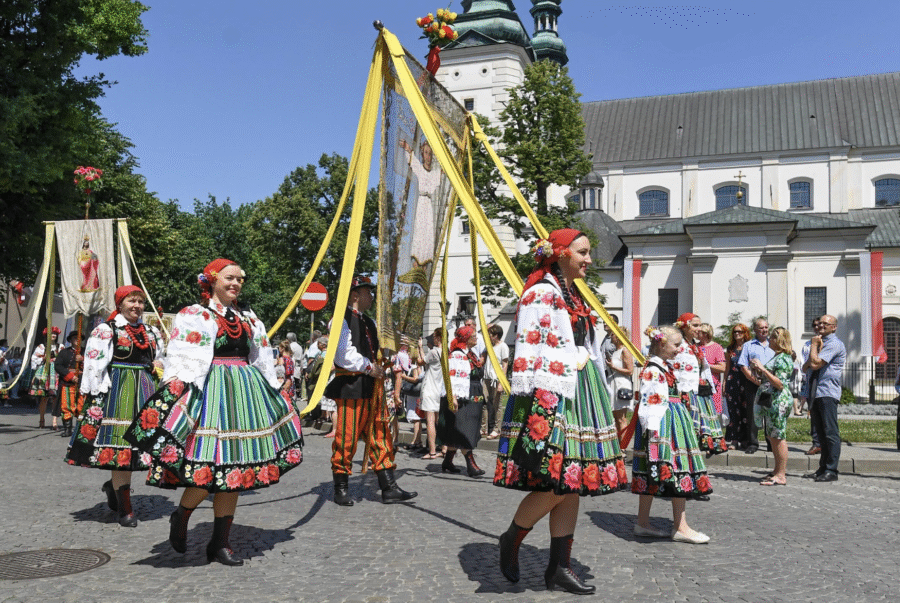
Corpus Christi, the Catholic feast honouring the Blessed Sacrament, is best known for its solemn liturgy and grand processions through the streets, traditionally stopping at four altars. At its heart lies a celebration of the institution of the Eucharist by Jesus at the Last Supper—a cornerstone of Christian faith. In Poland for centuries, the public display of Catholic symbols, especially during the time of the partitions and communist repression, was a powerful sign of unbroken patriotism and a very special relationship between the nation and Catholicism.
The origins of this feast trace back to the 13th century in Belgium. In 1245, Juliana of Cornillon, prioress of the Augustinian convent at Mont Cornillon near Liège, reported a vision of Christ. In it, He called for the establishment of a special feast dedicated solely to the Eucharist. Juliana, later canonised, claimed that the absence of such a celebration left a symbolic “blemish” on the Church’s liturgical calendar.
Her vision initially sparked theological debate, and Juliana herself faced accusations of heresy. Nevertheless, her appeal found a powerful supporter in Bishop Robert of Liège, who, after consulting his cathedral chapter, formally introduced the feast locally in 1246.
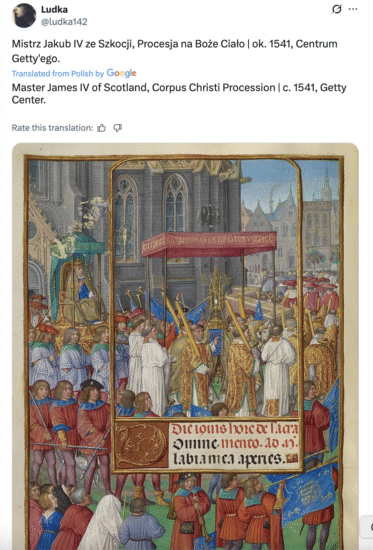
Another public celebration followed in 1251, led by the cathedral archdeacon Jacques Pantaleon, who would go on to become Bishop of Verdun, Patriarch of Jerusalem, and eventually Pope Urban IV.
It was under his papacy that Corpus Christi was extended to the universal Church, securing its place in the liturgical life of Catholicism for centuries to come. What began as a mystical experience in a cloister near Liège would evolve into one of the most beloved and visually striking feasts in the Christian calendar.
The celebration of Corpus Christi in Poland dates back to the early 14th century, with the first recorded observance taking place in the Diocese of Kraków in 1320. By the 1430s, in the Diocese of Płock, hymns were already being sung at the four altars—an integral feature of the traditional procession that remains to this day. As the centuries passed, the feast evolved into one of the most elaborate and symbolically rich expressions of Catholic identity in Poland.
By the 17th century, Corpus Christi processions had become vibrant displays of public piety and social order. Priests and monks, robed in liturgical vestments, processed alongside schoolchildren, guild members, and confraternities bearing candles and the instruments of the Passion.
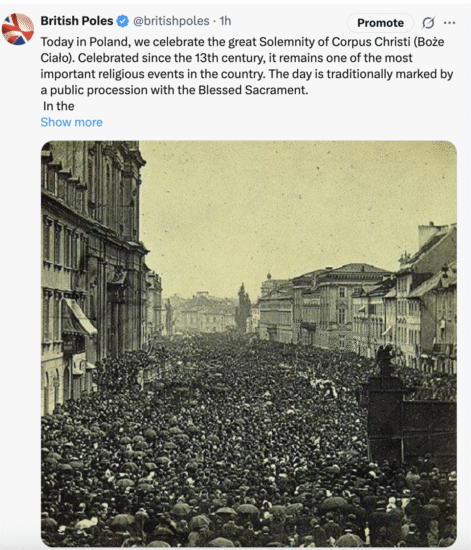
Streets were transformed into sacred corridors, with houses adorned in religious décor. In some places, the faithful dressed as biblical figures and rode in decorated carts, reenacting scenes from Scripture. The processions often concluded with elaborate mystery plays—outdoor dramas that brought Gospel stories and doctrinal truths vividly to life for the faithful.
Since 1967, Poland has used revised liturgical texts for the feast, including updated supplications, Gospel readings, and prayers. Yet many traditional elements remain unchanged. After the principal Mass, the celebrant—flanked by two prominent laymen—carries the monstrance beneath a canopy.
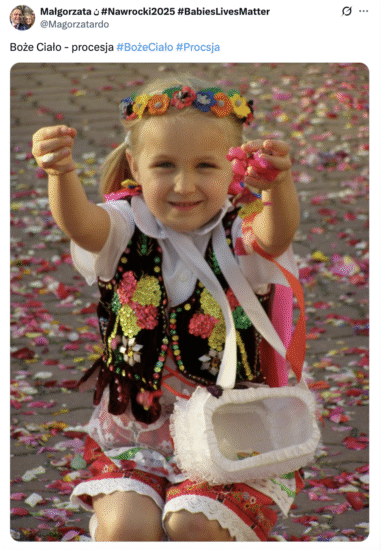
Before him, little girls known as bielanki scatter flower petals, while the congregation follows, chanting Eucharistic hymns and bearing church banners, embroidered cushions with sacred images, and portable altars. Church bells ring out as the Blessed Sacrament is incensed, and the procession pauses at four altars adorned with birch branches and fresh flowers. At each stop, a Gospel passage is proclaimed, linking the journey with the life and mission of Christ.
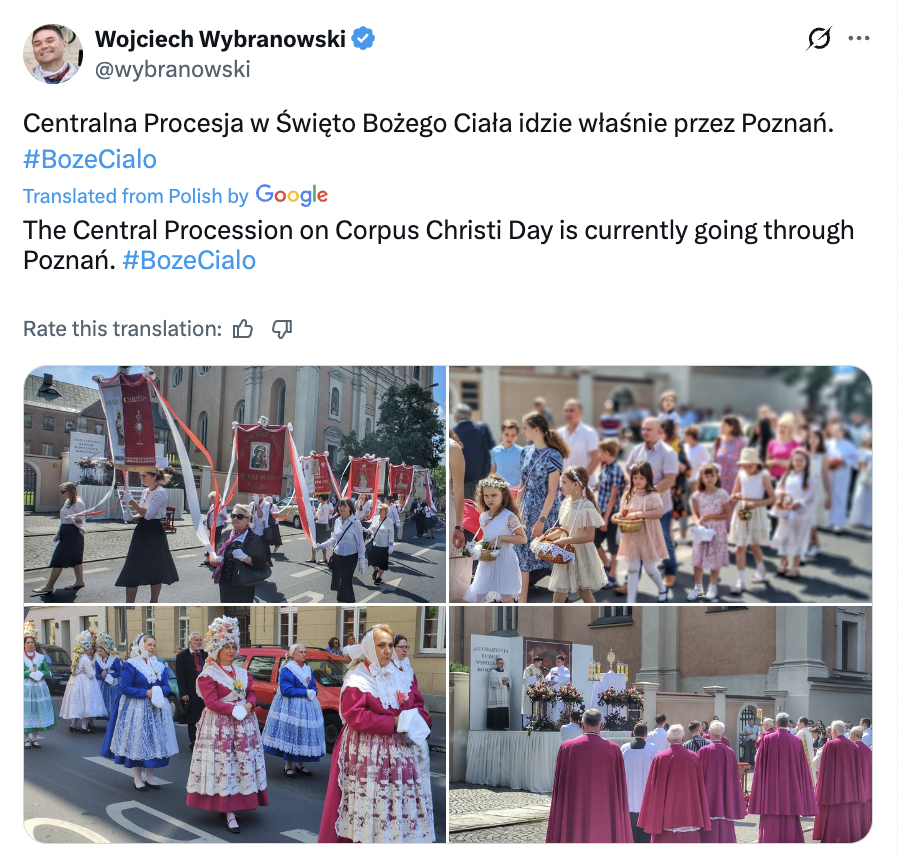
Priests use their sermons to emphasise the link between the Eucharist and the broader mystery of salvation, proclaiming the divinity of Christ and the public role of faith.
The procession was often not just a religious act, but a declaration of belonging to the Church and the message of the Gospel.
In times of political oppression, such as during the partitions of Poland, the feast also served as a patriotic demonstration, with participants asserting their national and religious identity in one breath.
Local customs added layers of folklore to the sacred. In Kraków, the feast once coincided with the Lajkonik parade, commemorating a Tatar raid on the city. Birch branches and flower petals collected after the procession were believed to protect homes from fire, storms, and pests. In rural Poland, Corpus Christi was also a time of whispered fears and superstition: villagers spoke of witches wandering the fields collecting herbs or stealing milk from cows.
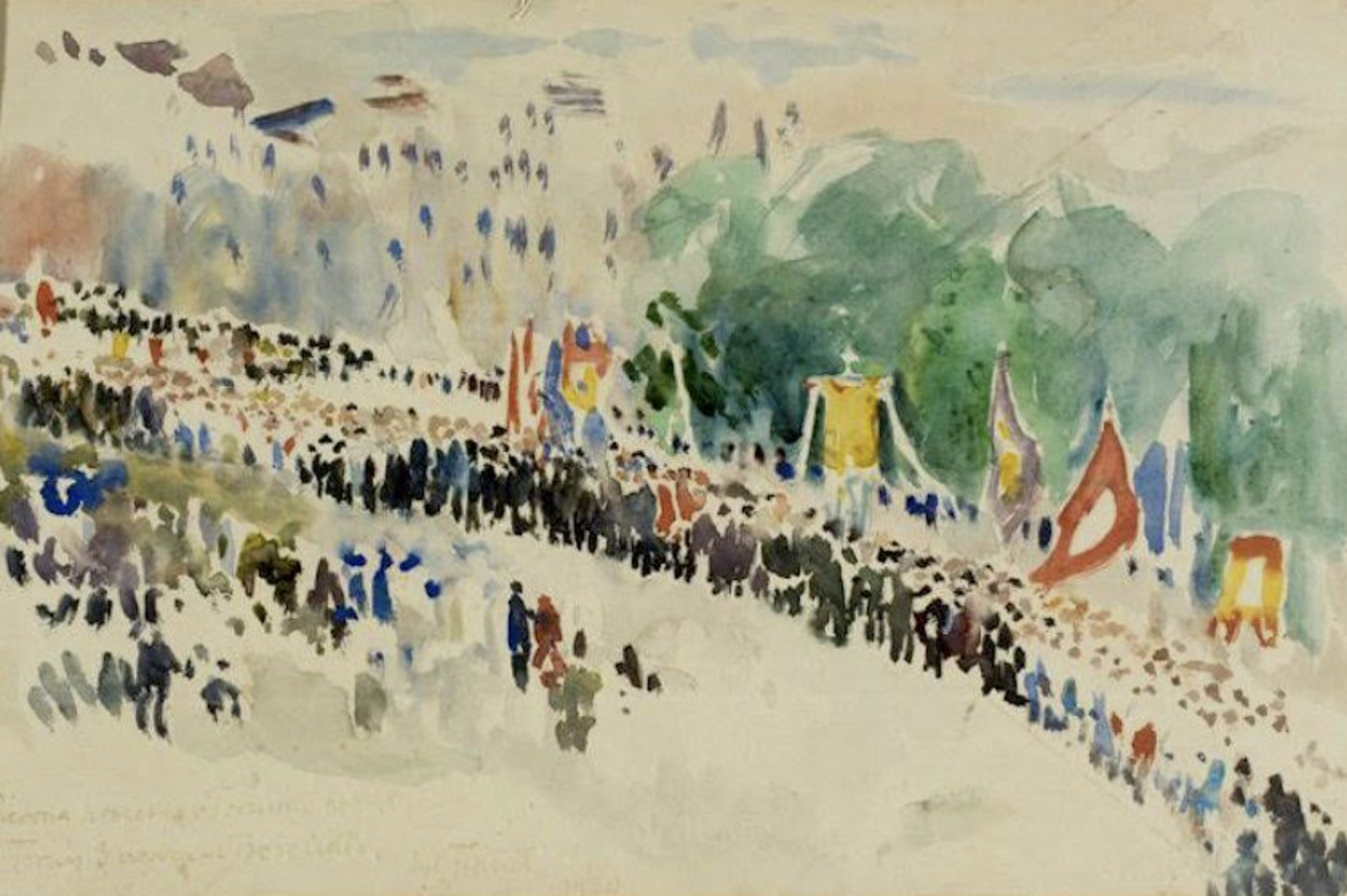
The Corpus Christi Processions were often painted by renowned Polish artists such as Julian Fałat, who pictured the Catholic feast in Toruń.
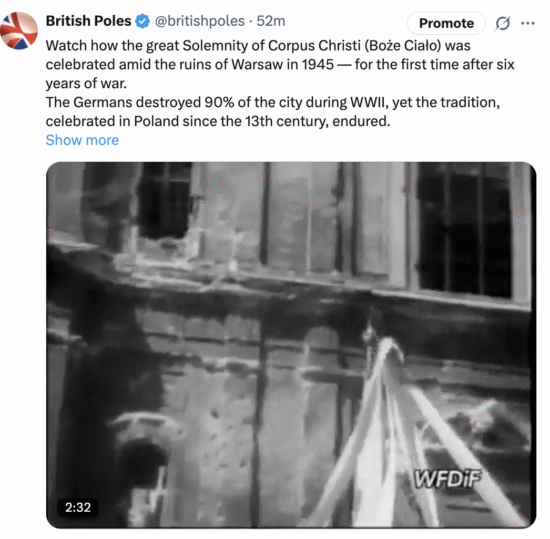
The tradition was kept wherever Poles lived and fought, even during the Polish deployment in Palestine in the World War II.
Corpus Christi in the United Kingdom is celebrated on the Sunday following the Feast of the Holy Trinity. You can learn more about the London procession in our article.
Source: PAI, British Poles
Photo: @DoRzeczy_pl
Tomasz Modrzejewski