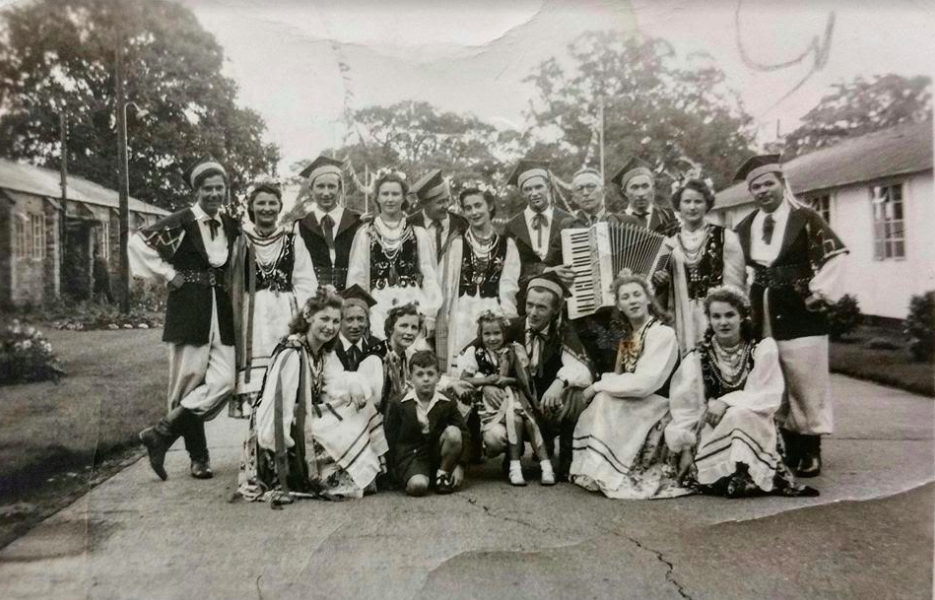
As Europe celebrated the end of the second world war many Poles made a traumatic journey across the war-ravaged continent to reach the safe haven that was Penley where a unique Polish community developed out of Penley Polish hospital. This community flourished in a tiny rural village in Wrexham North Wales for many years after the war. Penley became fondly known as a ‘Little Poland in Wales’ a real ‘Polish Wonderland’.
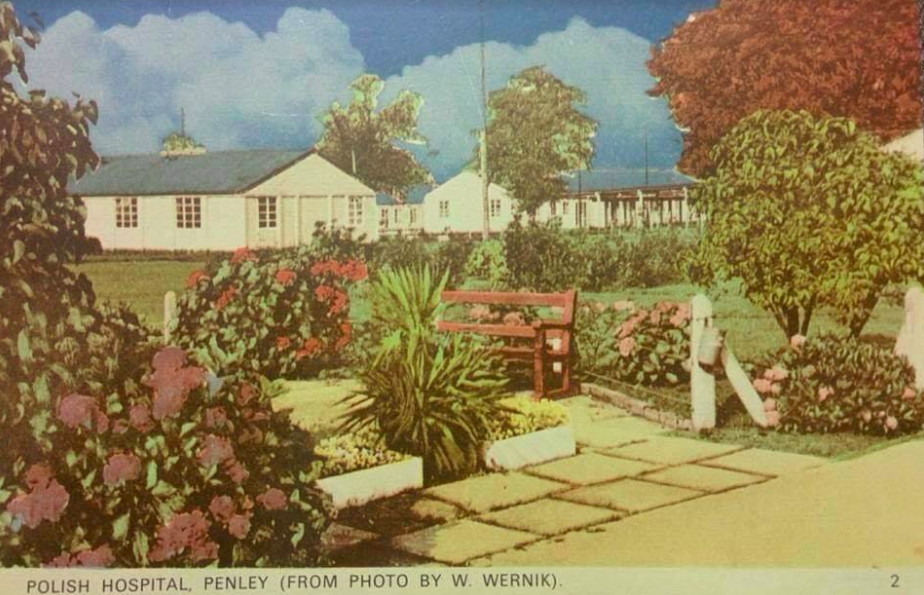
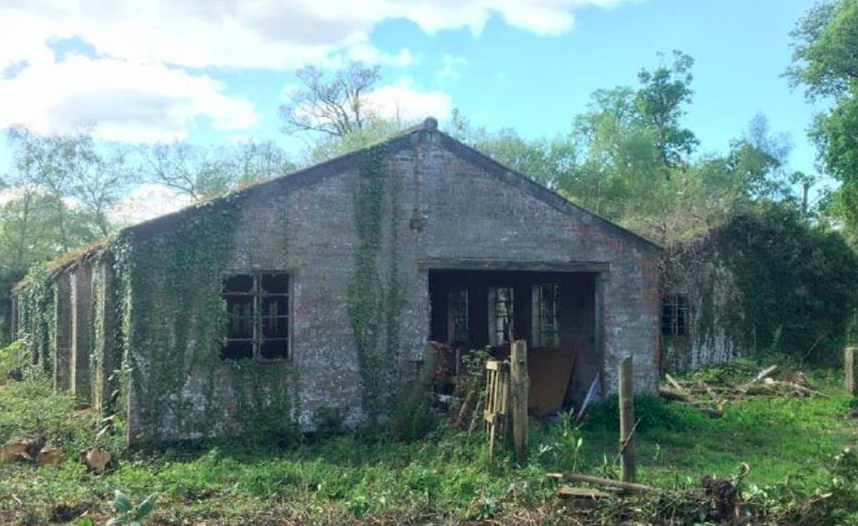
My campaign to try to Preserve Penley Hospital was established in October 2018 following an article in the local newspaper reporting that the remains of the hospital were to be demolished and a new housing development erected in its place. I’d believed what had remained of Penley hospital had been transformed into a business park and the rest of this World War Two hospital had been demolished years ago and cleared for housing and a more modern Penley Community Hospital. I was excited to learn that there are still 21 of the original buildings built by Sir Robert McAlpine that remain standing, all be it in varying stages of decay!
Penley hospital was built at the outbreak of the Second World War when five hospitals were built in the Maelor area on the border of rural North East Wales and England by the US Army in preparation of the expected casualties during Operation Overlord and the D-Day invasions. Penley, Llanerch Panna and Iscoyd Park were destined to be utilised by the Polish military. Iscoyd Park had 1500 beds, LLanerch Panna in Penley 800 beds and Penley 1000 beds. The population of the small rural village of Penley more than tripled overnight and it took some adjustment for the locals to cope with these friendly invaders. Public utilities such as electricity and sewerage were experience for the very first time in the village and new roads built, thanks to the hospital’s construction. The Americans were to treat over 10,000 battle casualties during their 3-year residency before they left in 1943. During the summer of 1946 the Polish military field hospitals arrived in Liverpool by sea from Italy and after a short stay in a transit camp at Ormskirk they were allocated the now somewhat dilapidated abandoned hospitals at Penley and Iscoyd Park.
150,00 Polish service men and women with a total of 250,000 or so displaced Polish remaining in the UK after the war. This huge number of Poles in exile all needed to be accommodated and integrated into local communities and employment. The resettlement act of 1947 disbanded the Polish Armed Forces into the Polish Resettlement Corps and resettlement camps sprung up all around the UK. There were five hospitals around the UK treating the wounded and caring for those with mental illness and tuberculosis. The three Polish hospitals numbered 3, 4 and 11 mustered 2000 beds on the rural Welsh border to treat all the battle-worn displaced Polish servicemen and their families. They had suffered long years of unthinkable persecution and hardship. This is no more evident than in the burials at Penley church where a legacy from the hardships they’d suffered during the Second World war was the tragic high infant mortality rate. 68 Children born to parents who were malnourished and in a poor state of health from the rigours of war are buried in unmarked graves at Penley. The servicemen needed healthcare and hospital treatment that would not be hindered in any way by language or cultural differences. Winston Churchill pledged that these Polish servicemen and their families would be taken care of for as long as was needed.
In its first year Penley hospital had 1,000 patients and 1,000 staff and went on to reach a population of 2,500, almost wholly staffed by Polish Doctors and Nurses. Many of the staff were with the hospital at its beginnings in Persia, when thousands of Poles were released from Russian concentration camps to form the basis of the Polish army and had journeyed through the Middle East, North Africa and Italy and had seen great loss of life at Monte Cassino.
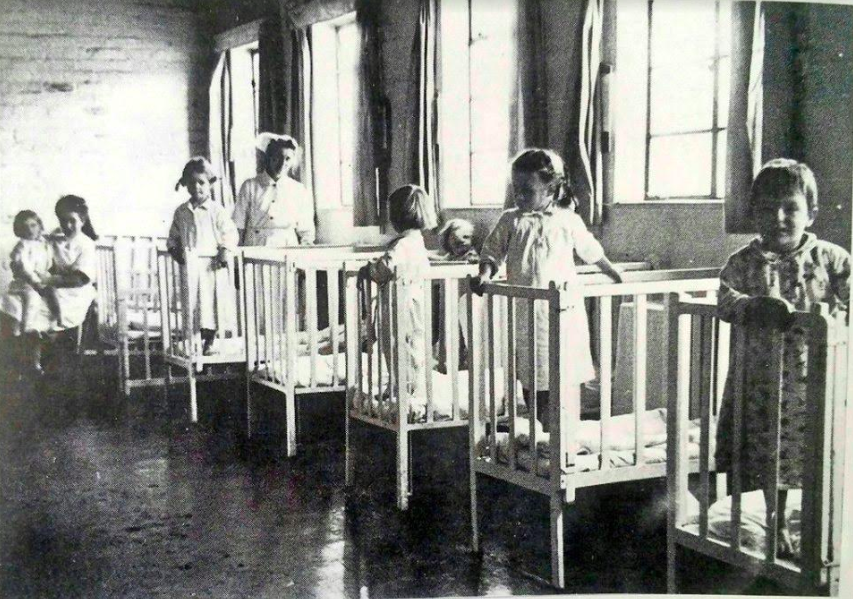
There was only a handful of British staff who learned what was called Pidgeon Polish, so they could communicate in the Polish language to meet their patient’s needs. There were 30 wards initially at Penley Hospital, each containing 30 beds. All the staff had to be accommodated on site and married quarters were also provided. Along with all the facilities you would naturally expect in a fully functioning hospital like its own operating theatre etc there were also three recreation rooms with a fully equipped band and Polish costumes for the theatre group.
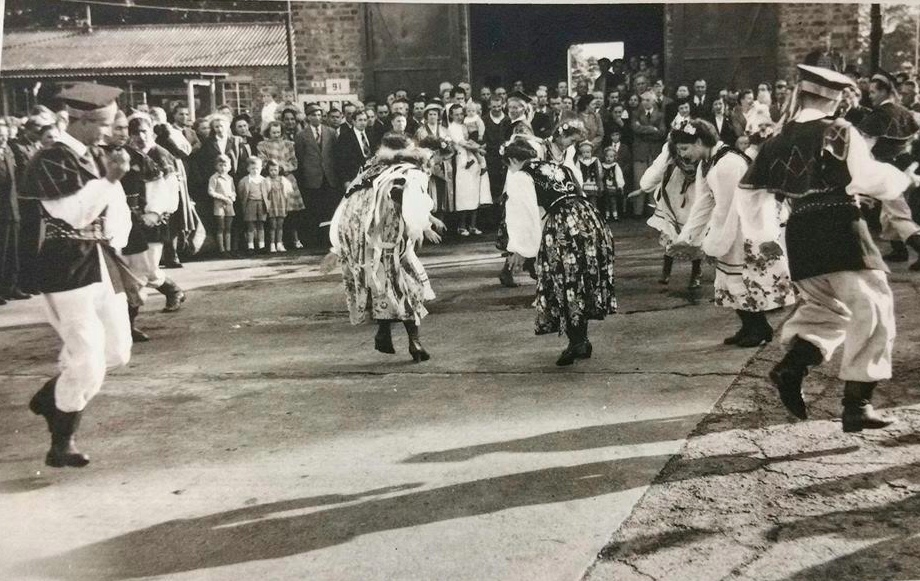
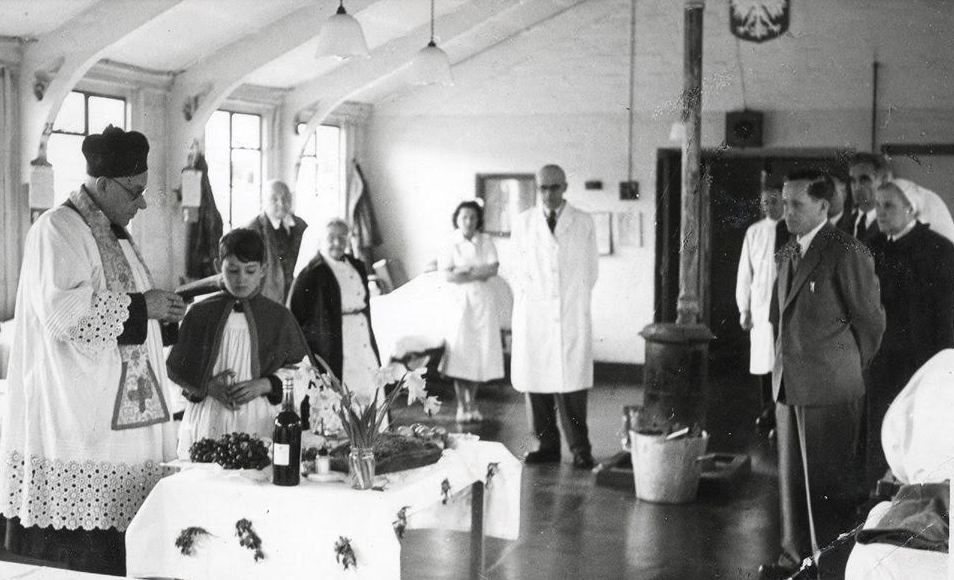
Social and sporting activities were encouraged, Penley had two snooker / billiard rooms, a tennis court and a large gymnasium. Penley also had football, tennis, archery and netball teams. There was a full-sized cinema at Penley supplied by the Army Cinema Corporation which played Polish films. The chapel at Penley housed an icon of Our Lady of Ostrobrama made by Polish servicemen in No 8. Military hospital in Egypt during 1943 from army issue coffee tins. The Bishop also used to visit the Penley hospital wards too and magnificent processions used to be held when seven altars were built around the hospital grounds for the annual religious celebration of Corpus Christi.
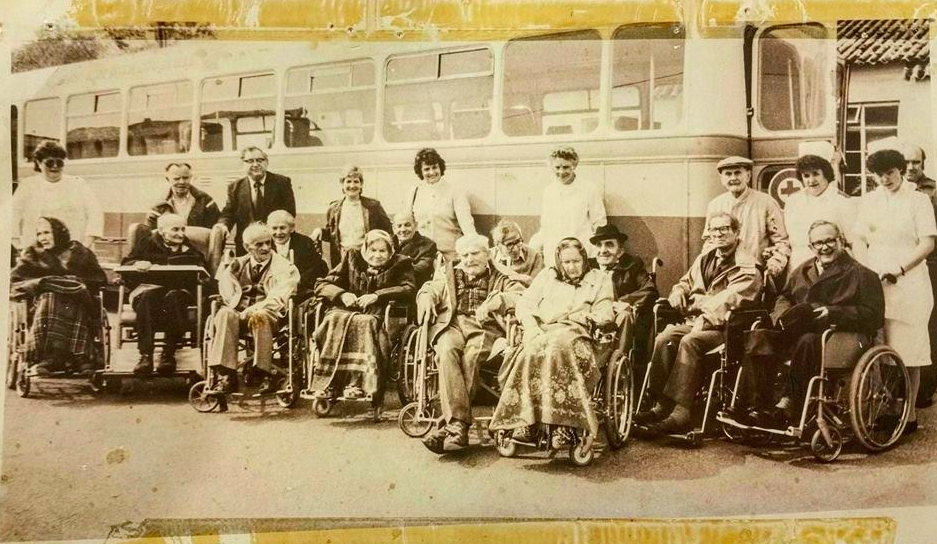
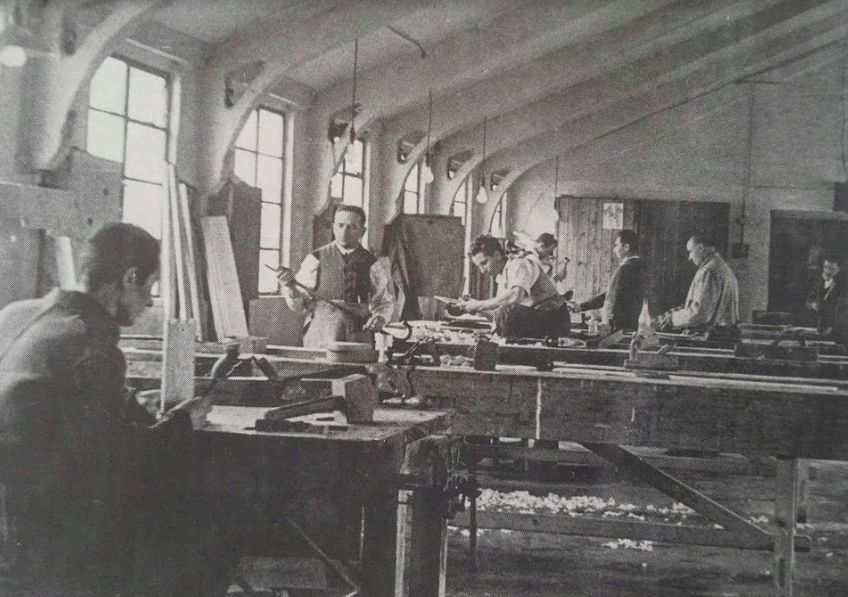
The shop at Penley provided patients and staff with Polish and English produce. There was a nursery to help prepare the children for the local school. The gardens at Penley were magnificent and maintained by a team of gardeners. All maintenance at Penley was completed by onsite maintenance departments. There were a fleet of Ambulances, with drivers and mechanics and even 20 garages for motor propelled tricycle’s for disabled patients. Penley was very forward thinking and ahead of its time with the level of care it provided for its patients with onsite physiotherapy and occupational therapy departments. A league of friends was established at the hospital to provide patients with comforts, presents on birthdays, Easter and Christmas, parties, fetes and regular day trips by coach and minibus were provided. There were numerous rehabilitation workshops at Penley to give the veterans the adequate skills they needed to obtain employment when they left the hospital including weaving, shoe repairs, carpentry.
Later there was a social club and dancehall added, a library which had 8000 Polish books and the hospital had it’s very own radio station. Penley aimed to help patients overcome the bad parts of their lives and every effort was made to cater for their needs. There were visits from traditional Polish choirs, musical groups, entertainers and social organisations were commonplace.
Nursing Sister at Penley Irena Szenderowicz from 1946 – 1982 recalled many prominent and important people that came through Penley. Writers Ferdynand Goetel, Sergiusz, Janusz Dolega – Kowalewski, Beata Obertynska and Teodozja Lisiewicz. Politicians and freedom fighters Dr Adam Pragier, Dr Kaplicki last Mayor of Krakow, Dr Stanislaw Ostrowski the last Mayor of Lwow and Bronislaw Skalak President of the Polish Government in Exile in London, Jan Pilsudski activist of the Polish Socialist Party and the brother of Marshal Jozef Pilsudski also Miss Stanislawa Paleolog founder and commandant of women’s police in Poland.
The three hospitals were amalgamated into one site at Penley Polish hospital in 1956 as many of the younger ex service men had learnt to speak English and were able to be treated in local hospitals and as a direct result of better treatment for Tuberculosis TB. By the 1960’s the hospital took on a new role as a geriatric long stay hospital for the elderly and chronically sick Polish ex-combatants and families and in the 1970’s there were only 131 beds.
The last seven wards at Penley were named after famous Polish people: Sikorski, Paderewski, Pilsudski, Chopin, Kopernik, Curie – Sklodowska and Anders. General Anders commanded the Polish Second Corps to whom the No.3 Polish hospital was attached. General Anders along with many outstanding military men passed through Penley hospital, Walerian Czuma, Przewlocki, Galica, Sochaczewski, Dr Salicki and Narbutt-Luczynski. In the 1990’s there was one ward left while the rest of Penley hospital deteriorated and sadly crumbled around it.
The patients that remained in Penley hospital had made Penley their home since the war and the staff were mostly their family. Patients also came from all over the UK as other hospitals closed. Many of these patients were former soldiers living alone without family to care for them in their declining years and they had not learnt to speak English. Some had never managed to
be rehabilitated and integrated into the local community due to their complex health needs, language barrier and the trauma they had suffered. Many patients had harrowing stories to tell of their journey to the safety of Penley, stories of atrocity and the horror of concentration camps, of torture, starvation the loss of loved ones and their homes, they were maimed and mentally scarred for life.
The hospital staff and patients created a really unique community, maintaining their own Polish identity and culture yet more and more becoming part of local Welsh life in Penley and Wrexham. It was an island community like a pre-war Poland living in a small rural village in Wrexham.
In the 56 years that Penley hospital was open over 2000 babies were born there and they treated over 26,000 Polish patients.
Penley hospital for me holds fond childhood memories of such a happy place with beautiful gardens blooming with scented roses and sunny garden fetes. My mum Kay Lewis was a staff nurse at Penley hospital spanning 3 decades.
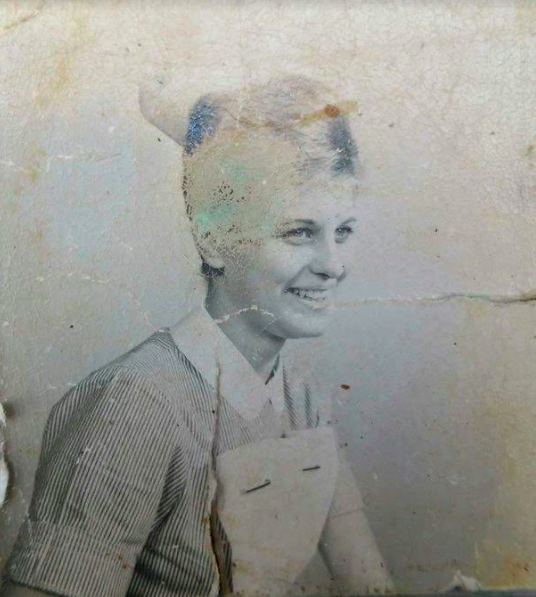
I vividly remember running down the never-ending corridors between the wards to greet my mum on Sikorski ward, running not only eager to see my lovely mum, but because I sensed that the corridors were filled with so much untold history which scared me a little. Looking through the windows all around I could also sense the sadness that comes when you know a place is not quite what it once was as it slowly fell into disrepair as wards were closed. At the end of those corridors were the homely wards with the dedicated staff teams, what Penley lacked in architectural beauty it made up for with a warm friendly atmosphere. The Veterans were so lovely to me, greeting me with a kiss to my hand and a smile. As a child I didn’t wonder why patients were missing limbs or why I could not understand what they were saying as I was Welsh like my mum. I remember always being in awe of the Polish Prince that I met there, he was educated in Britain before the war, he lived out his life at Penley and mum took me to pay respects at his simple grave in Wrexham cemetery many years later as she would for the many patients she nursed. Great care and attention was taken by the staff team to uphold all Polish traditions and culture. I remember the traditional Polish foods that were served at Penley, mum would try to make them for us at home too. Mum used to get me painting eggs at Easter for the traditional Easter table and Swieconka basket. Every summer as a family we would travel to Penrhos in Pwllelli North Wales a smaller sister hospital to Penley, here mum would check in on past patients from Penley and catch up with the nursing staff, some were Nuns who had previously worked at Penley. Everybody became part of an extended lifelong family.
Today people still visit Penley on their own pilgrimage searching for where they were born, grew up and attended local schools, where their Parents, Grandparents, Aunts and Uncles worked and lived or were patients at Penley. It is important when these visits of remembrance occur that there is somewhere for people to pause and remember, to pay their respects, but there is no monument at Penley, nothing to tell visitors about this important site. However, there are still hospital buildings remaining, hidden and overgrown and inaccessible to the public and once they are gone they are gone. I fear that all that will remain is a sign saying ‘Here once stood a site of major local, national and international importance during WW2 and beyond.’ Amongst the remaining buildings include the social club and the doctors living quarters, I met people recently who remember living in these
buildings and dancing in the social club. Preserve Penley Hospital’s dream is to see a heritage centre at Penley with a permanent exhibition, research and education facilities to tell the story of Penley Hospital, World War Two and the journey that the patients and staff took to reach this place of peace in rural North Wales far away from the trauma of war. To not do this would be a real missed opportunity to be able to tell and preserve these stories of Penley’s legacy here in North Wales and to celebrate our Welsh and Polish heritage. These buildings are the last remaining of their kind in the whole of Wales.
To help raise awareness about the Penley hospital campaign a fabulous second exhibition at Wrexham museum was held during the summer, the first had been when the hospital closed.
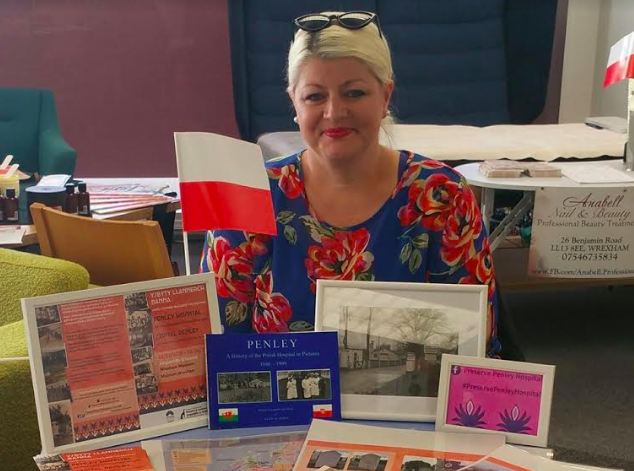
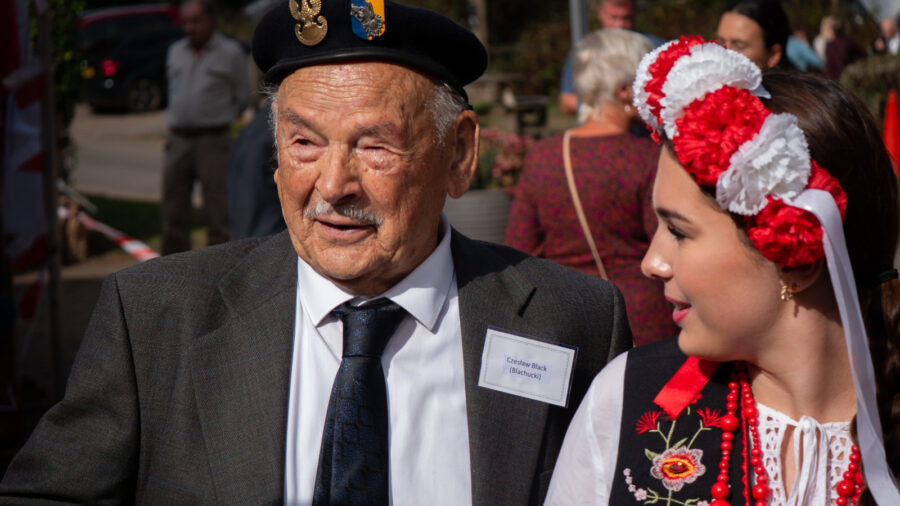
A reunion of the Penley hospital community was held, attended by the Mayor of Wrexham and people came from far and wide to meet with old friends and colleagues, many people having been born in Penley. It was Iovely to meet the people who had been born at Penley and many of my mums’ colleagues. A theme throughout the day was the amount of people who told me what a wonderful place it was to work and to grow up in, such happy memories they had of Penley. So many romances also blossomed at Penley and there were many marriages that took place.
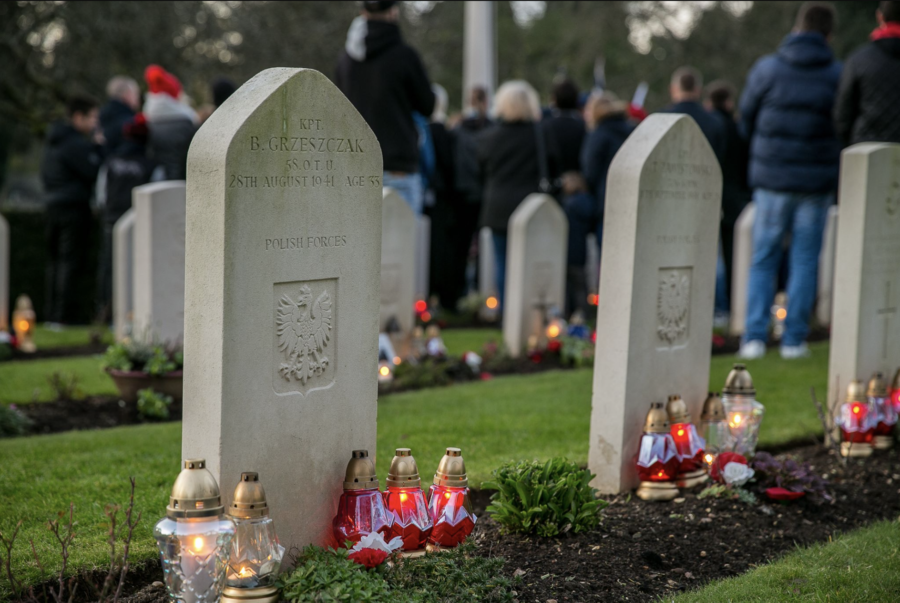
Due to Penley Polish hospital the cemetery in Wrexham has the second largest concentration of Polish burials in the UK, 1350 counted so far up until 2004 and records show that virtually all those burials are from Penley and Iscoyd Park. It is not difficult to find the many graves from Penley Polish hospital as a lot of the headstones have Penley inscribed on them, you don’t have to look hard to find a grave with Monte Cassino inscribed on it. These Veterans’ graves are falling into disrepair unfortunately as there are no family to maintain them and it is a sad sight to see. Some of the notable Polish military graves were exhumed and they were returned to rest in Poland. Former Mayor of Krakow Lt. Col. Mieczyslaw Kaplicki and Jan Pilsudski are buried at Wrexham. My lovely mum is now buried amongst her patients at the cemetery, I like to think that she is still caring for them. There are 40 Polish Common Wealth War Graves at the cemetery too which are well maintained. The helpful cemetery staff can help you find the resting place of a loved one and will even guide you to it, they have painstakingly listed all the Polish burials and there is detailed information on the CWGC burials. There are also information boards about the Polish community in Wrexham in the chapel. The cemetery regularly hold guided tours of the Polish War Graves, the next tour is on Sunday 3rd November.
In 1989 a monument – triptych was erected at the cemetery by the Penley Hospital community.

‘In memory of Polish soldiers and their families to whom the return to a free Poland was not given, who rest here and in other cemeteries in Wales’ – it is written in English, Polish and Welsh.
If you are interested in the campaign to Preserve Penley Hospital please contact me through Facebook at Preserve Penley Hospital and on Twitter @PreservePenley. This is a platform to raise awareness and a place for the Penley Hospital community to utilise to share memories and regain contact with old friends.
Author: Claire Lewis, Head of Preserve Penley Hospital Campaign and a daughter of a Staff Nurse who nursed at Penley over 3 decades
Pictures: From Claire Lewis archive
Bibliography: „Penley – A History of the Polish Hospital in Pictures” – Keith B. Jones, „The Spirit of Penley” – Pratt Derrick & Shirley