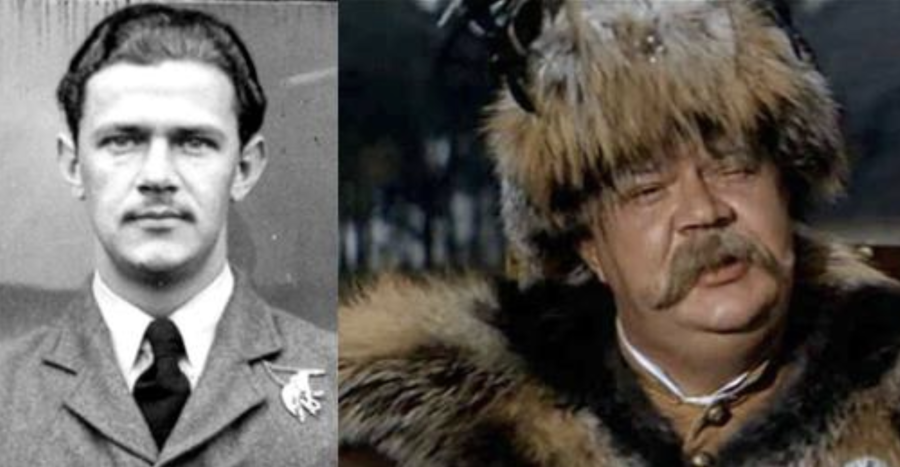
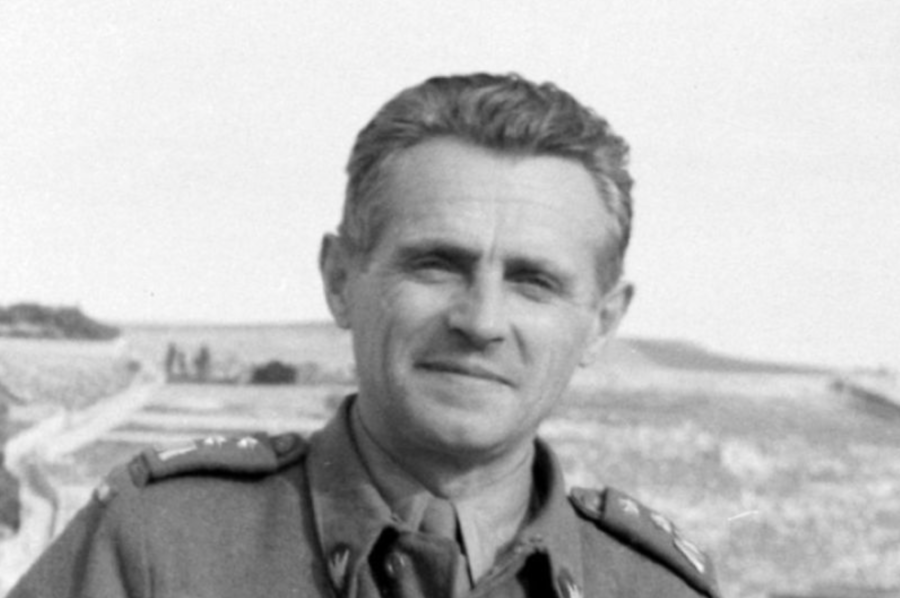
One of the most colourful commanders of the Polish underground, Michał Tokarzewski-Karaszewicz, was a man of striking contradictions. A legionary of the First World War, a general at just thirty-one, the founder and first commander of the underground Service for Poland’s Victory (Służba Zwycięstwu Polski, SZP), he was also a Freemason and an ordained priest of the Liberal Catholic Church, rooted in theosophical thought. Few figures of modern Polish history combined military discipline, political imagination and spiritual heterodoxy in such an unusual way.
Michał Tokarzewski was born on 5 January 1893 in Lwów (then ruled by Austria-Hungary). Long before the outbreak of the First World War, he became involved in clandestine independence activities. Under the nom de guerre “Karasiewicz”, he joined the Riflemen’s Association and the Union of Active Struggle, organisations preparing the cadres of a future Polish army. In 1913, he took part in the officers’ course in Stróża near Limanowa, which trained many of the leaders of the Polish state.

From August 1914, Tokarzewski served in the Polish Legions. After the 1917 Oath Crisis, he was interned by the Austro-Hungarian authorities. Once released, he threw himself into underground work within the Polish Military Organisation (POW), operating not only on Polish lands but also deep inside Bolshevik Russia, including Moscow itself.
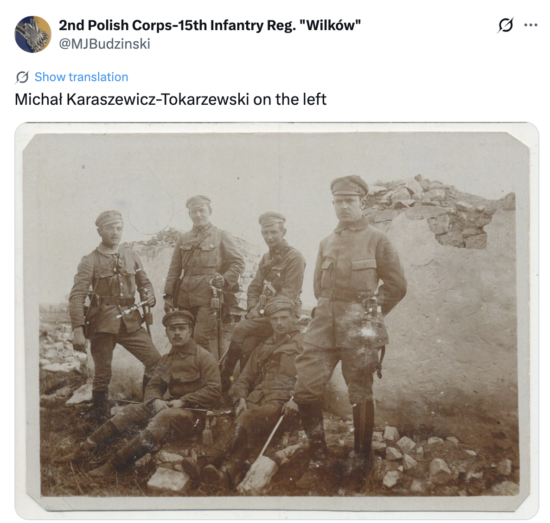
In November 1918, he joined the newly restored Polish Army and fought first against Ukrainian forces and then in the Polish–Bolshevik War. During the inter-war years, he pursued a steady military career, crowned in 1924 by promotion to the rank of general, making him one of the youngest generals in the Polish Army.

During the September campaign of 1939, he commanded an operational group within the Pomorze Army. On 27 September 1939, as Warsaw was capitulating, he was appointed commander of the newly formed Service for Poland’s Victory, the first nationwide resistance organisation.

The authorisation issued by General Juliusz Rómmel, commander of the Warsaw Army Group, stated:
“The authority entrusted to me by the Commander-in-Chief, in agreement with the Government, to conduct the war against the invader throughout the entire territory of the State, I hereby pass to Brigadier General Michał Tokarzewski-Karaszewicz, tasking him with continuing the struggle for independence and the integrity of Poland’s borders.”
Stefan Korboński later recalled Tokarzewski as a man whose manner was more political than strictly military, at ease in political debate, brimming with initiative, and not always easy for his colleagues to restrain.
After the underground transformed into the Union of Armed Struggle (ZWZ), Tokarzewski was appointed commander of the Lwów area. Crossing into Soviet-occupied territory, he was arrested by the NKVD and sent first to a labour camp and later, once his identity was uncovered, to the notorious Lubyanka prison in Moscow.

His release came only after the signing of the Sikorski–Mayski Agreement in July 1941. He was given command of the 6th Lwów Infantry Division in the forming Polish Army in the USSR, and later became deputy commander of the Polish Army in the East under General Władysław Anders. From August 1944, he commanded the Polish III Corps. As a committed Piłsudskiite, he was often sidelined when senior posts in the Polish Armed Forces in the West were allocated.

After the war, Tokarzewski remained in exile in the United Kingdom, taking an active part in the life of the Polish émigré community. Like many former generals, he struggled financially and worked as a manual labourer in a radio-equipment factory to make ends meet.
Alongside his military and political activity ran a deep engagement with esoteric and spiritual movements. He was an active Freemason and a priest of the Liberal Catholic Church, which combined Christian symbolism with theosophical beliefs and the conviction that contact with the supernatural was possible.

Tokarzewski shared a faith common among many independence activists of his generation in the exceptional spiritual power of the Polish nation, an idea echoed earlier by figures such as Juliusz Słowacki and Stanisław Wyspiański.
Theosophical circles, including Tokarzewski-Karaszewicz himself, were also involved in creating one of the largest intelligence networks of the post-war Polish émigré community.

Michał Tokarzewski-Karaszewicz died in Casablanca on 22 May 1964.
The posthumous fate of Michał Tokarzewski-Karaszewicz proved almost as complex as his life. In 1992, at the request of the Consul General of the Republic of Poland in London, the general’s remains were exhumed from Brompton Cemetery without informing the local veteran circles, the caretakers of the grave, or his last life companion, Antonina Płońska.
The exhumation itself caused damage to the tomb, and what added to the confusion was the fact that the same grave also contained the remains of the general’s cousin, Anna Tokarzewska-Karaszewicz, buried there in 1956.
The event long remained shrouded in uncertainty. Historian Bartosz Piasecki contacted the Brompton Cemetery administration, the National Archives at Kew, and the Polish Embassy in London, yet none could initially provide information about the exhumation.
Ultimately, Piasecki and a group of London-based history enthusiasts – Bartosz Piasecki, Tomasz Muskus and Magdalena Kamińska, funded the renovation of the London grave themselves. In theory, this left the general with two burial sites: the original London grave and the new resting place at Powązki Military Cemetery in Warsaw, where he was reburied with full military honours in 1992 in the Home Army Headquarters quarter. You cen read more about the renovation and exhumation here (in Polish).

The reality, however, was more intricate. As established by historian Adam Pszczółkowski the archive records confirm that the exhumation, cremation, and transfer of the ashes to Poland were entirely legal and duly recorded in Brompton’s burial register, now held at the National Archives.
Those same records make clear that the cousin’s remains were not disturbed. Beyond London and Powązki Military Cemetery, the general’s name appears on four further graves: in Montreal (Mont Royal Cemetery) in Canada, in Drohobych, and at two sites in Warsaw’s Powązki Civil Cemetery.
The official Catholic military funeral at Powązki in 1992 sat uneasily with the fact noticed by only a few observers that Tokarzewski-Karaszewicz had been both a Freemason and a bishop of a theosophical church.
Persistent rumours suggest that his ashes may have been divided: one part interred during the Catholic ceremony at Powązki Military Cemetery, another during a theosophical rite at Powązki Civil Cemetery.
Visitors to plot 155b-4-13 in the civil section of Powązki Cemetery could find a neglected grave with different signs: one with the general’s name, others commemorating Wanda Dynowska, Jadwiga Karaś, and Ewelina “Wela” Karaś his courier, arrested with him by the NKVD in 1940.
Who, if anyone, actually lies there remains unresolved. To close the circle, the overgrown grave was eventually cleared thanks to the initiative of the granddaughter of Irena Brzostowska, an understated gesture in a story where symbolism, memory and mystery still intertwine.
Source: Muzeum AK w Krakowie, Adam A. Pszczółkowski
Photo: X/@WBH_2016
Tomasz Modrzejewski