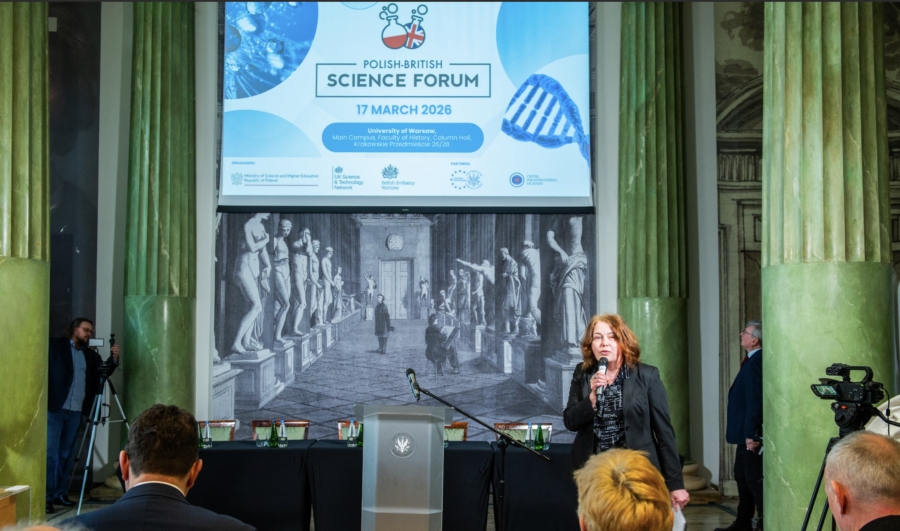
During a recent British-Polish Tech Forum in London, there was an exciting round table workshop titled “Challenges in cooperation with Poland. How does hybrid work in software houses in Poland affect the decision to choose a vendor?”. Participants were representatives of Polish software houses and Kerry Hallard – CEO of Global Sourcing Association. Bob Poole – Chief Sales Officer of TenderHut, and the discussion moderator summarized the key findings of the meeting.
COVID forced most of us to work from home, but how are companies viewing the future as we emerge from those times? Whilst some leaders of companies say they need workers in the office full time to foster a collaborative environment, others are letting many employees work from anywhere.
Many organisations are finding, however, that the ideal solution is a compromise utilising a hybrid schedule in which employees roughly split their workweeks between the home and office. These schedules allow for the right mix of flexibility and engagement that makes employees happier, more productive, and more creative, resulting in higher-quality work.
With the establishment in infrastructure, hybrid working is now an efficient method of interaction. Companies have made tangible investments in networks, VPN’s and cloud based systems that enable remote connectivity.
Psychological well-being is be a growing issue. We see how isolation and mostly hybrid/remote work affect many people (work burnout, etc.). It’s not everybody’s issue, but long-term hybrid work tends to decrease our internal company relationships, decrease our social skills, affect creative ideas, and last but not least, affect our own mental health.
Outsourcing is predicted to continue to grow as it offers flexibility, agility, and speed to delivery and helps companies save capex in favour of opex and of course, vendors bring additional expertise and creativity. Companies see value in IT partnerships, and those already engaged in hybrid working themselves are seeing the benefits.
No longer is nearshoring just about saving costs, it’s now an essential part of how companies augment their skills, gain expertise and drive innovative solutions.
Personally, I encourage British companies to work with Polish specialists because I know you can rely on their professionalism. With the possibility of remote and hybrid working, the distance between countries is even less important than it was before the pandemic.
However, as the UK is outside the European Union now and contracts with foreign workers can be complicated, it is better to cooperate with an experienced, well-known company that will provide the relevant staff and will take responsibility for the legal aspect of the cooperation or even the project as a whole.
Author: Nel Badowska