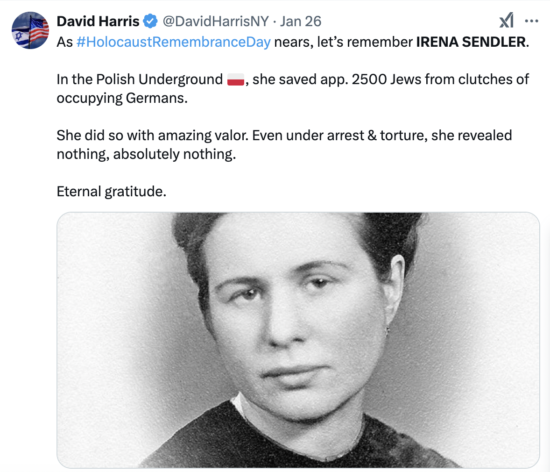
During World War 2, Irena Sendler saved 2,500 Jewish children from the Warsaw Ghetto, transporting them out and finding a safe place in Polish families, orphanages and convents.

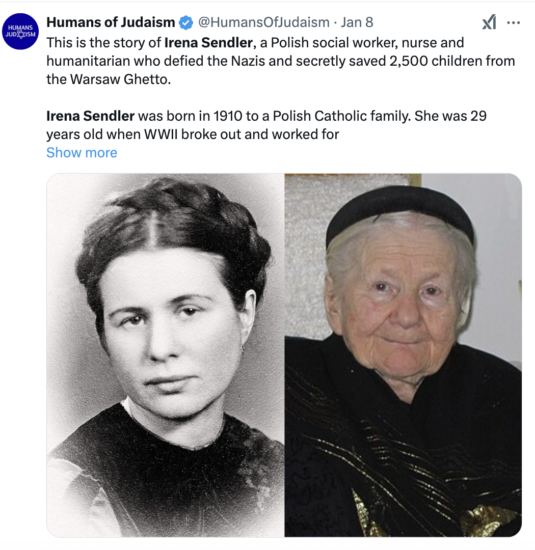
Irena Stanisława Sendler, née Krzyżanowska, was born on 15 February 1910 in Otwock, near Warsaw, into a patriotic family. Her great-grandfather, Karol Grzybowski, fought in the January Uprising, for which he was exiled to Siberia.
Irena was very active in helping all people in need during her studies in pedagogy and law at the University of Warsaw.
As early as the autumn of 1939, after the Germans imposed a ban on helping the Jewish poor, Irena and ten trusted colleagues organised secret cells to help the Jews at the Social Welfare Department of the Warsaw City Board.
During World War 2, she was a Polish charity worker and social activist. She is a well-known Polish heroine for saving Jewish children from the Warsaw Ghetto.
After the creation of the Warsaw ghetto in the autumn of 1940, Irena Sendler was determined to help the separated Jewish community. To get into the ghetto, she obtained a special nurse’s pass.
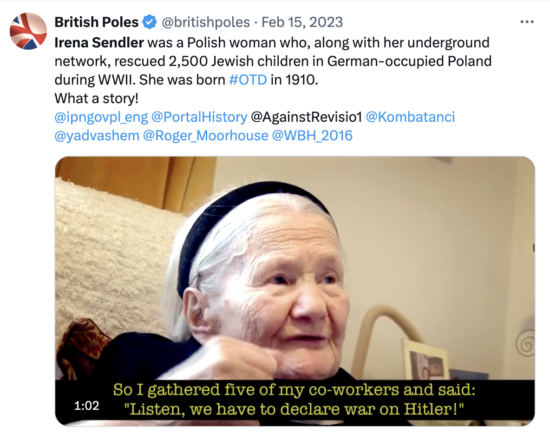
Sendler, together with her trusted colleagues, arranged false documents for Jews locked in the ghetto, by which they created safer Polish identities for them.
She cooperated with the Polish Underground State, especially its special organisation called ‘Żegota’ (Council to Aid Jews by the Polish Government in Exile operating from London, UK) and Jewish partisan organisations. Her role was to transport Jewish children and workers to the ‘Aryan’ side of the city divided by the Ghetto’s walls. From then on, she operated under the codename “Jolanta”.
Together with her trusted liaison officers, she began smuggling children outside the Getto and the city, choosing one of several predetermined escape routes. These included trams, lorries of sanitary services, a nearby court building or the cellars of tenement houses neighbouring the ghetto walls. Small children, previously put to sleep with sleeping pills, were often taken out of the ghetto in baskets, sacks or boxes.
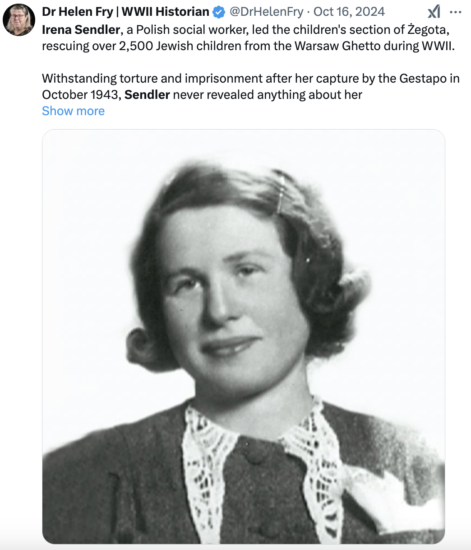
She was arrested and detained by the Germans in Pawiak prison where she was questioned and tortured. However, she continued her actions saving around 2,500 children from the Warsaw Ghetto.
Her actions were unknown to the world until the 1990s. The first time Sendler’s heroism became public was through an American theatre play entitled ‘Life in a Jar’. It was inspired by Norman Conard, a teacher from Uniontown, Kansas.
The school play, based on the life story of Irena Sendler, was performed more than 200 times across the United States and Poland. It received a great deal of publicity in the American media and eventually led to the creation of the ‘Life in a Jar’ foundation, which promotes Irena Sendler’s heritage.
In 1965, however, she was awarded the Medal of the Righteous Among the Nations, and in 1991 she was granted honorary citizenship of Israel.
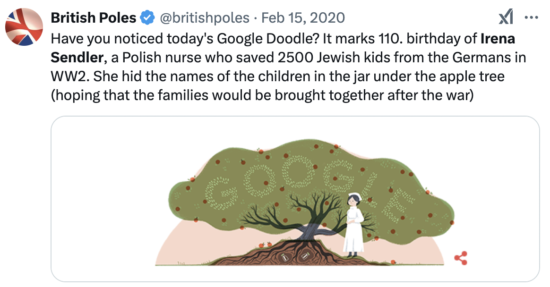
Irena Sendler was awarded the Order of the White Eagle and the Commander’s Cross with Star of the Order of Polonia Restituta by the President of Poland.
Irena Sendler passed away on 12 May 2008 in Warsaw, at the age of 98.
Source: Dzieje.pl
Photo: @HumansofJudaism
Tomasz Modrzejewski