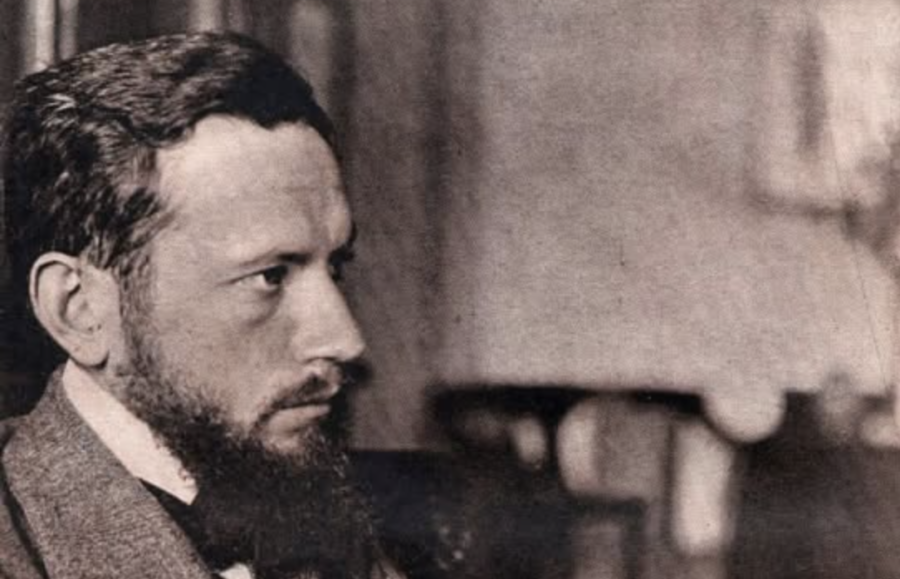
Few writers have shaped modern Polish poetry as profoundly as Leopold Staff. Celebrated for his versatility, intellectual depth, and remarkable longevity as an artist, Staff became a literary figure whose work connected several distinct eras of Polish culture. Throughout a career that spanned more than half a century, he continuously reinvented his poetic voice while remaining committed to timeless questions about beauty, morality, faith, and human existence.
Born in Lviv in 1878, when the city formed part of the Austro-Hungarian Empire, Staff grew up in a multicultural environment that exposed him to a wide range of intellectual influences. After completing his secondary education, he enrolled at the University of Lviv, where he studied law before turning his attention to philosophy and Romance languages. These academic interests would later leave a lasting mark on his writing, which frequently drew upon classical thought, European literature, and philosophical reflection.
During his student years, Staff became involved in literary and cultural circles. He contributed to academic publications and formed friendships with writers and critics who would remain important companions throughout his life. At the turn of the twentieth century, he emerged as one of the most promising young poets in Poland.
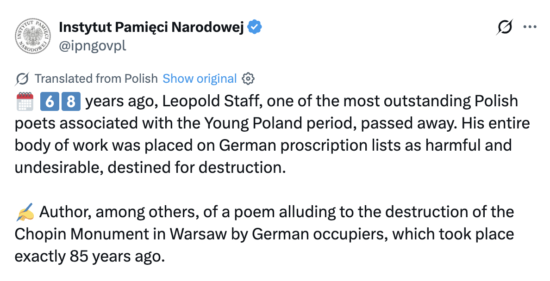
Staff made his literary debut in 1901 with Dreams of Power (Sny o potędze), a collection that reflected the spirit of the Young Poland movement. Influenced by modernist ideas and the philosophy of Friedrich Nietzsche, his early poems explored themes of strength, self-development, and the pursuit of greatness.
Yet Staff never remained confined to a single artistic programme. As his career progressed, his poetry gradually moved away from youthful rebellion towards a more balanced and reflective vision of life. Classical harmony, ethical responsibility, and admiration for the natural world became increasingly important elements of his work.
What distinguished Staff from many of his contemporaries was his ability to adapt without losing his individuality. Each phase of his career introduced new perspectives while preserving the clarity and craftsmanship that characterised his writing from the beginning.
Throughout his poetry, Staff consistently returned to questions about the meaning of human existence. Ancient mythology, Christian spirituality, love, memory, and the passing of time all found a place in his work. Rather than embracing extremes, he often sought equilibrium, believing that art should reveal order amid life’s uncertainties.
His fascination with classical culture helped establish him as one of the foremost representatives of twentieth-century Polish classicism. However, his poetry never felt detached or purely intellectual. Many of his most admired works combine philosophical reflection with vivid imagery drawn from everyday experience and the natural landscape.
This balance between thought and emotion made his writing accessible to a broad readership while earning the respect of literary critics.
In addition to writing poetry and drama, Staff played a significant role as a translator. His linguistic abilities enabled him to introduce Polish readers to works from several European traditions. He translated texts from languages including German, French, Italian, Latin, and Greek, helping to broaden the horizons of Polish literary culture.
Among the authors who influenced him most deeply was Friedrich Nietzsche, whose writings Staff helped make available to Polish audiences. At the same time, he was fascinated by the spiritual legacy of Saint Francis of Assisi, demonstrating the wide range of intellectual currents that shaped his worldview.
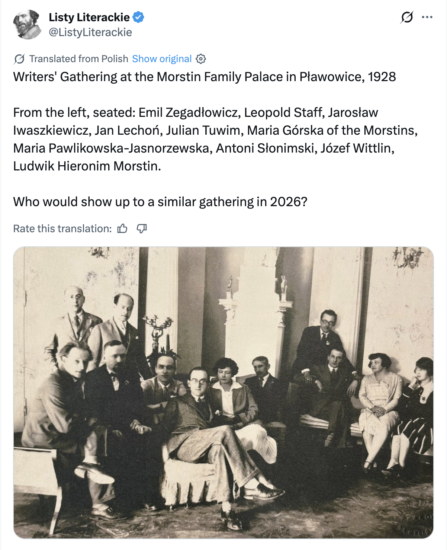
By the interwar period, Staff had become one of Poland’s most respected literary figures. Younger poets frequently looked to him as a mentor and example. Members of the influential Skamander group, including Julian Tuwim and his contemporaries, regarded Staff as an important source of inspiration.
His standing within Polish cultural life continued to grow. He participated in major literary organisations and played an active role in shaping the country’s intellectual landscape. Despite changing political circumstances and artistic fashions, his reputation remained remarkably strong.
The dramatic events of the twentieth century inevitably left their mark on Staff’s life and work. He witnessed two world wars, the rebirth of an independent Polish state, and the profound social transformations that followed. During these difficult decades, his poetry evolved once again, becoming more contemplative and restrained.
Even in later life, Staff remained creatively active. His final collections reveal a poet still searching for new forms of expression while reflecting on mortality, memory, and the passage of history. The maturity of these works demonstrated his extraordinary ability to develop artistically across generations.
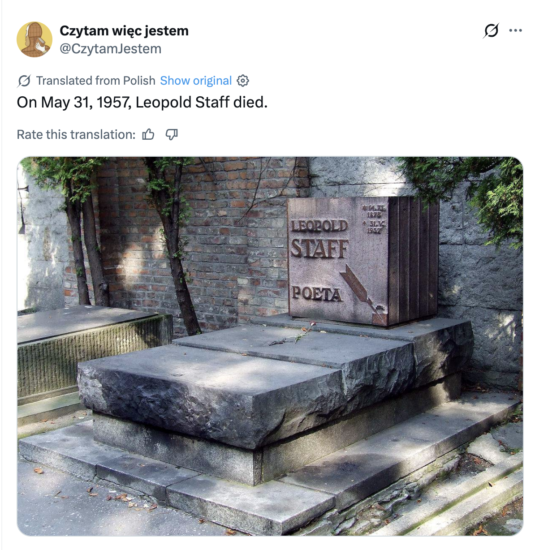
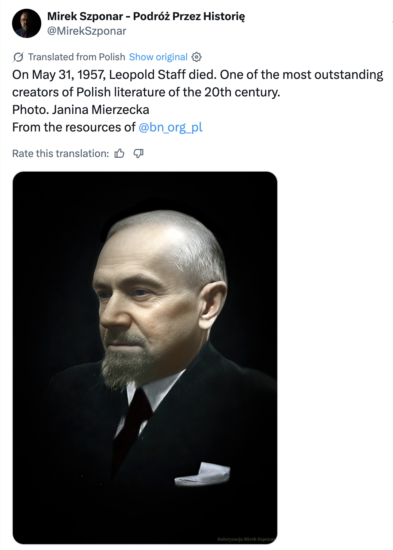
Leopold Staff died in 1957, leaving behind one of the richest and most influential bodies of work in Polish literature. His career stretched from the age of symbolism and modernism to the post-war era, making him a unique witness to the cultural transformations of the twentieth century.
Today, he is remembered not only as a gifted poet but also as a writer who successfully united diverse intellectual traditions. Classical and modern, philosophical and personal, reflective and accessible, his poetry continues to resonate with readers seeking insight into the enduring complexities of human life.
For many scholars and readers alike, Staff remains a symbol of artistic balance and cultural continuity, an author whose voice transcended literary movements and historical upheavals to achieve lasting significance.
Photo: X/@ipngovpl
Tomasz Modrzejewski