England and Wales’ water blind spot: Public underestimate their daily water use by more than 100 litres.
- Leading scientists and experts join forces to back the launch of a four-year campaign to challenge how society thinks about and uses water
- England faces a projected daily water shortfall of five billion litres by 2055, as climate change and rising demand put supplies under increasing pressure
- Just one in 10 (11%) adults in England and Wales understand how much water they use, while more than half (53%) believe water shortages are only short term.
Only one in 10 (11%) adults in England and Wales understand how much water they use, new research reveals, as a major new initiative launches to transform how society thinks about and uses water.
The Let’s Save Water campaign comes as scientists, environmental experts and industry leaders warn of increasing pressures on water resources driven by climate change, population growth and rising demand. It aims to build awareness of the precious and finite nature of water while encouraging simple behaviour changes – from taking shorter showers to fixing dripping taps – to reduce water use today and help protect supplies for future generations.
Despite the UK’s reputation for rain, water availability is becoming less predictable. In England, there is a projected potential daily water shortfall of five billion litres by 2055, equivalent to 25 million people running the tap for 20 minutes. In Wales, changing weather patterns are also expected to affect how much water is available across the year, especially during hot weather and at peak times.
The new data, from a YouGov survey of 3,121 adults across England and Wales, highlights a gap between perception and reality when it comes to individual water use. On average, people believe they use around 30 litres a day, compared to actual usage of around 140 litres. In other words, people use almost five times as much water as they think.
Awareness of the potential water shortfall is also limited. More than half (53%) believe shortages are only short-term, such as during hot weather, and around a third (34%) feel their individual water use makes little difference at a national level.
Experts are stressing that this is a shared, system-wide challenge, rather than an individual one, and that clearer understanding can help people play a part alongside wider action already underway.
Water Minister Emma Hardy said:
“Water is one of our most precious resources and in many parts of England we are using it faster than it can naturally be replenished.
“Droughts are becoming longer and more common due to climate change, exacerbating water shortages that can have a devastating impact on our environment.
“Meeting this challenge will require action from all of us. The Government is taking decisive measures to secure supplies, including supporting the construction of nine new reservoirs, but other simple behaviour changes can make a real difference.”
Mary Lewis, Head of Natural Resource Management Policy from Natural Resources Wales, explains the specific challenge for Wales:
“While Wales may be known for its rainfall, climate change and shifting weather patterns means water may not always be reliable all year-round in the future.
“We’ve seen in recent years the strain this has placed on our natural environment with pressure on wildlife, habitats and waterways, as well as communities.
“Every drop we waste at home or work, is less water to keep our rivers and wildlife healthy. By using water wisely, we can all play a part in protecting these vital resources for the future.”
Professor Lizzie Kendon, Strategic Head of Climate Processes and Projections at the Met Office, explained:
“More rainfall doesn’t automatically mean more usable water. Climate change is driving increasingly extreme weather patterns, with wetter winters, drier summers, and more intense bursts of rainfall. When rain falls on dry, hardened ground, much of it cannot soak into the soil where it is most valuable, instead it runs off and is being lost. This growing imbalance is placing mounting pressure on our water resources, and there is an urgent need for action. By acting now and embracing small, everyday changes, we can help safeguard this precious resource for future generations.”
Water companies are investing billions to upgrade infrastructure, including fixing leaks and developing new sources such as reservoirs. However, these measures alone will not fully close the gap between the projected supply and demand, and experts agree that action across society will also be needed.
Chris Walters, Chief Executive at Ofwat, said:
„Investment in new infrastructure and reducing leaks is essential, but lasting resilience also depends on changing our relationship with water and becoming stewards of our natural environment. This campaign is about helping people understand that water is a finite resource and that valuing it more highly today will help secure reliable supplies and protect the environment for the long term.”
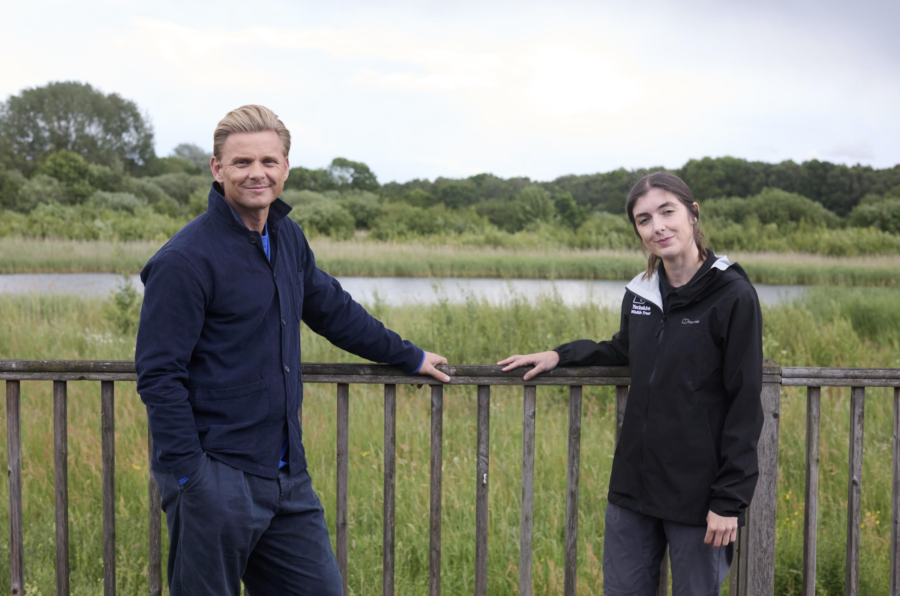
A short film, Water: A Shared Challenge with Jeff Brazier, accompanies the launch of what will be a four-year campaign across England and Wales. Travelling across the two countries, Jeff visits leading experts to explore the growing threat of water scarcity and what the projected daily shortfall means for people and nature. In Cardiff, he speaks with Professor Ian Walker, Head of Psychology at Swansea University, about public attitudes and behaviours around water use; in Exeter, Professor Lizzie Kendon from the Met Office explains how climate change is shaping England’s water future; and in Yorkshire, Clare Cashon, Project Officer at the Yorkshire Wildlife Trust, highlights the impact of water shortages on habitats and wildlife.
Reflecting on his experience, presenter Jeff Brazier said:
“Making this film changed the way I think about water. Like many people, I’ve always assumed it would be there when I needed it, but after speaking to the experts, it’s clear we can’t afford to take it for granted. What struck me most is that water scarcity isn’t just about having less water coming out of our taps. It’s about the impact on rivers, wildlife, communities, and the future resilience of our country. The challenge is bigger and more immediate than I realised, but the good news is that the choices we make every day can make a real difference. If we all start paying a bit more attention to how we use water, together we can help to make sure there’s enough water for future generations.”
To find out more, search Let’s Save Water or visit letssavewater.com
provided an estimate, 65% underestimated usage by more than 100L. While a large proportion of respondents selected “don’t know,” meaning a strict majority claim cannot be made for the full sample, the overall pattern indicates that the public tends to significantly underestimate their daily water use.
About Let’s Save Water
In England and Wales today, climate change and growing demand are affecting how much water is reliably available for homes, businesses and the environment. We need to save water now, and for future generations. Let’s Save Water is a four-year campaign backed by regulators and water companies to help everyone across England and Wales use less water through small, everyday changes.