Based on a biography, The Safe House intertwines the director’s personal experiences with excerpts from a biography and the French history of 1968.
In an interview with Tygodnik Przegląd, Lionel Baier spoke about his Polish roots and how he traces back his own heritage through his filmography. This time, in The Safe House, which premiered during the recent edition of Berlinale, the Swiss director goes back to the events of May ’68 in Paris, which in a way echo the tensions in Poland from the same year, too.
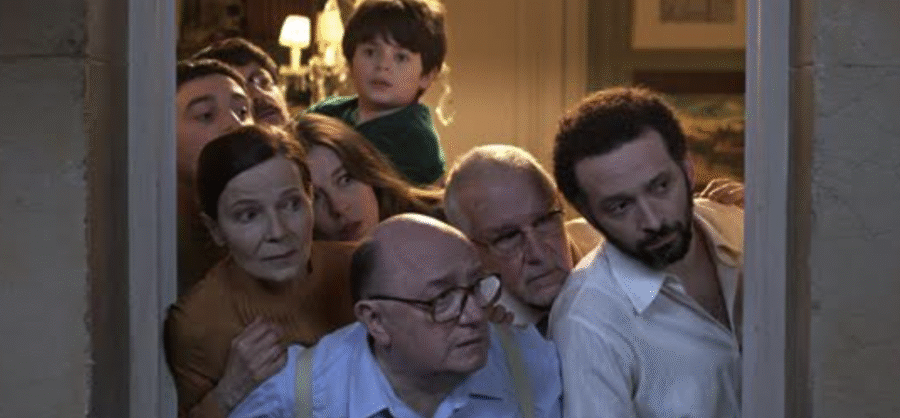
There is something magical in the way Baier tells his story. We follow it through the eyes of a young boy, who, for quite a long time, needs to stay in the apartment of his family of uncles, aunts, grandpas and grandmas. Meanwhile, his parents participate in the national uprising. The Safe House depicts the moment of the protagonist becoming a young man. Through the conversations he is having with his family members, he learns more about what is actually happening in France. However, he still doesn’t truly understand everything, so sometimes his imagination creeps in. Therefore, we have a narrative consisting of both fiction and history, all mixed together within the sequences.
Nonetheless, it’s not an ideal film, as it, from time to time, feels rather longish, almost repetitive. It’s difficult for a modern viewer to comprehend why (and how) important those events are from today’s perspective. It’s more of a film for people who have actually experienced it or maybe know something more about French history.
But, Baier truly believes in his little and heartwarming project, so the director’s passion fills the screen and reaches the audience’s hearts. We start rooting for this artistic family, full of various characters and personalities. When the future seems unsure for all of them, the apartment becomes an eponymous safe house, a place where everything is going to be alright.
And, with such a conclusion, we leave the cinema. What else do we need from an uplifting screening like this?
Photo: Berlinale website
3/5 stars
Author: Jan Tracz