Maria Skłodowska-Curie, one of the most remarkable scientists of the modern era, was born on November 7, 1867, in Warsaw as the fifth child of Bronisława and Władysław Skłodowski. She was the first woman to receive the Nobel Prize for scientific discovery in the area of radioactivity.
By the age of 15, she had already distinguished herself academically, graduating with a gold medal from the Governmental Girls’ Gymnasium in Warsaw. Her interests were wide-ranging, from sociology and mathematics to physics and literature. She even penned poetry during her youth.
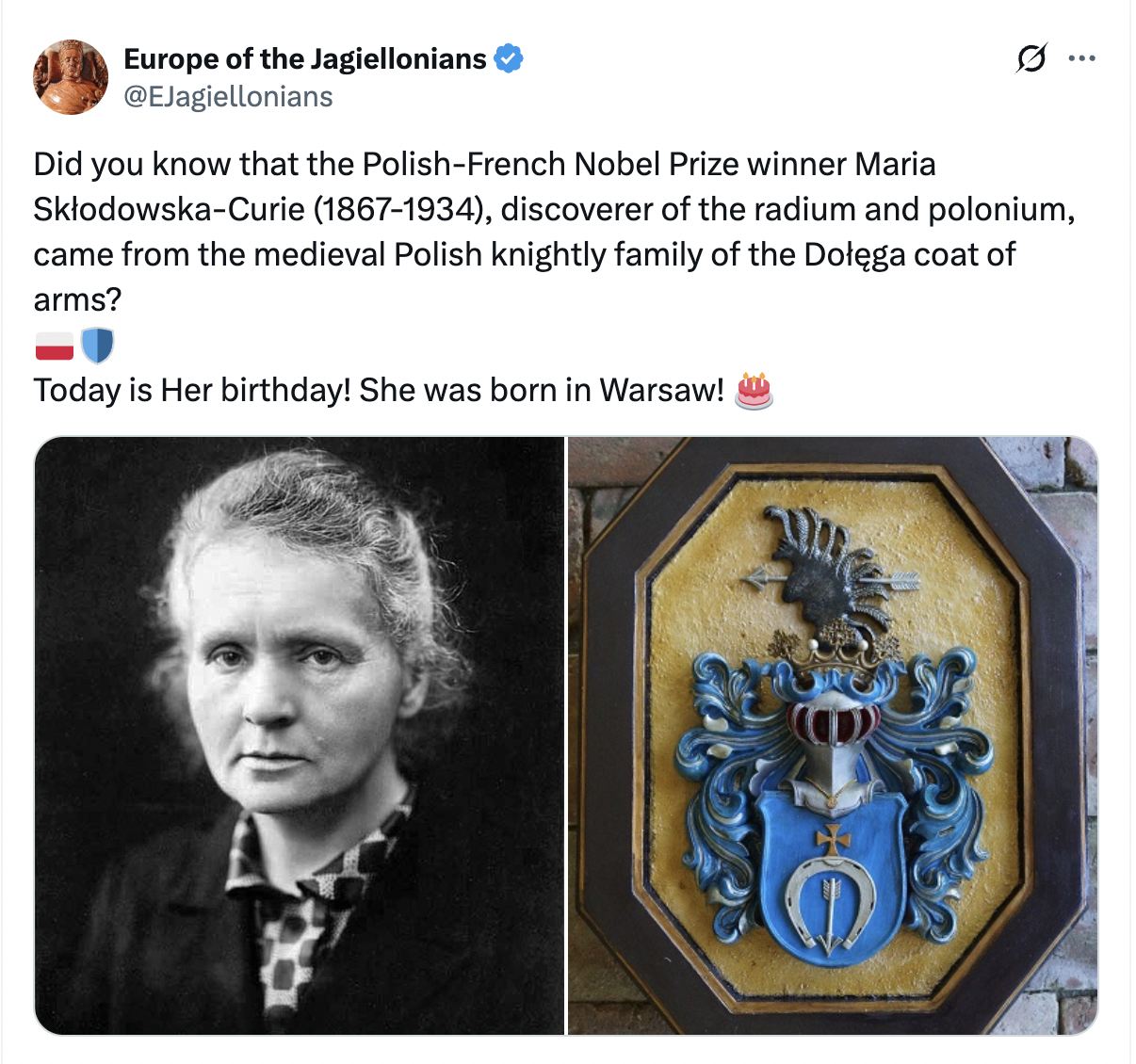
After completing her secondary education, she worked as a tutor while also attending clandestine lectures at the so-called „Flying University”, a secret educational initiative in Poland under Russian partition.
There, she deepened her knowledge of the natural sciences and sociology. She later took a post as a governess for the Żorawski family at their Szczuki estate, a role she held for three years.
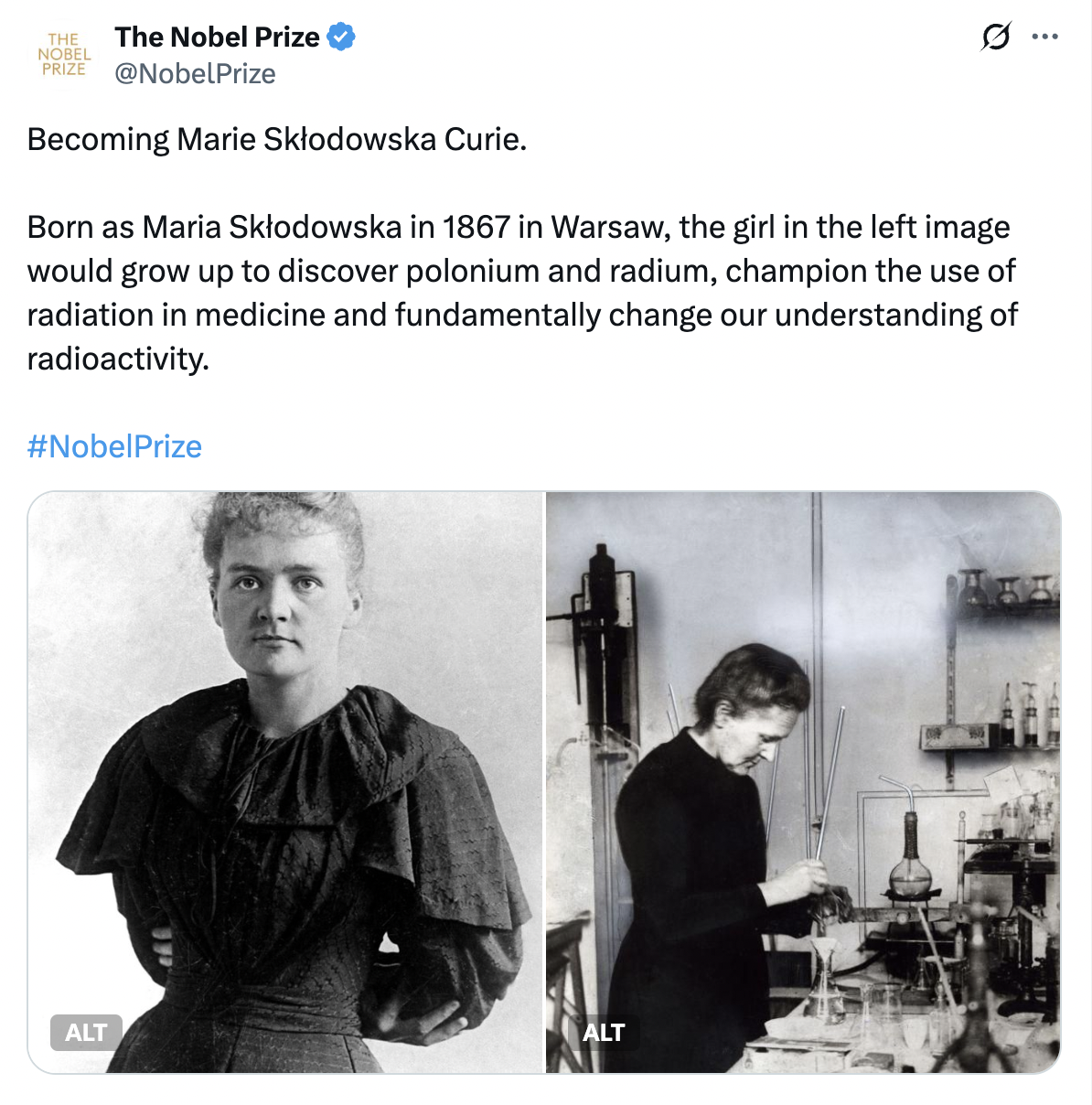
Skłodowska’s first scientific experiments took place in Warsaw, where she gained practical experience in a physics laboratory and a chemistry lab based in the Museum of Industry and Agriculture.
She moved to Paris in 1891, where she was able to study despite her gender, which posed a problem to enter academic training at the end of XIX century. Enrolling at the Sorbonne, she began studies in mathematics and the natural sciences. She lived with her sister Bronisława and her brother-in-law Kazimierz Dłuski.
In 1893, she earned a degree in physics with distinction, followed by a second degree in mathematics a year later. In 1895, she married the French physicist Pierre Curie, whom she had met through fellow Polish scientist Józef Wierusz-Kowalski.
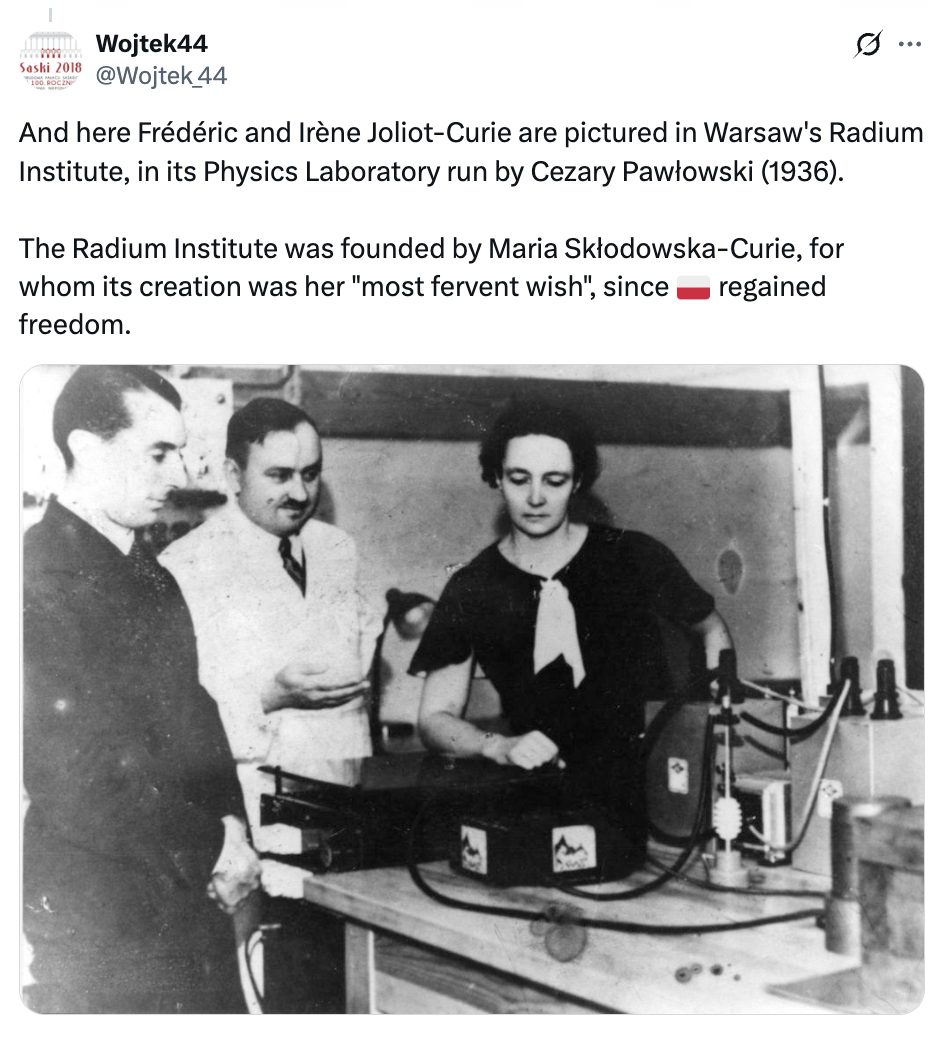
Their wedding took place at the town hall in Sceaux, just outside Paris, and the couple famously spent their honeymoon cycling through the French countryside.
Their first daughter, Irène, was born in 1897. Like her mother, Irène would go on to achieve great scientific acclaim, winning the Nobel Prize in Chemistry in 1935 together with her husband Frédéric Joliot-Curie for their discovery of artificial radioactivity. In 1898, Maria and Pierre Curie made a ground-breaking scientific discovery: they identified two new elements — polonium and radium.
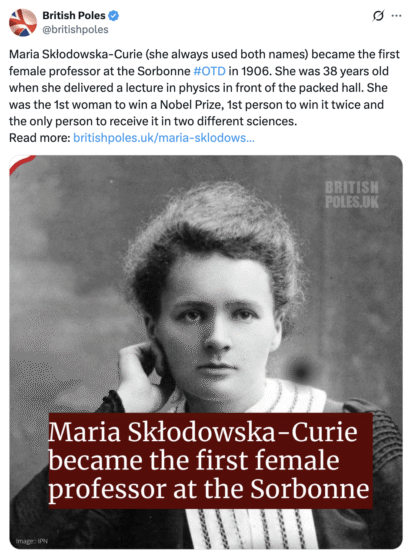
Against her wishes, Maria Skłodowska-Curie found herself thrust into the limelight — a figure who, by today’s standards, might be called a celebrity. The French press crafted a romanticised narrative around her life, portraying her as a real-life Cinderella.
She had, after all, arrived in Paris from a country that no longer officially existed, penniless and devoting her nights to scientific study. Not long after, her tireless research led to the discovery of a luminous, almost magical substance believed to hold the potential to save countless human lives.
The public fascination soon escalated. The Curie household was flooded with autograph requests, an avalanche of letters and even poetic tributes — including sonnets dedicated to radium. Yet neither Maria nor Pierre welcomed this fame. Both recoiled from the noise and spectacle that surrounded their private lives and scientific pursuits.
In recognition of their pioneering research into radioactive substances, the Curies, alongside physicist Henri Becquerel, were awarded the Nobel Prize in Physics in 1903.
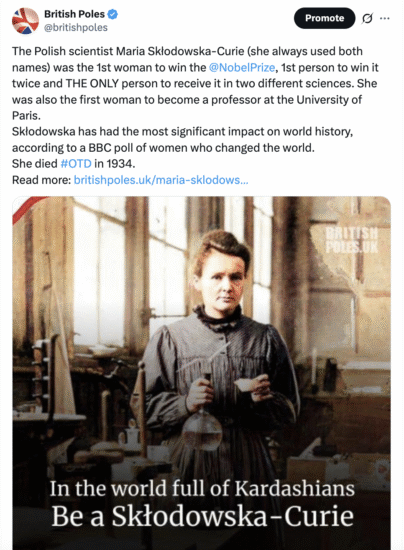
In 1896, Maria had passed an examination that qualified her to teach at girls’ secondary schools, later taking up a teaching position in Sèvres. Her scientific achievements continued. In 1911, five years after the tragic death of Pierre Curie, who was killed in a street accident in Paris. Pierre had died after being struck by a horse-drawn cart at a busy Paris intersection.
Soon she was awarded a second Nobel Prize, this time in Chemistry, for her continued work on radioactivity and the isolation of radium and polonium.
She returned to Warsaw in 1913 to attend the opening of the Radiology Laboratory, and after Poland regained independence, she actively campaigned for the creation of the Radium Institute in the capital — a project she described as her dearest wish.
In 1925, she attended the ceremonial laying of the foundation stone for the Warsaw Radium Institute on Wawelska Street. The following year, the Warsaw University of Technology awarded her an honorary doctorate.
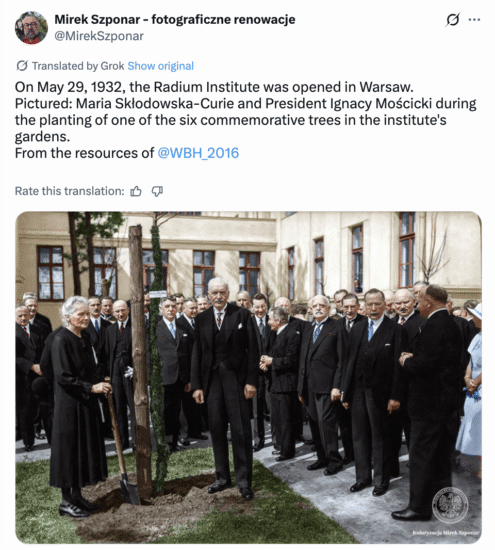
By 1932, she was back in Warsaw to open the completed Institute, where she planted three commemorative trees. It would be her final visit to Poland.
Maria Skłodowska-Curie died in 1934. The official cause of death was aplastic anaemia, brought on by prolonged exposure to ionising radiation during her years of research.
Her funeral was held on 6 July in Sceaux, where she was laid to rest beside her husband.
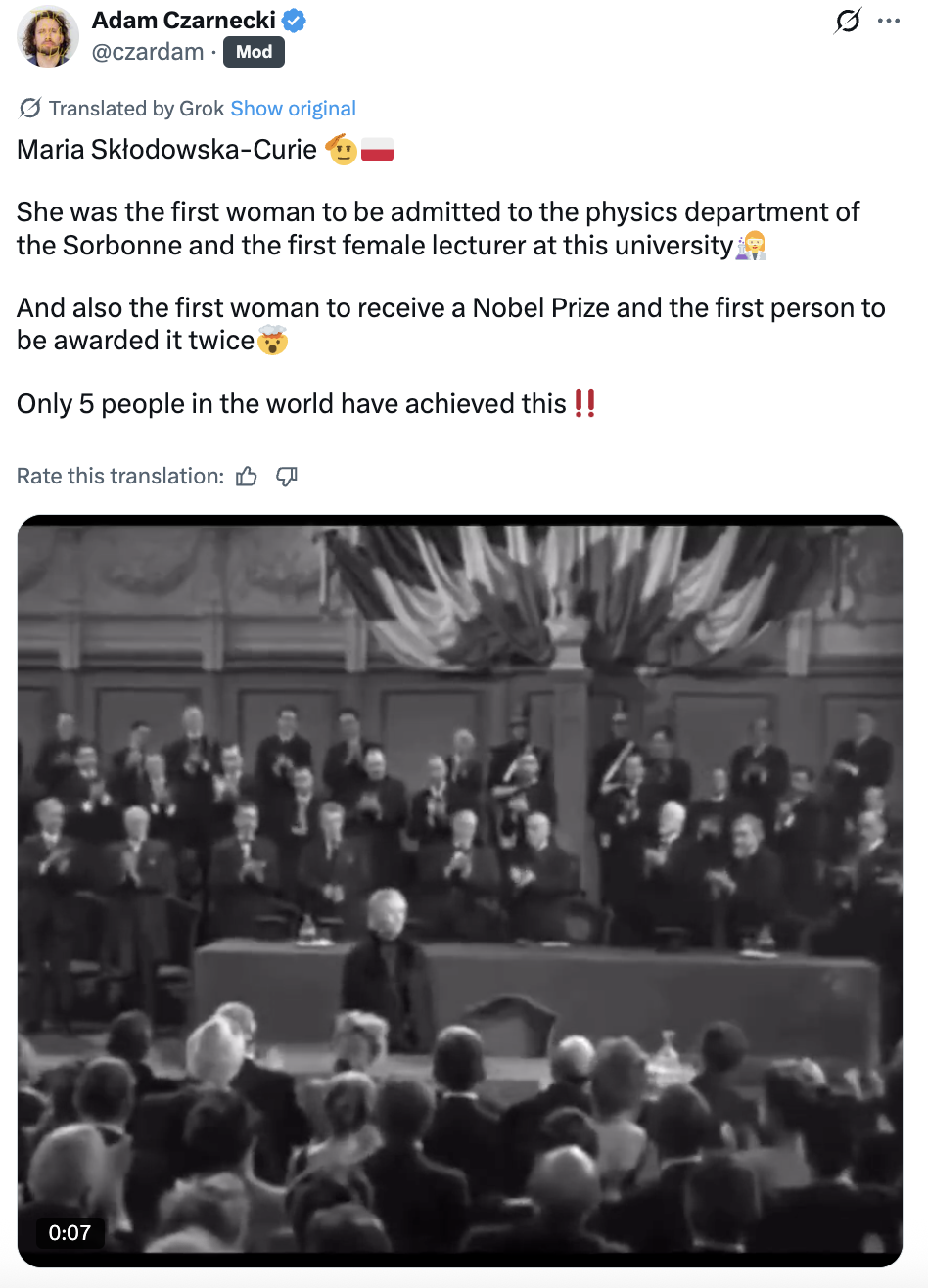
In 1995, the ashes of both Maria and Pierre Curie were transferred to the Panthéon in Paris, the resting place of France’s national heroes. Maria became the first woman to receive such an honour based on her achievements, and the first person born outside France to be buried there.
Today, the Maria Skłodowska-Curie Museum in Warsaw stands on Freta Street, in the house where she was born. The museum preserves her legacy through family photographs, personal belongings, and documents related to Polish chemists and her extraordinary scientific journey.
Source: Dzieje.pl
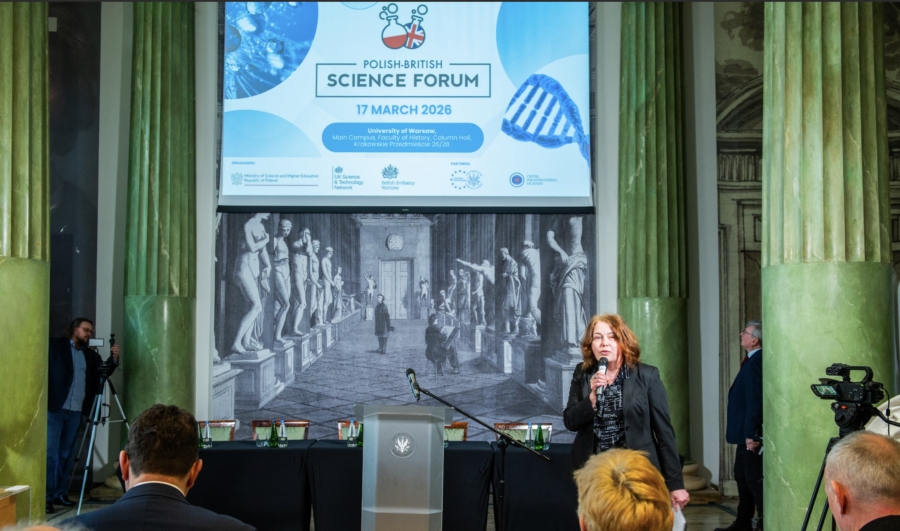
Photo: X/@Marzena12683472
Tomasz Modrzejewski