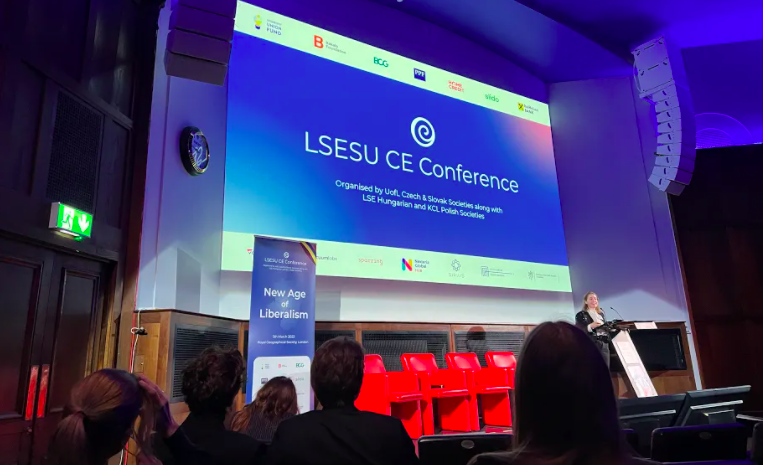
Students from Poland, Slovakia, the Czech Republic and Hungary organised the 5th annual session of the Central European Conference. The event took place on 5th March at the Royal Geographical Society building in London. This year, the main theme concerned the future of liberalism in Central Europe. The conference hosted a broad range of scholars, politicians and business representatives from the Visegrad group countries, including a variety of Polish public figures. The day finished with an evening reception at the Czech Embassy in London.
Engaging roundtables, inspiring speaker panels and interactive workshops
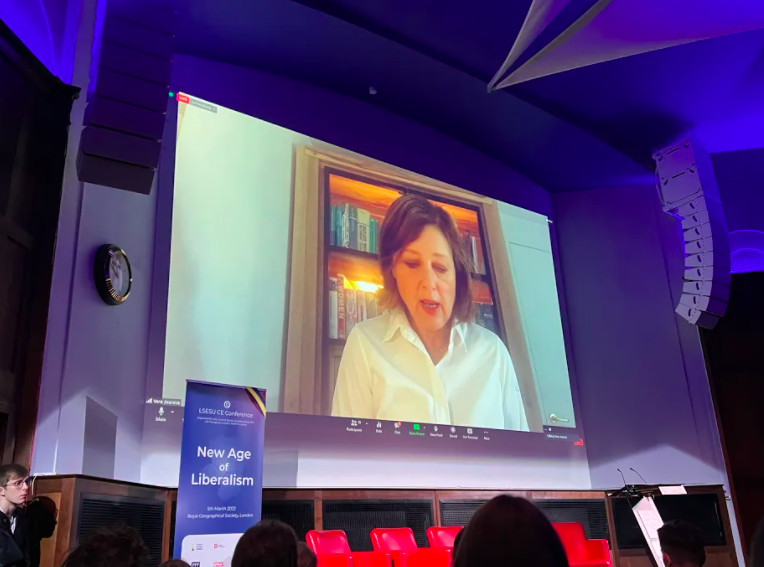
The conference featured two panel discussions, four roundtables, and two keynote speeches. In the morning, Vera Jourová, the Vice President of the European Commission for Values and Transparency, opened the event by addressing Putin’s invasion of Ukraine and elaborating on the key challenges affecting the future of the Central European region.
Anna Gielewska, a vice-chairman of the Polish NGO, Reporters’ Foundation, was one of the participants in the first panel, which covered the subject of media accountability. Together with fellow guests from V4 countries, she identified disinformation and the lack of EU-wide regulations as one of the biggest challenges to the modern and traditional forms of spreading public information.
Later that day, the guests gathered in smaller groups to participate in roundtables on sustainable fashion, genetic engineering, liberalism and R&D. Amongst other distinguished speakers, the debate on liberalism was led by Ryszard Petru, the founder of a Polish political party Nowoczesna.
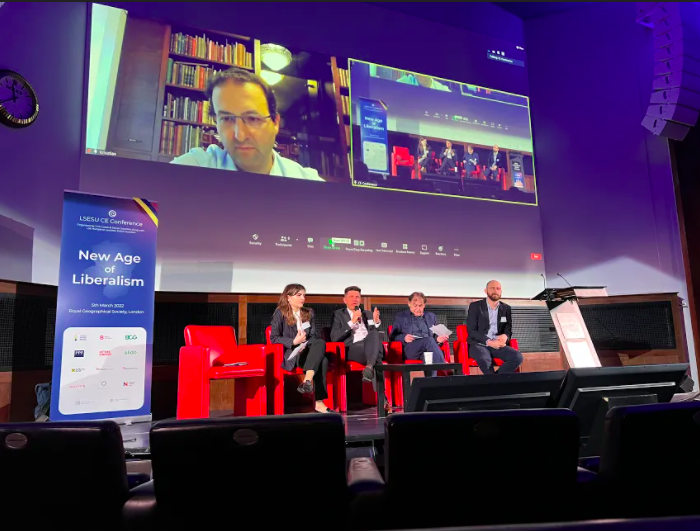
The last panel of the day concerned the EU and the Visegrad Four. It was visited by Karolina Zbytniewska, Editor-in-chief of EURACTIV Poland. Panellists discussed the main challenges and opportunities concerning the Visegrad 4 alliance and potential legislative challenges that might lead to a paradigm shift of the V4 scope of activities in the future.
Additionally to panels and roundtables, participants could directly engage with high-profile experts through workshops, covering topics ranging from the use of big data in finance and sustainable banking to brain drain and soft power.
Uncertain future of European students in the UK
The conference organisers highlighted that the possibility to study and work in the United Kingdom has become increasingly difficult for EU students. Since 2021 EU students are no longer eligible for the home fee status at UK universities and have no access to student loans offered by the UK government. Consequently, an immense number of students from the EU cannot make use of the world-class education in the UK.
During the event, a group of Polish students represented the Save EU Students initiative, which aims to mitigate this problem through cooperation with media and policymakers as well as a petition currently being considered at the European Parliament. You can read more about this student-led initiative in one of our previous articles.
Author: Marta Kąkol
Marta has recently graduated from Utrecht University, obtaining a Bachelor of Science in Philosophy, Politics and Economics. Thanks to her interdisciplinary education, she can apply multiple perspectives to complex political issues. She vocalizes her interest in public affairs in a multitude of ways, from journalistic writing to organising speaker events. She hopes to gain funding for her Master’s in European and International Public Policy at LSE starting in 2022.
Main picture: Marta Kąkol