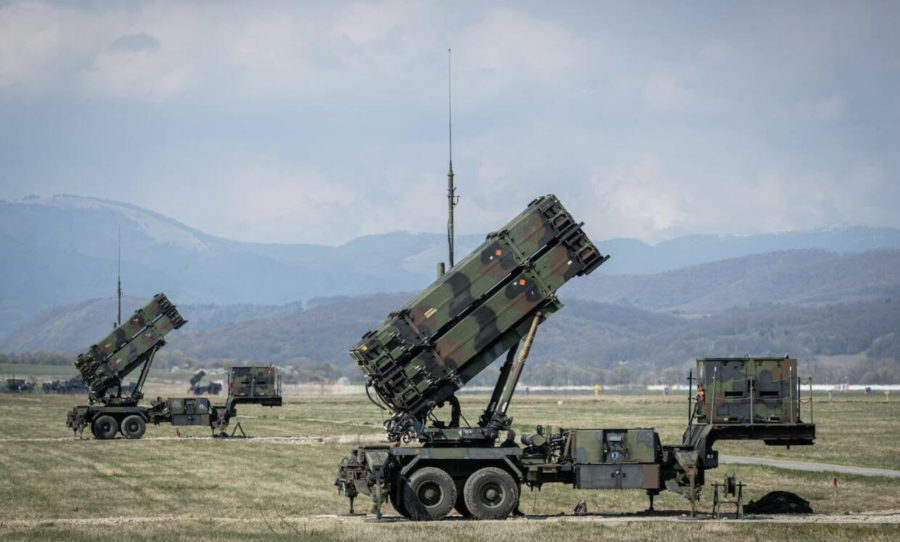
Poland has firmly rejected suggestions that its Patriot air defence systems could be redeployed abroad, insisting that the protection of national airspace remains its overriding priority. The statement came after reports that the United States had informally explored the possibility of Polish support in the Middle East, including the transfer of one Patriot battery and associated munitions.
Deputy Prime Minister and Defence Minister Władysław Kosiniak-Kamysz moved quickly to dispel the speculation.
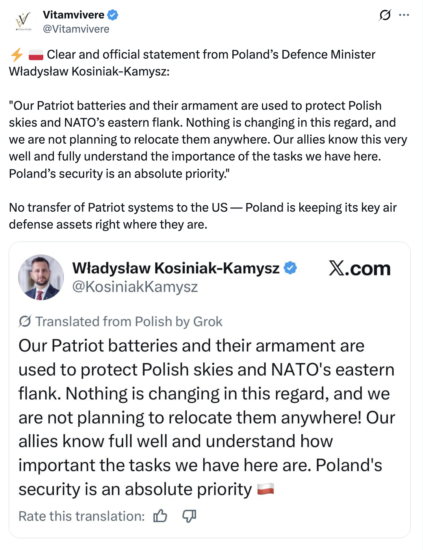
“Our Patriot batteries and their armament are used to protect Polish skies and NATO’s eastern flank,” he said. “Nothing is changing in this regard and we are not planning to relocate them anywhere.”
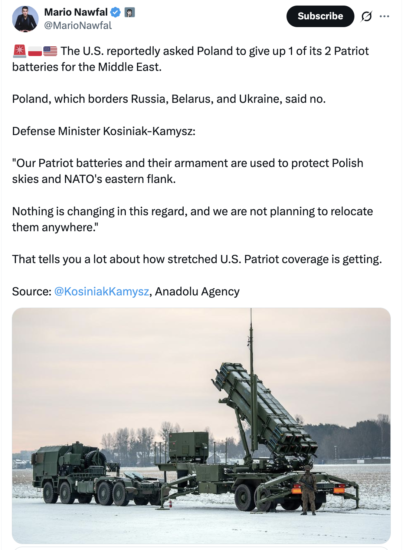
The reports, first carried by Rzeczpospolita, suggested Washington had also raised concerns about potential delays in future weapons deliveries. While such claims have stirred debate, Polish officials have adopted a notably unequivocal tone.
“Security for Poland is an absolute priority,” Kosiniak-Kamysz added, stressing that allies are fully aware of the country’s strategic responsibilities on NATO’s eastern frontier.
A similar message came from Deputy Defence Minister Cezary Tomczyk, who reiterated that the systems would remain in place.
“Polish Patriots stay in Poland; they have a clear mission here defending the country and NATO’s eastern flank,” he wrote.
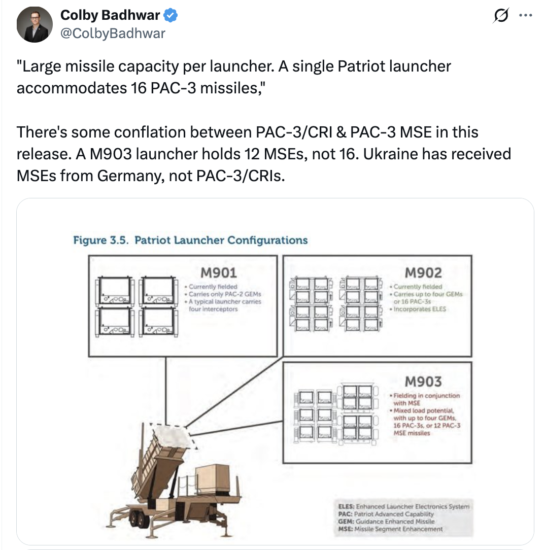
The Patriot system, developed in the United States, forms a central pillar of Poland’s emerging multi-layered air defence architecture. Under the Wisła programme, Warsaw is acquiring eight batteries comprising 64 launchers equipped with advanced technologies, including the Integrated Battle Command System (IBCS), next-generation LTAMDS radars and PAC-3 MSE interceptor missiles.
The first two batteries have already been deployed to the 3rd Air Defence Missile Brigade in Sochaczew, reaching full operational readiness in December 2025. Their activation marked a significant leap in Poland’s ability to detect and intercept airborne threats, from aircraft to ballistic missiles.
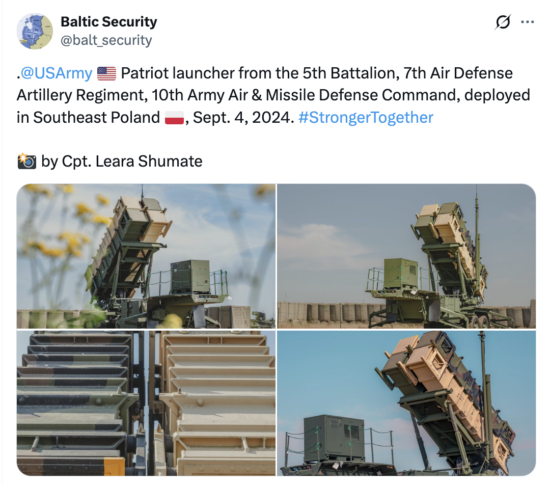
Further expansion is planned. Between 2027 and 2029, an additional six batteries and 48 launchers are expected to enter service, with units earmarked for locations including Bytom, Gdynia and Skwierzyna. The result will be a geographically distributed network designed to provide comprehensive coverage across the country.
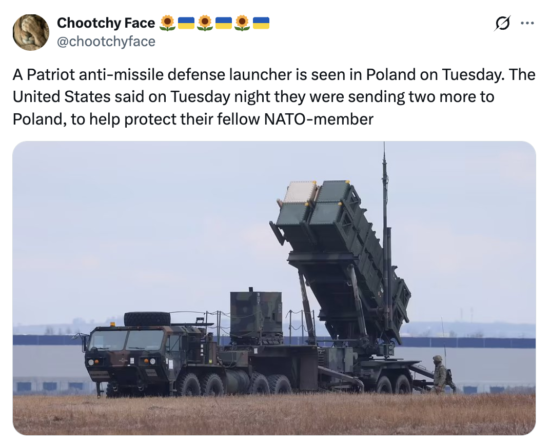
The firm stance taken by Warsaw reflects broader concerns about regional security, particularly along NATO’s eastern flank. With the war in Ukraine continuing to shape defence priorities across Europe, Poland has positioned itself as one of the alliance’s most active frontline states.
In this context, the idea of redeploying critical defensive assets abroad however hypothetical touches on sensitive ground. Officials have therefore been keen to underline both sovereignty and responsibility.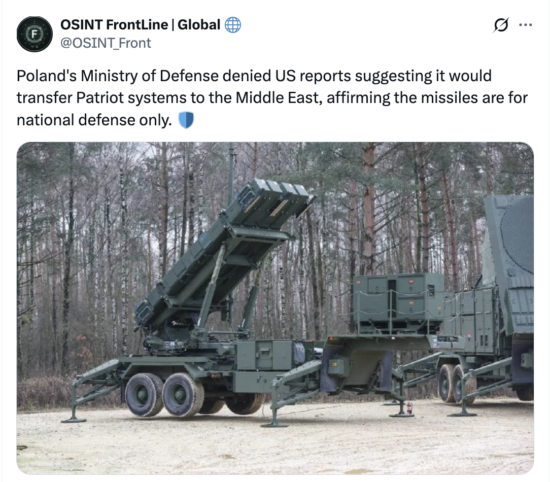
The message from Warsaw is clear: while Poland remains a committed ally, its most advanced defensive systems are not up for negotiation. In an era of shifting geopolitical pressures, the country appears determined to keep its shields exactly where it believes they are needed most: at home.
Photo: @Jeff21461/X
Tomasz Modrzejewski