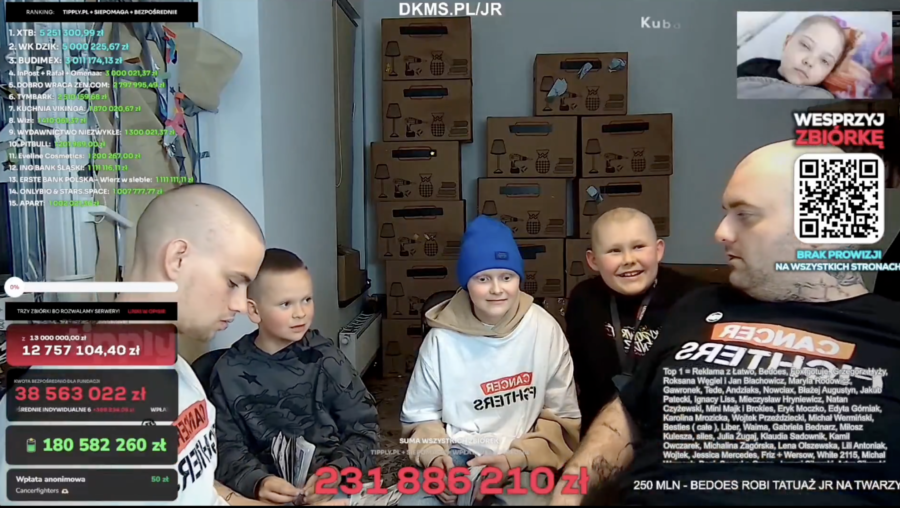
A record-breaking nine-day livestream led by Piotr “Łatwogang” Garkowski united millions and raised over £50+ million for children battling cancer. Featuring stars like Robert Lewandowski, the event showed how digital communities can turn engagement into real-world impact.
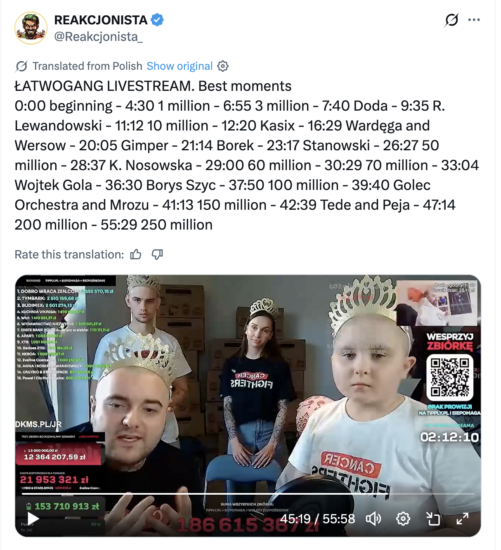
For nine days, a modest flat in Warsaw became the beating heart of a global phenomenon. What began as an online challenge turned into a record-breaking act of collective generosity, one that may redefine how an entire generation approaches philanthropy.
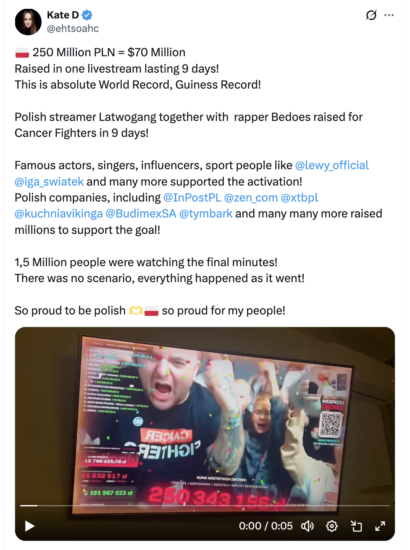
At the centre of it all stood Piotr “Łatwogang” Garkowski, a digital creator who transformed a simple idea into a £50+ million equivalent fundraising triumph. By the time the livestream ended later than planned, fuelled by unstoppable momentum, it had drawn more than 1.4 million viewers simultaneously and raised over PLN 251 million for children battling cancer.
Unlike traditional charity events, this was not a polished television spectacle. It was raw, immediate, and deeply interactive. Viewers didn’t just watch, they shaped the event itself. A TikTok challenge determined its length; audience engagement dictated its energy.
When figures like Robert Lewandowski or Dorota Rabczewska “Doda” appeared, they weren’t distant celebrities. They were participants in a shared space, contributing to something larger than themselves. Others made even more symbolic gestures, shaving their heads live to mirror the experience of young cancer patients.
The livestream blurred the boundary between entertainment and purpose. Musical performances, spontaneous conversations, and even reconciliations, such as the unexpected phone call between rappers, created moments that kept audiences engaged. But beneath the spectacle lay a consistent message: attention can be converted into action.
This conversion view into funds, clicks into care, is the defining mechanism of modern digital charity.
One of the most striking aspects of the campaign was its neutrality. In a time of intense social and political division, the initiative managed to unite audiences across demographics.
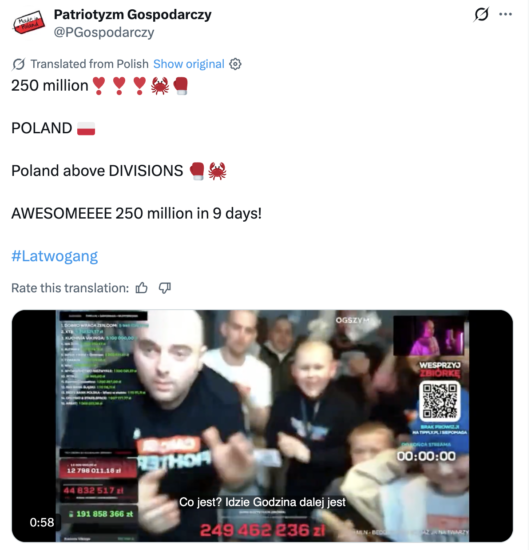
As Professor Monika Kaczmarek-Śliwińska observed, its apolitical character was key. Without ideological barriers, participation became universal. Supporting children with cancer required no alignment, only empathy.
This universality may explain why nearly all online reactions were overwhelmingly positive.
Comparisons to the Great Orchestra of Christmas Charity (WOŚP) have already begun.
Where traditional charity relies on scheduled events, this model thrives on spontaneity and audience-driven momentum. Where legacy systems depend on institutional trust, this approach builds real-time transparency, promising public tracking of every donated zloty.
If sustained, it could signal a broader shift: from periodic fundraising to continuous, community-driven engagement.
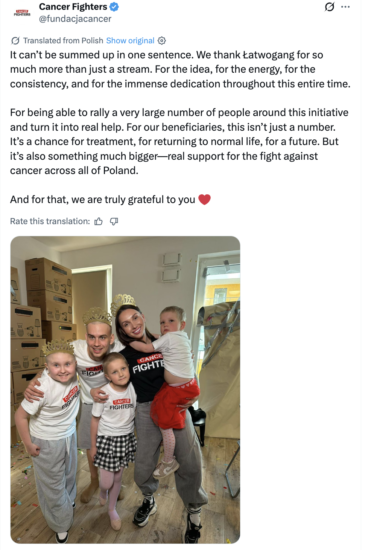
Ultimately, the success of the campaign lies not only in the funds raised but in what they represent. For the Cancer Fighters Foundation, the money will translate into treatment, equipment, and support. For the wider public, it demonstrates something equally valuable: that collective action, even in fragmented digital spaces, is still possible.
In an age often criticised for superficial engagement, this moment offered a powerful counterpoint.
Photo: X/@BurekRopa1
Tomasz Modrzejewski