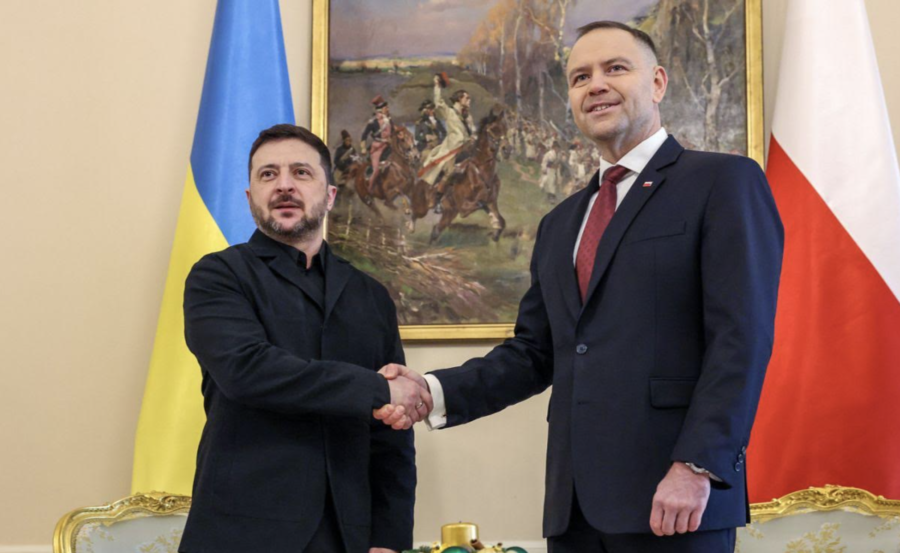
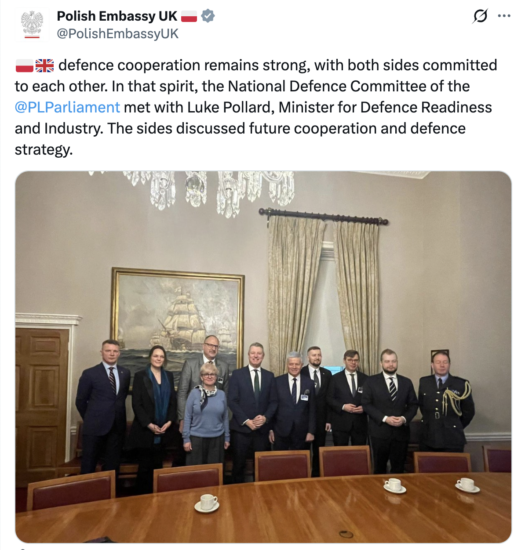
A delegation of the National Defence Committee of the Sejm of the Republic of Poland recently paid an official visit to London at the invitation of the House of Commons Defence Committee, underscoring the growing strategic alignment between Poland and the United Kingdom at a time of profound geopolitical uncertainty.
The visit began at the Embassy of the Republic of Poland in London, where the Polish delegation met with diplomats and defence attachés. Nearly two hours of briefings and discussions focused on the current political and security situation in the United Kingdom, bilateral military and economic cooperation, and areas of potential disagreement that may require careful diplomatic handling.
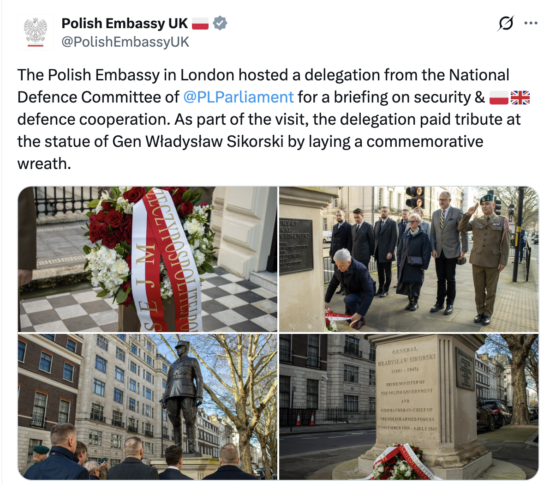
The visit also carried a symbolic dimension. Together with a military delegation, the Polish parliamentarians laid a wreath at the memorial to Władysław Sikorski, paying tribute to a figure who embodies the shared wartime history and enduring bonds between Poland and Britain.
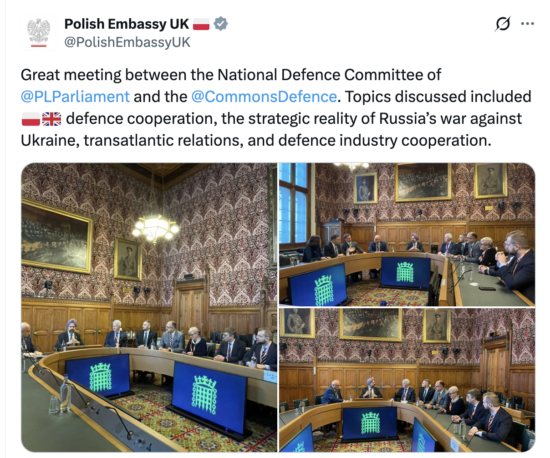
The delegation then proceeded to Westminster for talks with members of the House of Commons Defence Committee, chaired by Tan Dhesi.
The discussions covered a wide range of strategic issues. These included cooperation within NATO, particularly in the Baltic Sea region; the United Kingdom’s involvement in the EU’s SAFE programme; internal political differences between the President of Poland and the Polish Prime Minister; the situation in Ukraine and the continuation of military and political support; Poland’s military potential and its declared commitment to allocate 5% of GDP to defence; as well as preparations for the signing of a formal strategic alliance document between Poland and the United Kingdom.
The British side emphasised Poland’s credibility as a security actor. As one participant noted, “Poland doesn’t just talk about European security, they pay for it.”
With the highest defence spending in Europe measured as a percentage of GDP, Poland has made a clear political choice about the nature of contemporary threats and the need for sustained military investment.
Despite this substantial financial commitment, both sides acknowledged persistent structural challenges. Like many European states, Poland has struggled to develop domestic defence-industrial capabilities at sufficient speed. Too many critical systems and technologies are still imported, leaving gaps in sovereign capability and long-term resilience.
This concern is increasingly shared across Europe: how to manufacture at scale, maintain production lines in times of crisis, and adapt defence systems originally designed for a very different strategic environment. These questions lie at the heart of current debates on defence modernisation and procurement reform.

Poland and the United Kingdom already cooperate closely in countering Russian and hybrid threats, strengthening European energy security, and collaborating on defence production. In the current security climate, such partnerships are no longer optional but essential.
As British parliamentarians observed, every meeting with European allies returns to the same themes: modernisation, procurement bottlenecks, and resilience. What stands out most, however, is a shared recognition of collective strength.
The London visit demonstrated that the Polish–British relationship is moving beyond ad hoc cooperation towards a more structured strategic alliance, grounded in shared values, shared threats, and a shared willingness to invest in common security.
Photo: Polish Embassy UK/X
Tomasz Modrzejewski