On what might have been an ordinary day for emergency services, a single detail made all the difference: someone on duty spoke Polish. According to an official post by the Nottinghamshire Police on social media, a response officer who could communicate in the distressed man’s native language managed to de-escalate a life-threatening situation. The man, reportedly on the brink of taking his own life, was calmed through conversation one rooted not just in protocol, but in understanding.
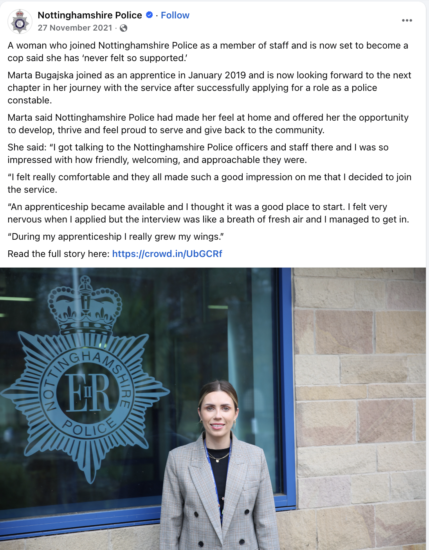
Mental health crises often unfold in silence, or worse, misunderstanding. When emergency responders arrive, every second matters, and communication becomes the most critical tool. In this case, language became a barrier but a bridge.
The situation was considered a man in his 40s threatening to take his life with a knife.
The report said: „The incident was highly volatile from the outset. On arrival PC Bugajska who is fluent in Polish, immediately engaged with the man and became the only viable communication link between him and emergency services. Throughout the incident the man was irate, distressed, and at times escalating his behaviour by pushing the knife into his throat and making further demands. Despite this extreme pressure, PC Bugajska demonstrated a calm but adaptive communication style, increasing her energy appropriately in line with her negotiator‑informed training. She maintained engagement at critical moments, preventing the man from withdrawing, shutting down, or acting on his threats.”
The man’s distress had escalated to a point where intervention was urgent. Yet rather than force or confrontation, what ultimately reached him was dialogue spoken in words he could fully grasp, in a tone that carried familiarity and trust.
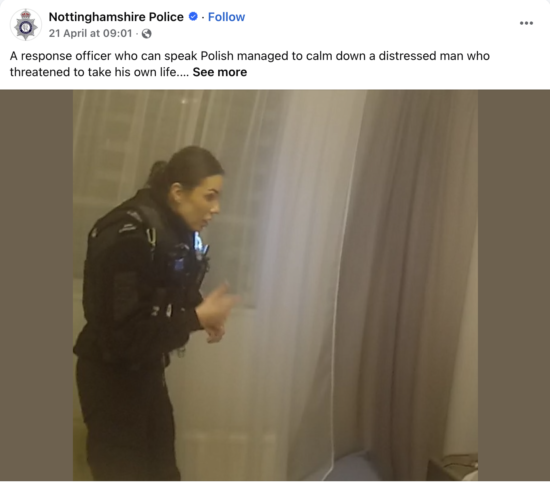
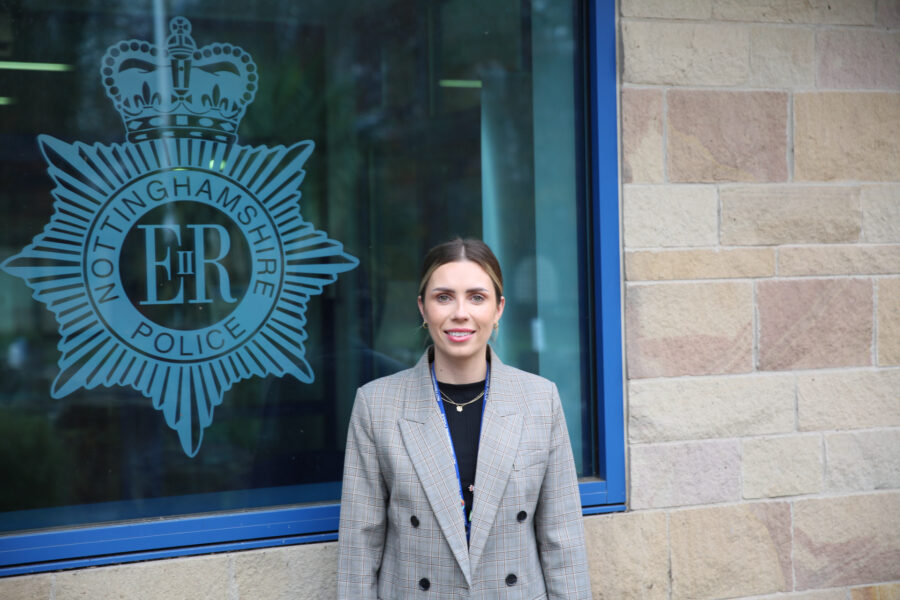
According to a statement by the Nottinghamshire Police thanks to communicating the man in his mother language Sergeant Marta Bugajska saved his life.
Experts in crisis intervention have long emphasised the importance of rapport. Establishing a human connection, especially in moments of acute psychological distress, can determine whether a situation escalates or resolves.
Language plays a crucial role in that connection. Speaking to someone in their native tongue can reduce anxiety, restore dignity, and create a sense of safety. It signals recognition: you are seen, you are heard, you matter.
In multicultural societies, such moments are increasingly common. Migration, mobility, and global interconnection mean that emergency services are more likely than ever to encounter individuals who are far from home linguistically and emotionally.
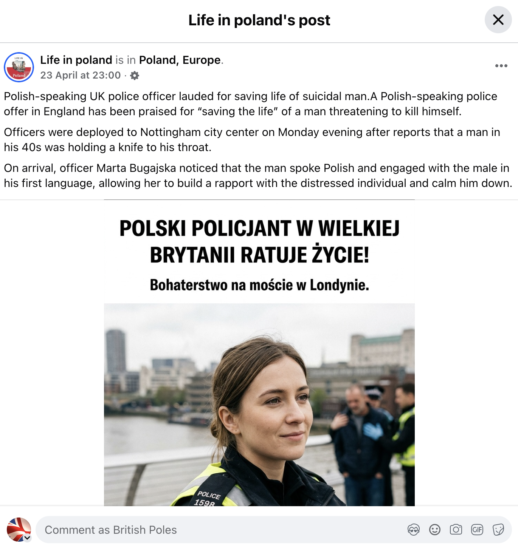
What stands out in this case is not only the outcome, but the method. The officer’s ability to communicate directly eliminated the need for intermediaries, delays, or guesswork. It allowed for nuance, tone, emotion, and subtle reassurance that no translation device or third party could fully replicate.
There are no dramatic headlines for conversations that end in calm rather than catastrophe. No visible markers for the moment someone steps back from the edge.
The police report of the scene concluded: „PC Bugajska fulfilled some of the fundamental duties and priorities of being a police officer – to protect life, safeguard the vulnerable and act with professionalism and compassion in the moments of greatest threat.”
It is hard to estimate how many Polish-speaking officers serve across Britain, but there are over 200 members of the Metropolitan Police Polish Association. It means that for the entire country, there are around a few hundred officers able to communicate in fluent Polish.
Source: Facebook/nottspolice
Photo: Nottinghamshire Police
Tomasz Modrzejewski