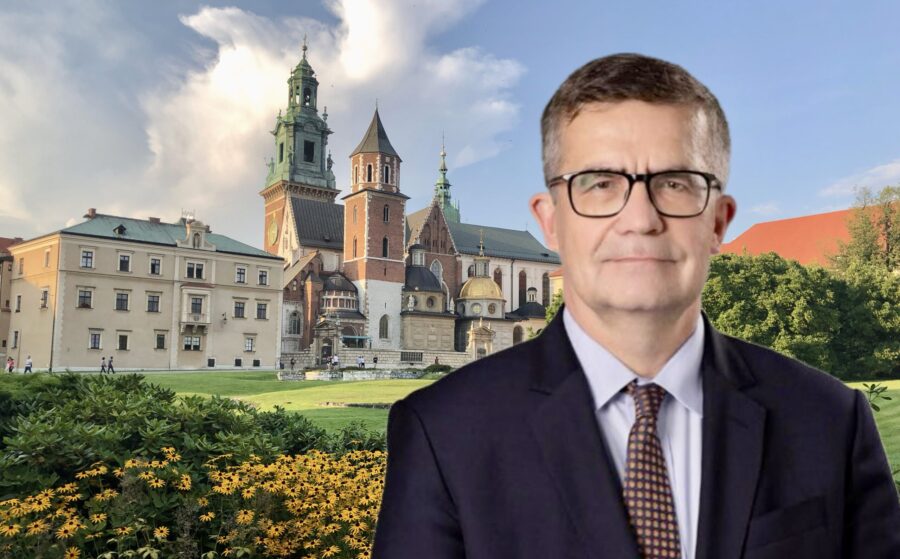
When The Spectator published an essay by Piotr Wilczek Poland’s former ambassador to the United Kingdom and the United States it added an authoritative voice to a debate that Europe has rehearsed for centuries: why do national stereotypes endure, and why do they still matter?
Wilczek does not begin with Brexit or modern political rhetoric, but with a strikingly literary reference. As he reminds readers, “in 1614, the Scottish writer John Barclay published a slim Latin book with the grand title Icon Animorum, or The Mirror of Minds.” Through this allegorical text, “he marched the nations of Europe across the stage: the proud Spaniard, the scheming Italian, the frivolous Frenchman, the solemn German, the valiant but volatile Pole”.
These were cartoons before the cartoon as we know it neatly packaged characters, breezily confident in their superficiality. Wilczek’s point is simple: Europe has always enjoyed labelling itself, and it has rarely done so with subtlety.

Europe’s contemporary politics, he argues, have changed little in their attachment to shorthand imagery. “Europeans have always loved pinning people like butterflies, neatly labelling them with adjectives,” he writes, “The trouble is that these stereotypes don’t always stack up”.
Wilczek revisits the early 2000s, when EU enlargement and referendums sharpened old clichés. During France’s campaign about the EU Constitution in 2005, the so-called Polish plumber became a symbol sometimes humorous, often resentful of the imagined Eastern European who would take Western jobs. As Wilczek recalls, “the ‘no’ campaign created the character of the ‘Polish plumber’, a menacing figure who was out to take French jobs.”
He notes that the UK then went through its own phase of symbolic scapegoating. In 2014, before the Brexit referendum had even been announced, “Nigel Farage said he would be concerned if a group of Romanian men moved in next door to him,” and for years afterwards, British fears were cast onto a rotating cast of Others: “the Romanian thief, the Albanian drug-runner, Pakistanis (rapists) and Nigerians (scammers)”
Ambassador Wilczek writes: the more loudly Europe laughs at its neighbours, the less capable it becomes of laughing at itself. As he puts it, “The more Europe laughs at others, the more it risks being trapped in its own cartoon.”
Perhaps the most compelling section of the ambassador’s essay concerns how a stereotype becomes a political tool.
He observes that during the Covid-19 pandemic, “Polish doctors and nurses kept the NHS standing,” yet instead of dismantling clichés, this contribution only fed into them. Such workers “became shorthand for Polishness,” just as “nobody generalises about the Indian lecturer or the Bangladeshi accountant,” though these professions also include many migrants.
In contrast, he argues, Central and Eastern Europeans have been turned into archetypes first manual labourers, then pandemic saviours while their lives remain more complex than their public image.
Immigration policy, he warns, often follows outdated imagery. Politicians promise to attract “skilled workers” while restricting those who do not fit preconceived categories.
The British post-Brexit system, for instance, “was sold as rewarding ‘skilled workers’ while keeping out supposed freeloaders,” yet many indispensable professions “nurses, builders and lorry drivers” fell between these artificial lines.
Wilczek ends by returning to Barclay’s 1614 allegory and asking what such a mirror would reveal today. It would not be the proud Iberian or the volatile Pole. Instead, he suggests, “a more offensive version might look like the ‘YooX Aesthetics’ Twitter account which now has more than 400,000 followers,” a place where people are flattened into trends, tropes, and memes.
Europeans, he argues, continue to trade in “stick figures” rather than people. And as long as they do, they will fail to see themselves clearly. “The more it laughs at them, the more it risks being trapped in its own cartoon… It is on us.”
Wilczek’s essay is a concise yet elegant plea for nuance. By invoking a 400-year-old book, he shows that stereotypes are not modern inventions, they are heirlooms. But just as Barclay’s Europe was imagined, so too is ours. Each generation can redraw, soften, or reject these silhouettes.
In revisiting the “Polish plumber,” Wilczek is not defending a profession or refuting an insult. He is reminding Europeans that they hold the pencil. And the question he poses is simple: if our continent is still sketching itself in caricature, is it not time to pick up a finer line?
Source: The Spectator
Photo: British Poles
Tomasz Modrzejewski