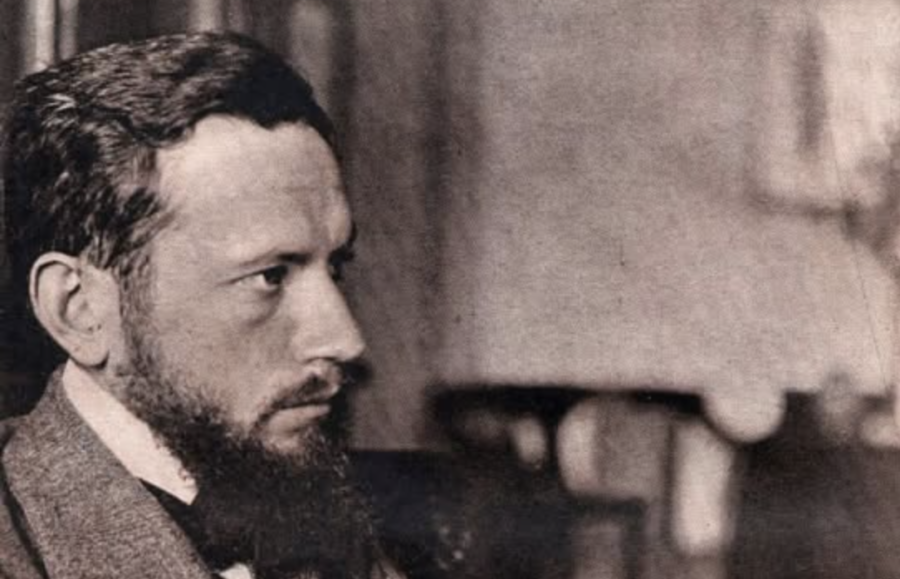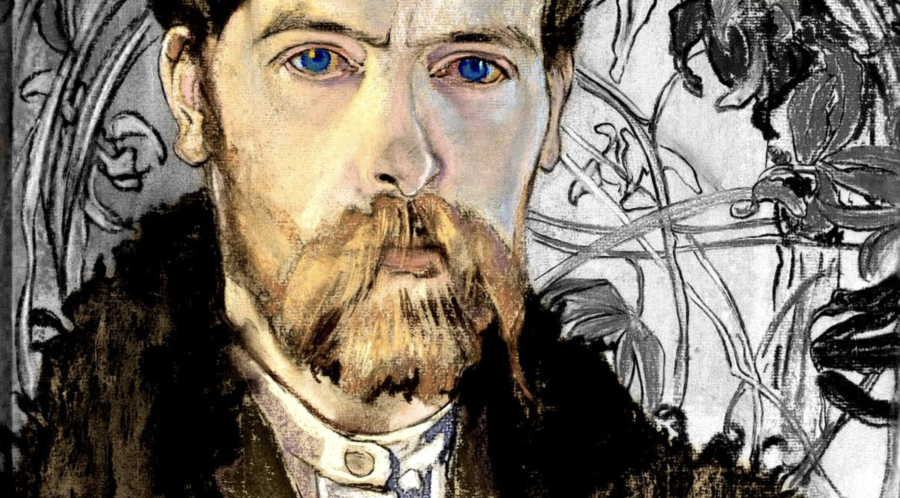
One of the most important Polish artists and a master of the Young Poland period (end of XIX and beginning of XX century in art and literature), Wyspiański was a master painter, graphic artist, stained glass creator, poet, and theatre reformer who reshaped the Polish national style.
Wyspiański grew up in Kraków at the end of the 19th century, then part of the Austro-Hungarian Monarchy. The place and environment in which he grew up largely shaped his mindset and his artistic imagination. The idea of creating both his own, and essentially Polish style was at its core.
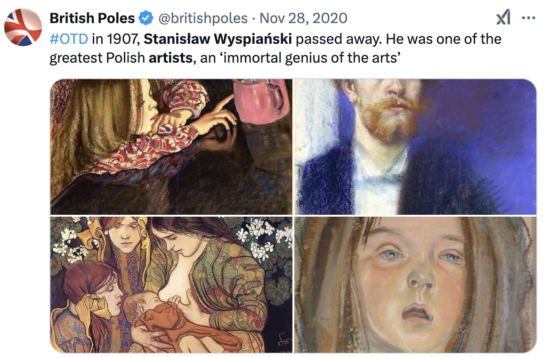
Wyspiański’s father, Franciszek, was a sculptor. His studio was located at the foot of Wawel, the historic castle of the Polish kings, with its cathedral, full of relics of the former glory of the nonexistent Polish state. At that time the royal castle was turned into military barracks where the Austrian army was stationed.

After graduating from high school, Wyspiański studied painting at the School of Fine Arts under Jan Matejko, the creator of great historical canvases. He also enrolled at the Faculty of Philosophy of the Jagiellonian University.
The most famous drama works written by Stanisław Wyspiański were “Wesele”(The Wedding), “Noc Listopadowa”(November Night), “Wyzwolenie”(Liberation) and “Warszawianka”.
In visual arts, he created amazing paintings, stained-glass and polychrome paintings, furniture, architecture and art books.
At the end of his life, Wyspiański was often called the “fourth national bard” of Poland, alongside the great three writers of Polish romanticism – Adam Mickiewicz, Juliusz Słowacki and Ignacy Krasiński.

In 1900, the poet attended the wedding of his friend, the poet Lucjan Rydel with Jadwiga Mikołajczykówna, a peasant girl from Bronowice near Krakow. The drama Wesele (The Wedding) was based on this event and brought Wyspianski fame and recognition.
The play was staged for the first time in 1901 and left Krakow’s elite shaken by its artistic and literary content.
While painting he most often creates pastels. He painted portraits, self-portraits, images of children, landscapes and flowers. His works are dominated by symbolism and Art Nouveau stylisation.
His designs for stained glass and polychrome interiors, with their characteristic motif of flame tongues and floral elements were used in many churches around Poland and Kraków.
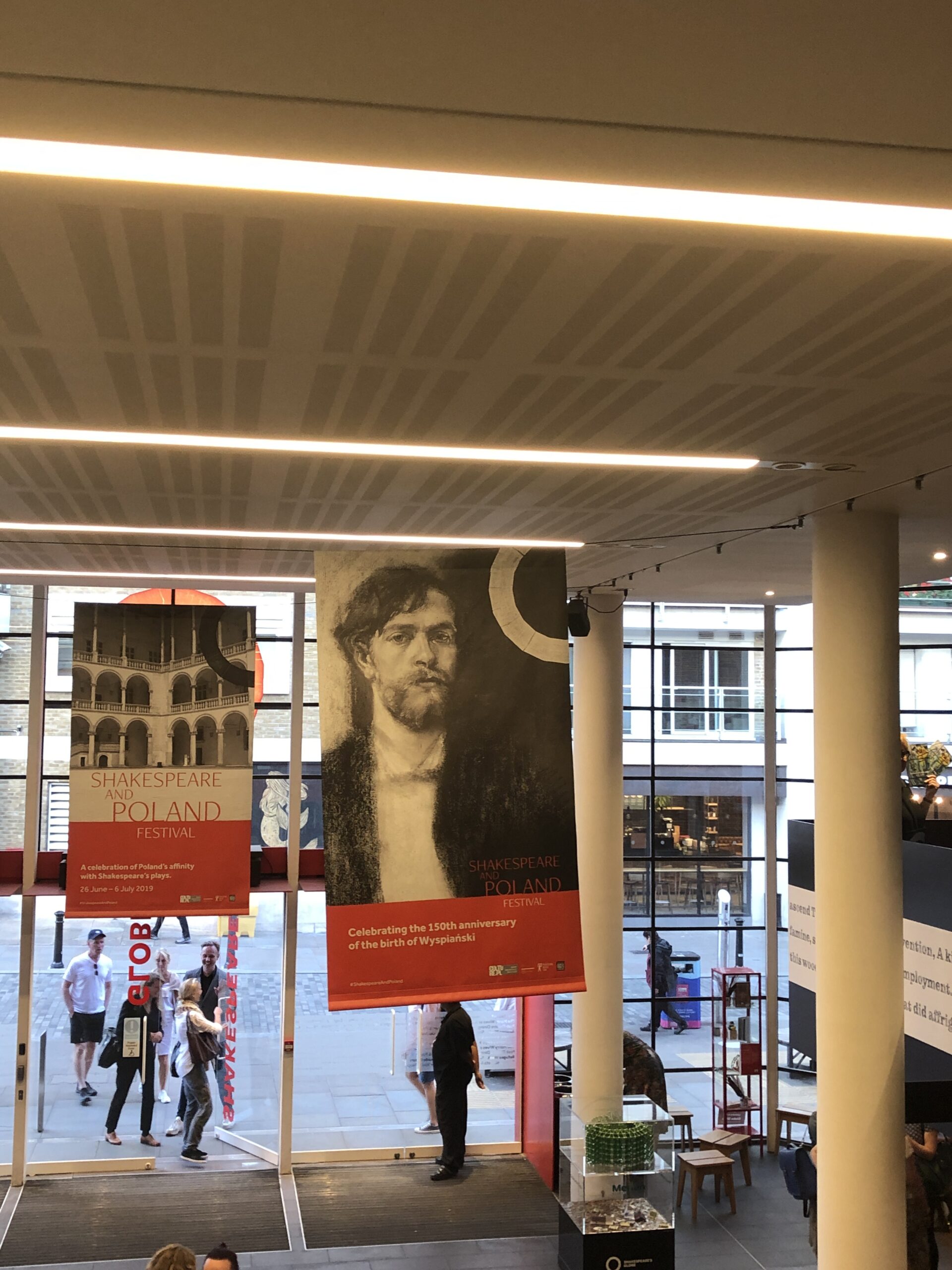
In the field of theatre, Wyspiański pioneered a modern understanding of adaptation and creation. Between 1898 and 1903, he served as decorator and staging director at the Kraków Theatre. He also designed theatre costumes, including for the world premiere of “The Wedding” for the famous actress of his time, Helena Modrzejewska.
Stanisław Wyspiański died on 28 November 1907. He was buried at Sepulcrum Patriae at Saint Michael the Archangel and Saint Stanislaus the Bishop and Martyr Basilica (Skałka). His funeral ceremony was one of the huge national manifestations of the Poles during the time of the partitions.

In 2019 Wyspiański’s works were presented in London during a special event in William Morris Gallery. The event featured a lecture by art historian Julia Griffin who compared Stanisław Wyspiański and his art initiatives to the William Morris’s Arts and Crafts Exhibition Society.
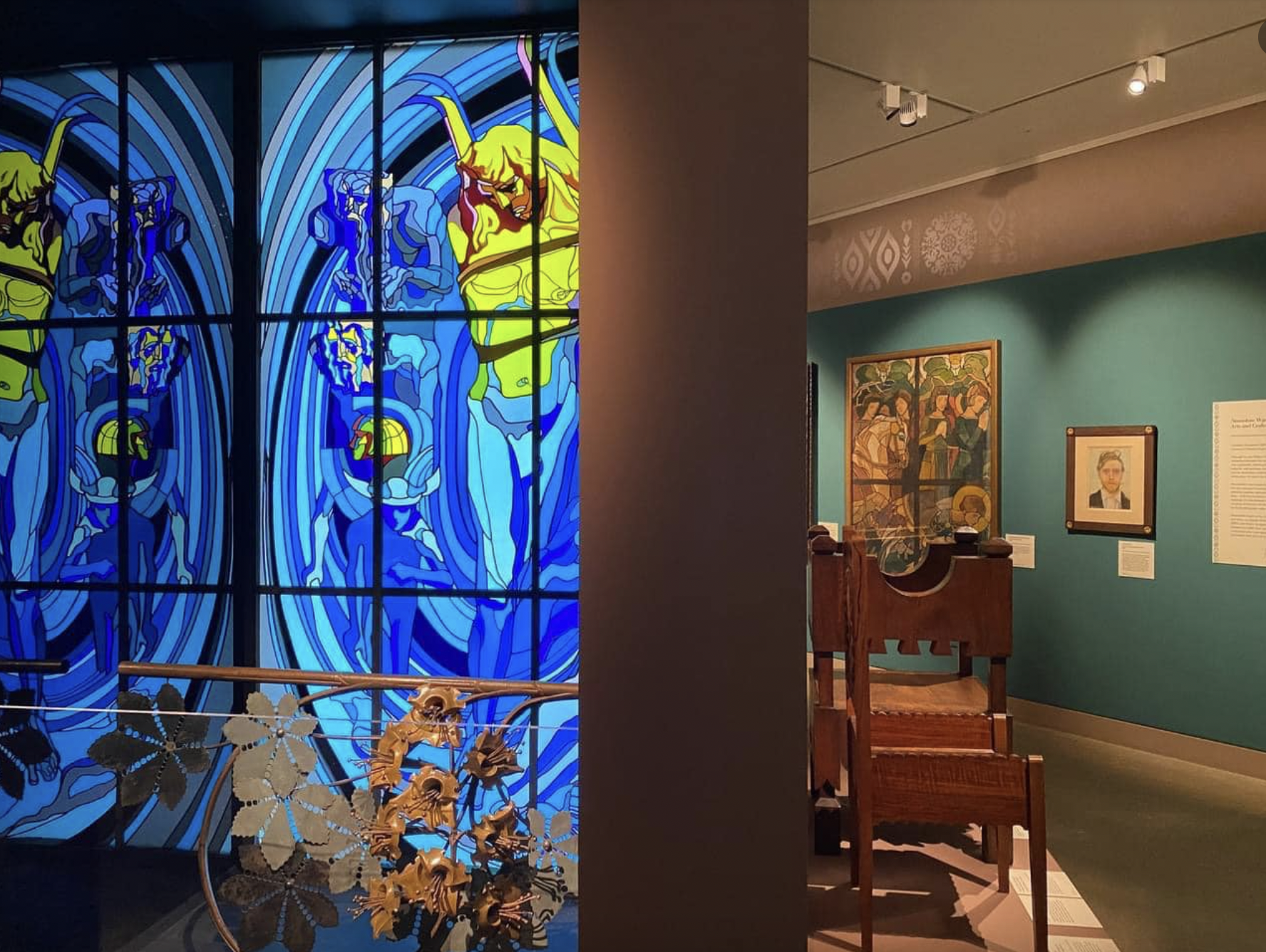
The most important part of the lecture was to explain the idea and art excellence of the famous decorative scheme at the Franciscan Church in Kraków.
Source: IAR, Polskie Radio, Culture.pl
Photo: @Historia_PR, British Poles
Tomasz Modrzejewski