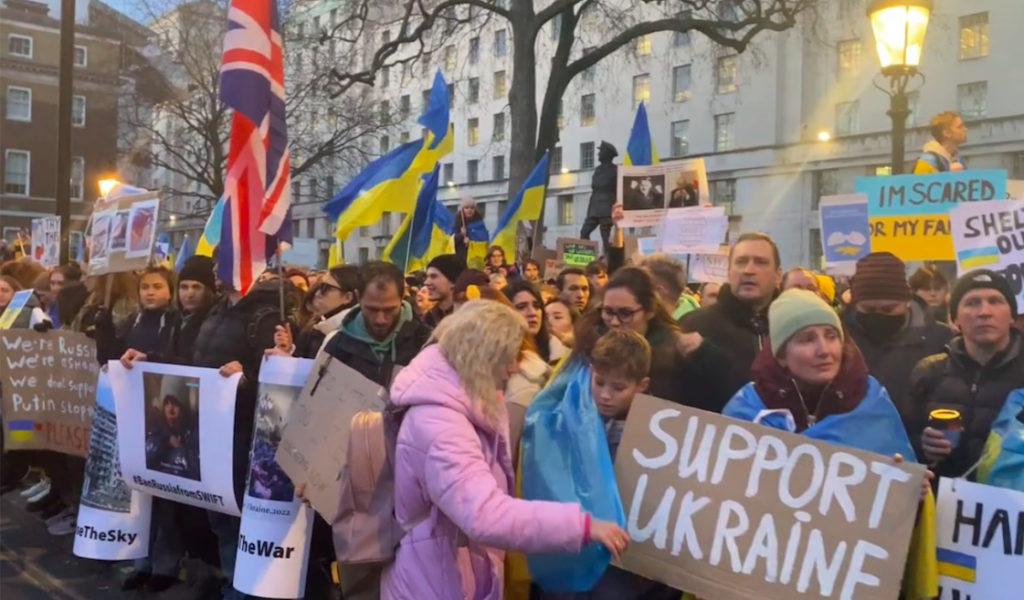
According to a recent press release, the United Kingdom intends to maintain its position as the global leader in providing global support to individuals affected by devastating conflict, catastrophic weather, and lasting pandemic effects. On World Humanitarian Day (19.08), the United Kingdom government announced £36 million in humanitarian aid for the most vulnerable groups in Ukraine, East Asia, and Syria. In the case of Russia invasion of Ukraine, the funds will be used to deliver emergency care to the most vulnerable and to commemorate aid workers.
Since 2015, the United Kingdom has supplied humanitarian assistance to nearly 32.6 million individuals, placing it among the world’s most prominent bilateral humanitarian aid contributors. The heightened pressure from conflicts in Europe, Africa, and the Middle East, as well as the long-lasting consequences of the pandemic and climate change, prompted the announcement of additional funding on World Humanitarian Day. According to a press release issued by the United Kingdom government, £15 million will be used to assist 200,000 of the most vulnerable people affected by the conflict in Ukraine, including children, the elderly, and those with disabilities.
Local aid workers are at the forefront of efforts to provide humanitarian aid and will focus on the United Kingdom’s funding plan. Currently, the British government is collaborating with partners in Poland to fulfil its humanitarian commitment. Michael Young, Mercy Corps Ukraine Response Director, stated, „In Ukraine and Poland, we have partnered directly with local organisations that know their community needs best and are working quickly to deliver humanitarian aid.” The organisation works in close collaboration with grassroot civil society groups to provide „emergency assistance to cover basic needs, including food, water and sanitation, psychological support and childcare services”.
In addition to emergency assistance and offering essential supplies, the local groups are the first points of contact and should provide reliable information on “where to access basic services, safe routes, legal rights for refugees and people displaced inside Ukraine”.
Russia’s actions exacerbate the global food crisis
One of the implications of the Russian invasion in Ukraine was the threat of a long-term halt in food delivery from Ukrainian ports, especially in Odesa. The United Nations reached an agreement in July to continue grain exports through Ukrainian ports. As the world monitors Russia’s compliance with the agreement, the instability of food supply to the world’s poorest regions has aggravated the global food crisis, particularly in East Africa.
According to a UN statement, the deal presented „a beacon of hope” for addressing the global food crisis. Rosemary DiCarlo, Under-Secretary-General for Political and Peacebuilding Affairs, comments that “the grain agreement is a sign that dialogue between the parties is possible in the search to ease human suffering”.
The United Nations agreed to promote access to Russian food products and fertilizers. However, the UK offered £1.5 million to “deploy technology to identify whether grain sold by Russia on the world market has been stolen from Ukraine”. The United Kingdom will provide a package of rail help to facilitate the transfer of grain, while additional military capabilities will bolster port security in Ukraine.
Humanitarian aid beyond Ukraine
Additional funding will be made available to deliver emergency care to those affected by the crisis in Syria, as well as the drought and the food shortages in East Africa, where almost 48 million people suffer from severe food insecurity. The government of the United Kingdom intends to alleviate the problem by allocating £14 million to save lives in nations suffering the most from the food crisis and prevent the number of people experiencing famine from increasing.
£5 million will be allocated to boost the UK Somalia programme, which aims to provide “life-saving health, nutrition, food security and water and sanitation assistance to over half a million people in some of the most vulnerable families”. According to a statement by UNICEF’s Deputy Regional Director for Eastern and Southern Africa, Rania Dagash, 386,000 children in Somalia are in dire need of treatment for life-threatening malnutrition, surpassing the 340,000 children who required treatment during the 2011 famine. Dagash states, „across Ethiopia, Kenya and Somalia, more than 1.7 million children are in urgent need of treatment for severe acute malnutrition”.
In addition, £6 million will be provided to the Ethiopia Humanitarian Fund, which assists underfunded communities hit by drought or conflict. Finally, £3 million will be allocated to support the World Food Programme in expanding its worldwide food assistance outreach.
The UK Government also announced a £7 million package to aid Syrian refugees in Lebanon. The UK is currently the third largest financial donor to aid the crisis in Syria and support Syrian refugees, having contributed approximately £3.8 billion in its largest humanitarian response in British history. The recently pledged funds will be made available through the World Food Programme to “provide more than 150,000 people with food, water and nutrition” as part of the UK’s pledge during the Brussels Pledging Conference for the Syria Crisis to provide up to £158 million in aid funding.
Picture: British Poles
Author: Marta Kakol
Marta has recently graduated from Utrecht University, obtaining a Bachelor of Science in Philosophy, Politics and Economics. Her interdisciplinary education allows her to apply multiple perspectives to complex political issues. She vocalizes her interest in public affairs in a multitude of ways, from journalistic writing to organising speaker events. She will soon continue her education by undertaking a Master’s in Politics Research at the University of Oxford.