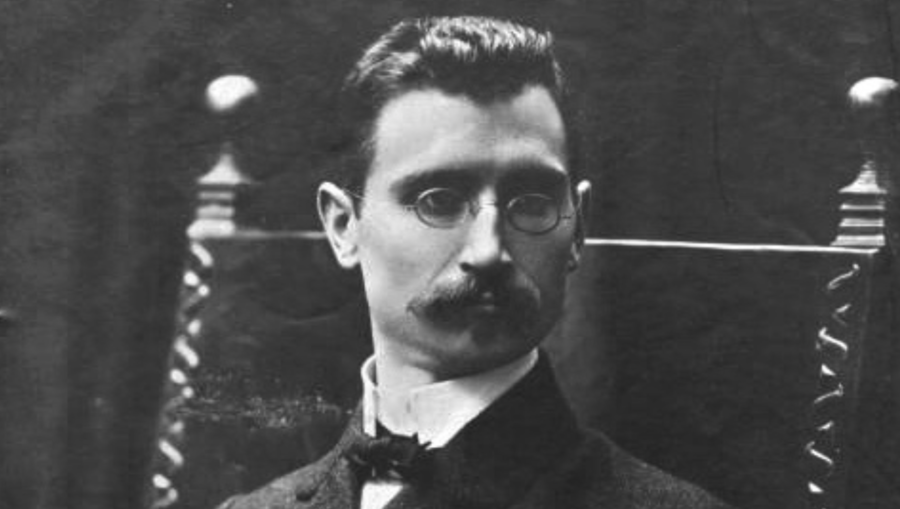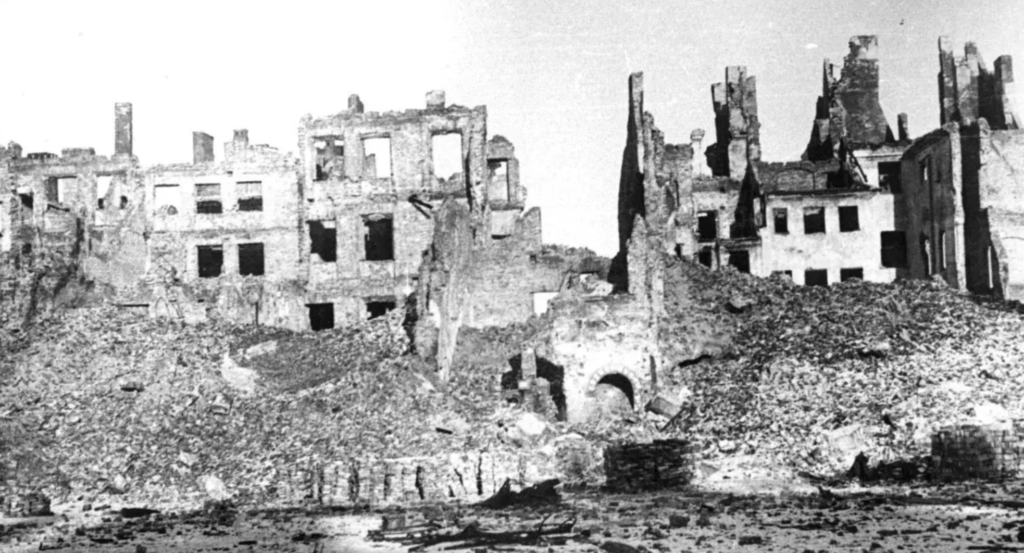
One of the least-known parts of Warsaw’s history is the Soviet air raids on the city during World War 2. During the 45 years of communist rule in Poland the topic was nonexistent due to censorship laws, but Today, very few people know about that event.
Soviet air raids on Warsaw began almost immediately after the outbreak of the German-Soviet war in June 1941. The first attack took place on 23 June. The targets of the air raid were the Kierbedzia Bridge and Okęcie. The accuracy of these bombings was very low.
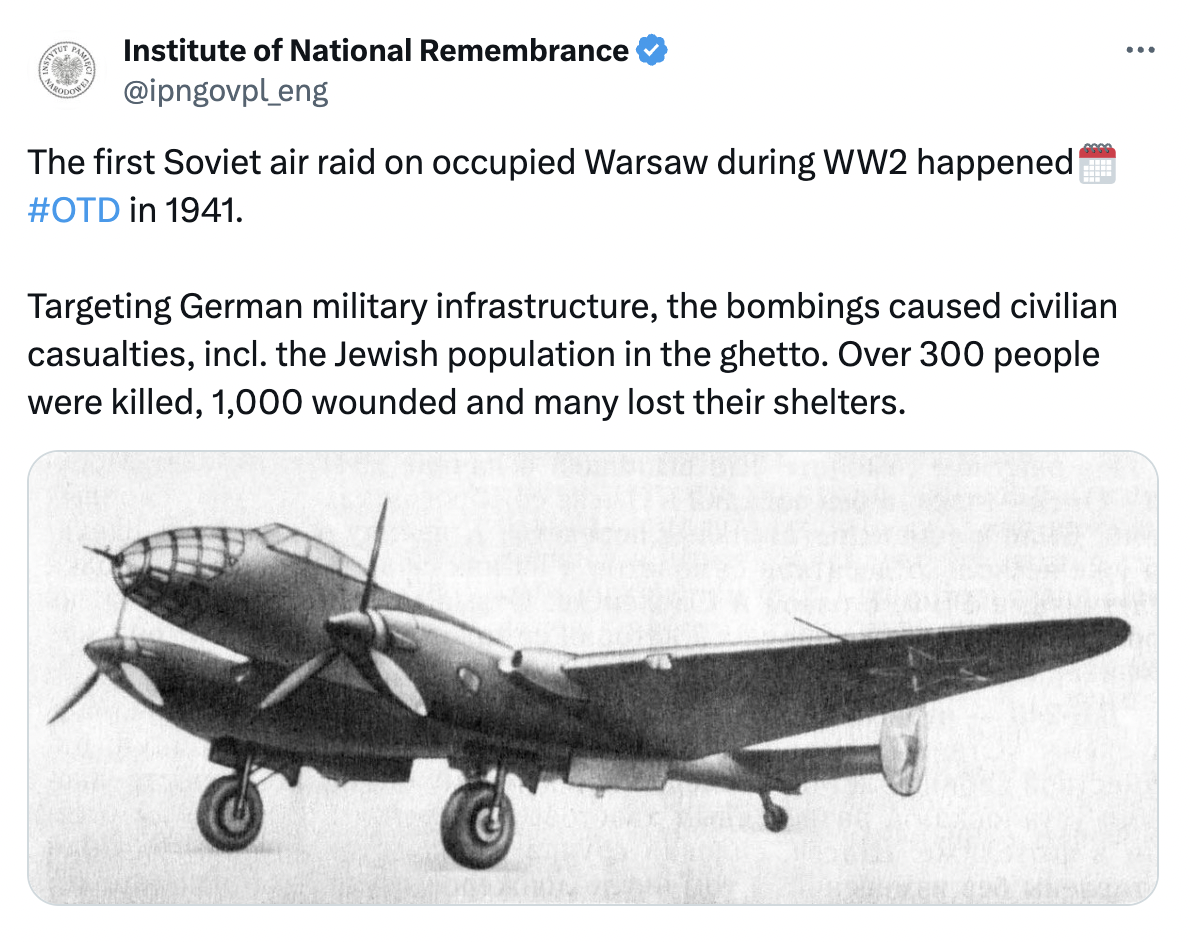
As a result of the initial attacks the Soviet planes destroyed a house, blew up a tram and destroyed the horse racing track in Służew, killing some 40 German soldiers. The reports of the bombings said both the Soviets and Germans were incompetent in their fighting. The Russian planes bombed the city from a very high altitude and therefore were unable to destroy any meaningful infrastructure, whereas the Germans reacted too slowly to chase any of the attack planes.
The first raid killed 34 civilians and wounded dozens.
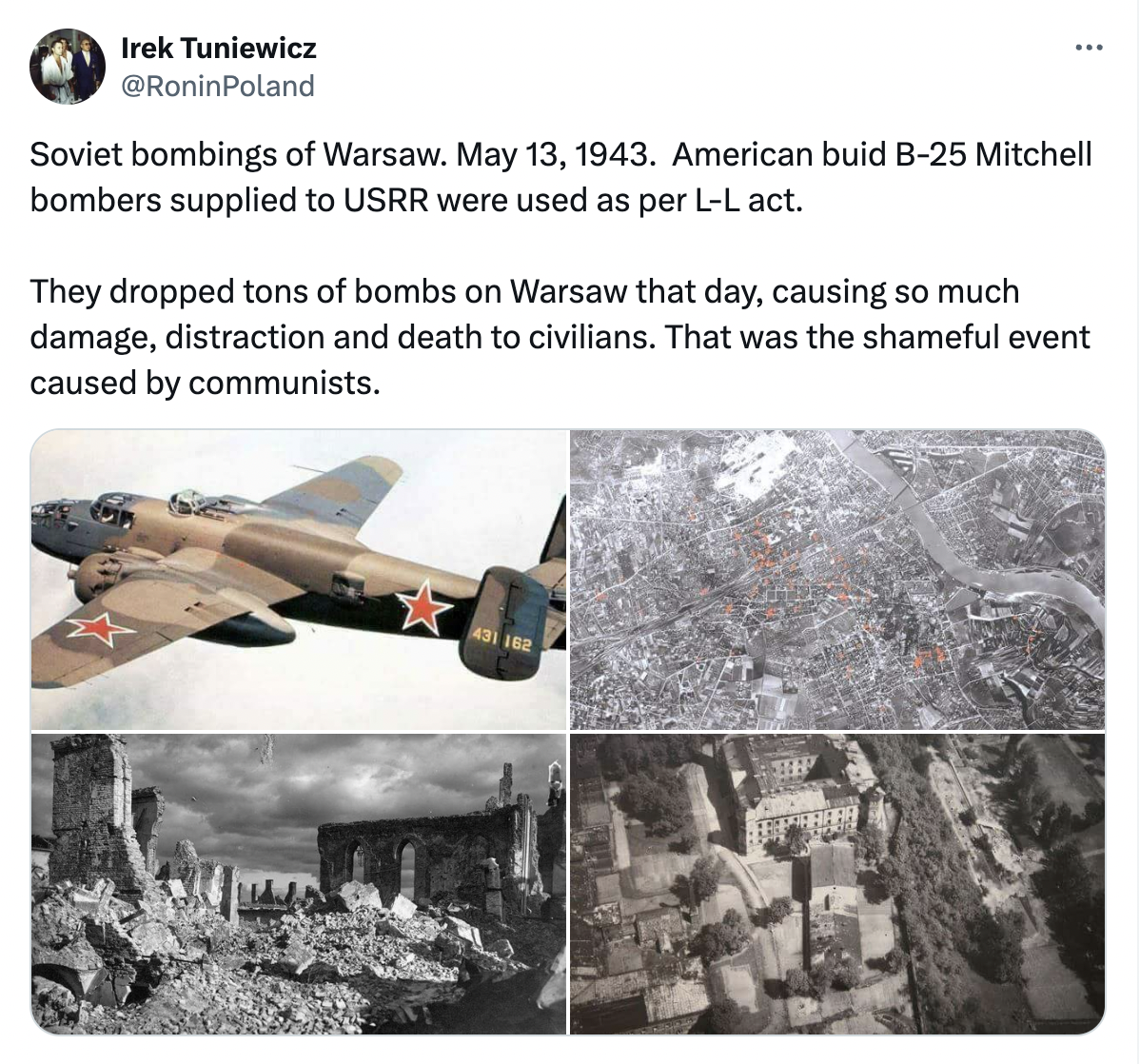
During the next bombing of 26 June, some of the bombs fell in the area of Srebrna and Miedziana Street, damaging three houses, killing around 50 people and injuring over a hundred. One hundred houses in this district had their windows blown out completely.
On 20 August 1942, at 23:15, another air raid took place, about 250 demolition and incendiary bombs of various weights (100-300 kg) fell on the city. The bombings were planned to reach several railway stations, the Telecommunications Office, Bielany, Okęcie, the Gestapo building on Szucha Street, and Pasta. None of the alleged targets were destroyed.
According to reports the bombings killed some 800 Poles and wounded around 1000. Among German civilians, more than 200 were killed and 400 wounded.
In other air raids, Soviet bombs damaged or destroyed around 100 residential buildings, including 2 civilian hospitals and caused the deaths of around 200 Poles.
The attacks continued until 1944, and killed and wounded thousands of Poles, destroying a lot of civilian infrastructure and therefore increasing the suffering of the nation under the German occupation.
Source: wSieci Historii, Polskifr.fr
Tomasz Modrzejewski
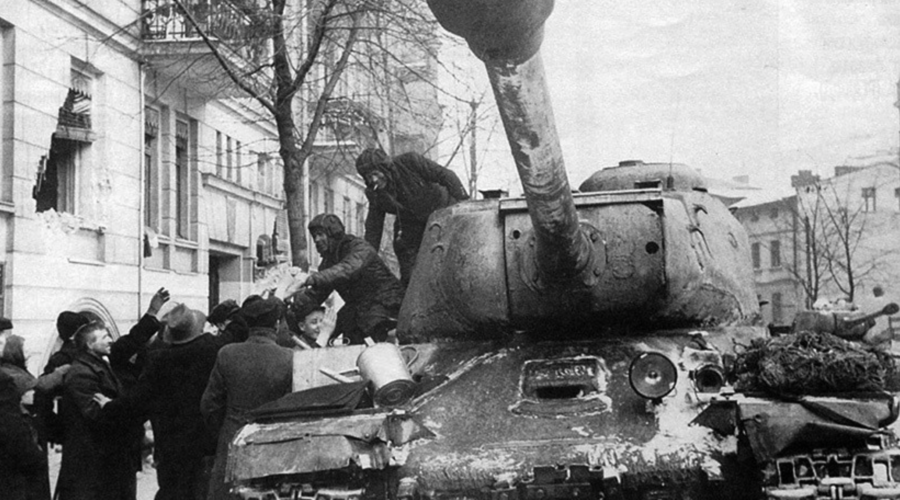
Photo: Żdżarski Wacław / Narodowe Archiwum Cyfrowe