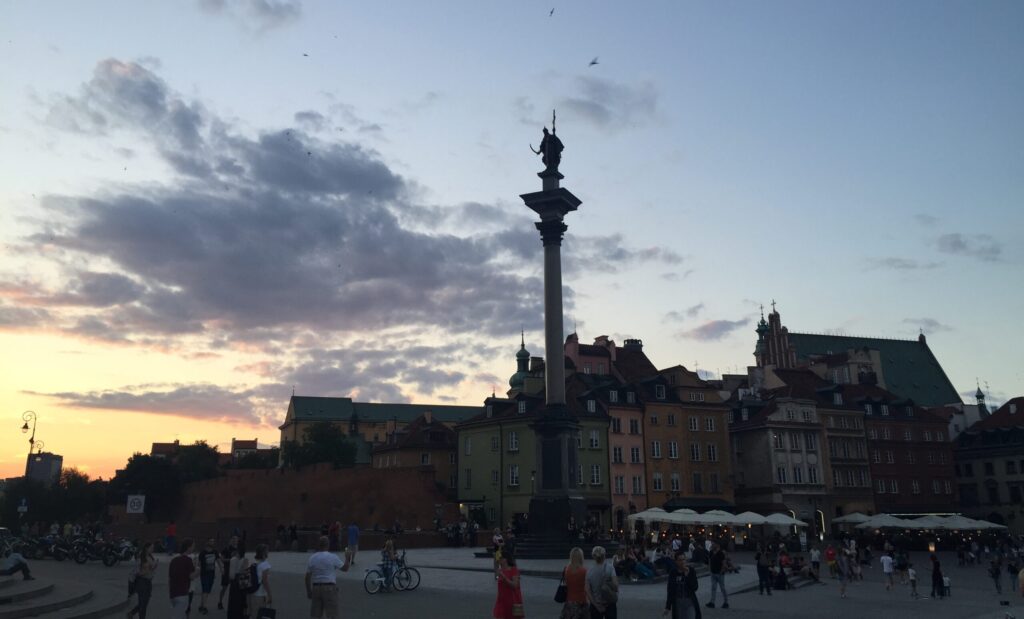
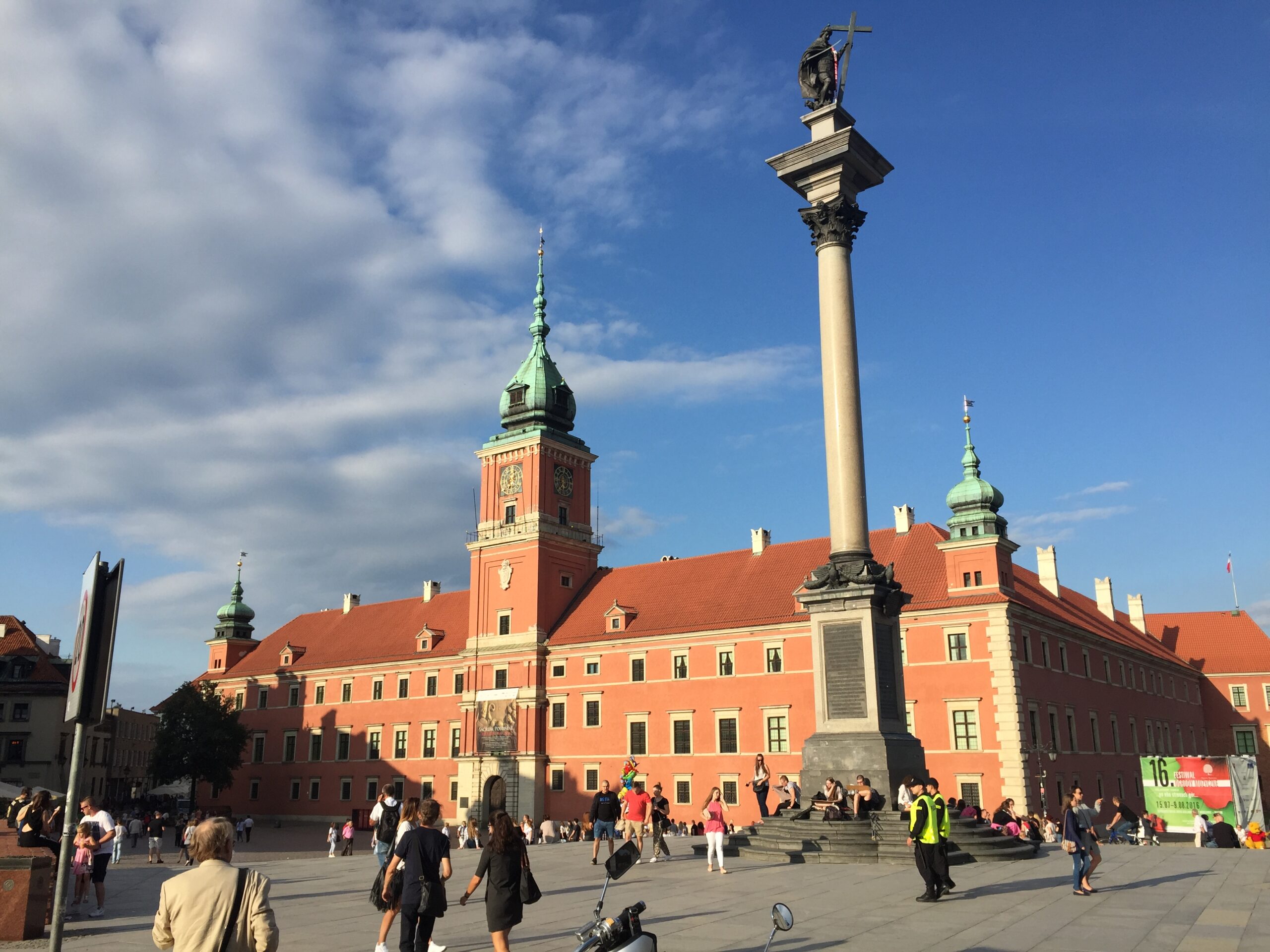
The Sigismund Column is a must-see for anyone who travels to Warsaw. Located right in front of the Royal Castle in the heart of the Old Town, the famous monument was erected in 1644.
The monument depicts King Sigismund III who is presented as a knight and ruler. The crown and the mantle are symbols of monarchy, the armour and the sabre – of chivalry. The cross the king holds in his hand is a sign of devotion to the Catholic faith.
The initiator of the statue was King Władysław IV Vaza, Sigismund’s on and successor on the Polish throne. He hired some of the most famous artists and craftsmen and sculptors from across Europe to create this monument commemorating his father. It was modelled among others on the Italian column-shaped monuments in front of the Basilica di Santa Maria Maggiore in Rome.
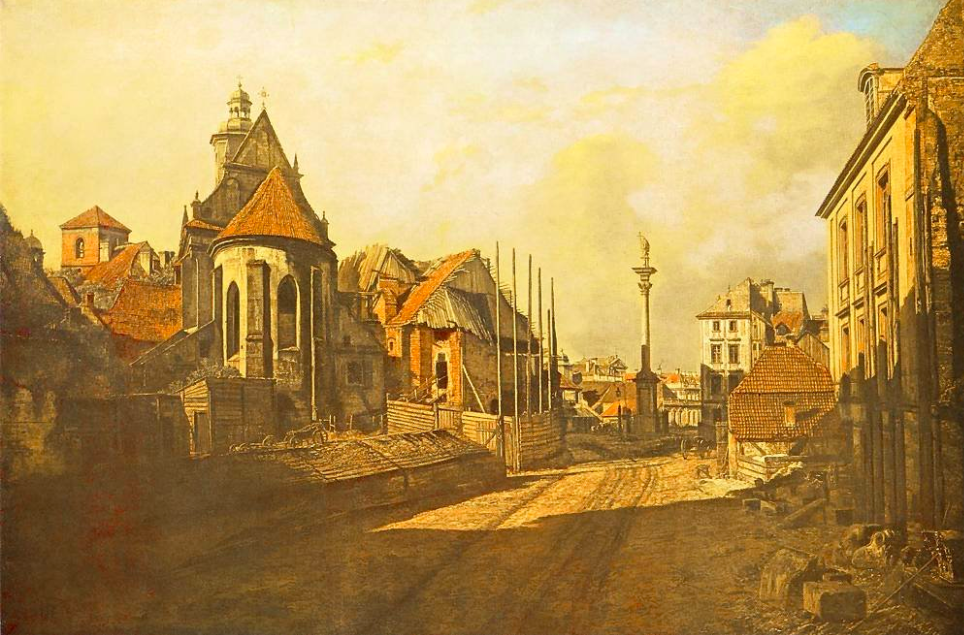
The column was damaged as a result of the Swedish invasions dating back to the XVIIth and XVIIIth centuries. Therefore, the marble column had to be renovated and rearranged several times. Until the unveiling of the Napoleonic column on the Paris Vendôme Square in 1810, Sigismund’s Column was the only secular column in Europe.
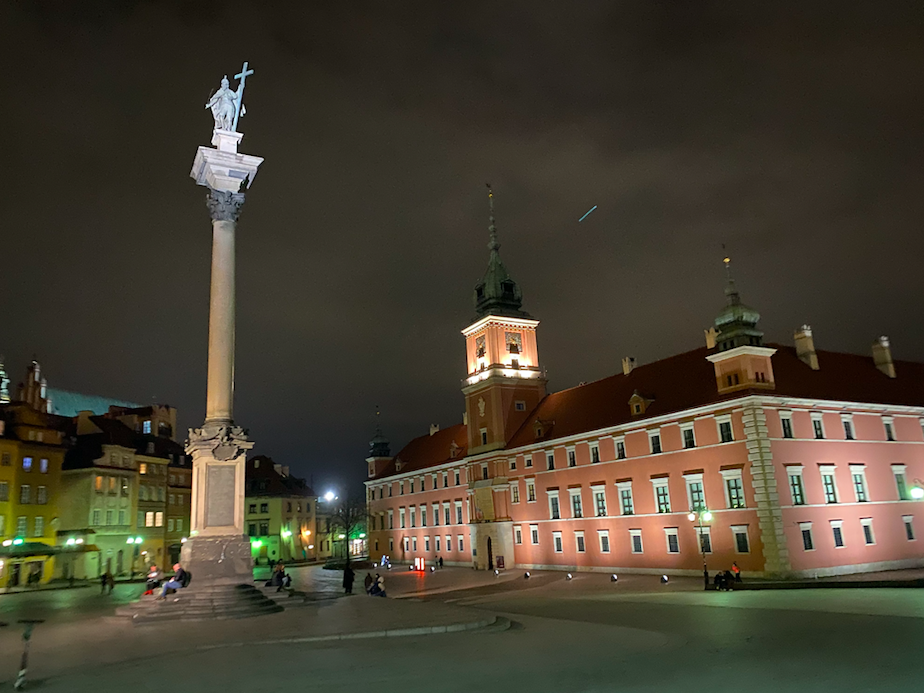
Like most of the Polish capital, the monument was destroyed by Germans during the 1944 Warsaw uprising. However, the statue of the king fell to the ground in such a way that it was not seriously damaged. The initiators of its reconstruction were among others workers of the metal, ceramics and chemical industry. The new design of the column reconstruction was prepared by Stanisław Żaryn.
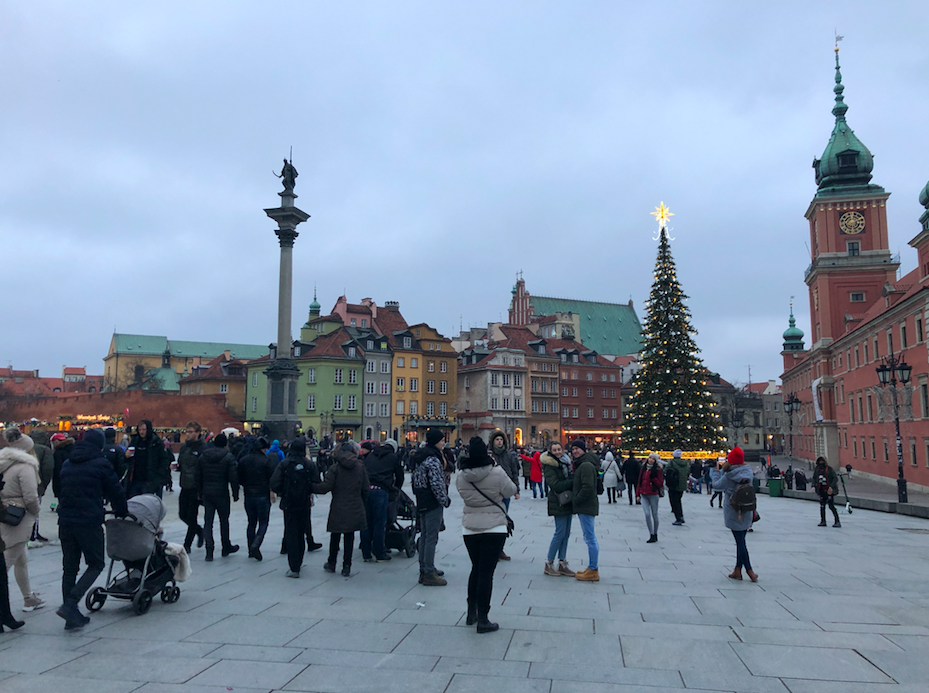
Today, the column stands proudly on Warsaw’s Castle Square. In addition to being an interesting tourist attraction, it is also a practical and classic meeting point for anyone wanting to enjoy a walk in the Old Town of the Polish capital.
Author: Sébastien Meuwissen
Photos: British Poles