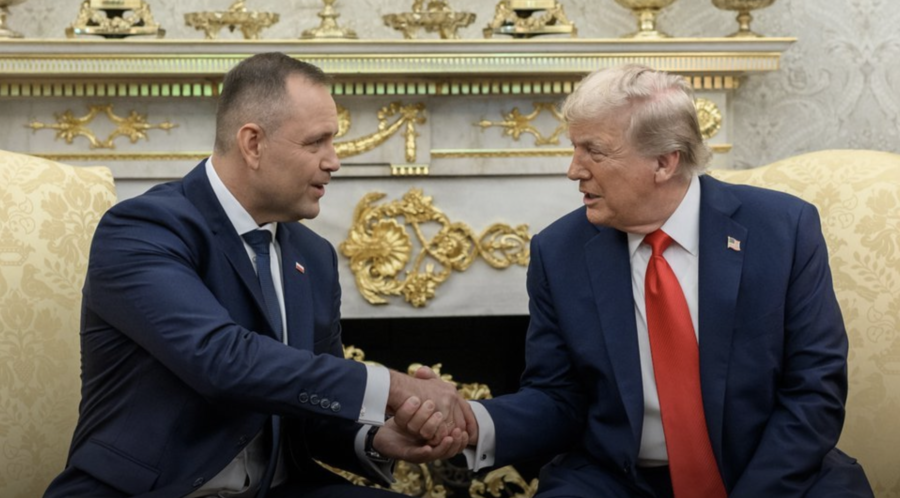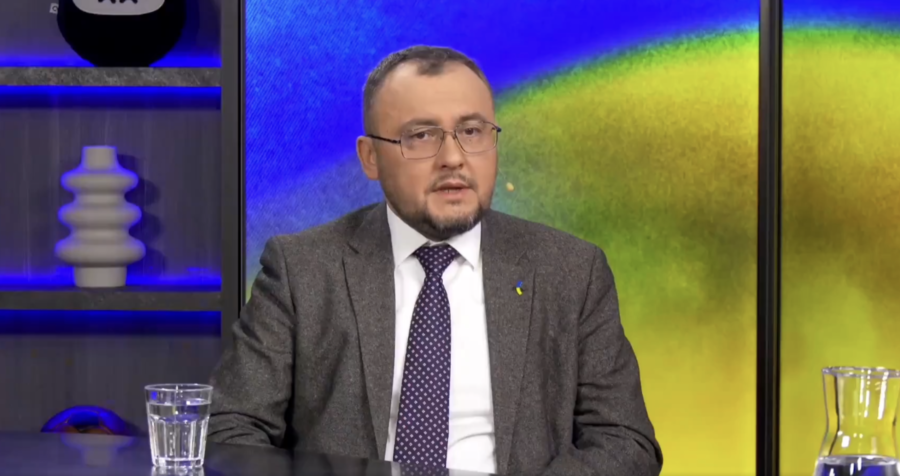
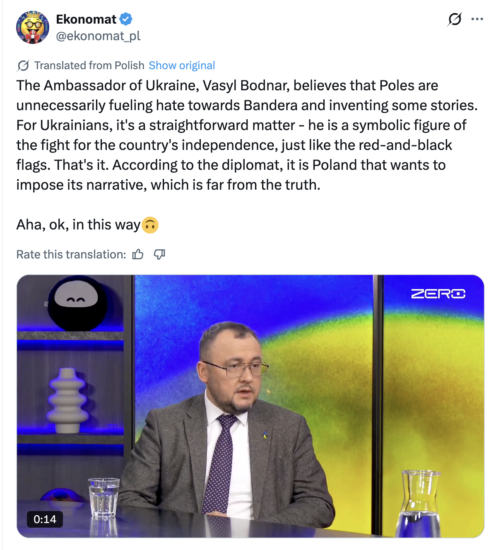
A question about one of the most controversial figures in Ukrainian–Polish historical memory has once again ignited public debate. During an interview on the Kanał Zero programme, Ukraine’s ambassador to Poland, Vasyl Bodnar, was asked directly whether Roman Shukhevych should be considered a war criminal. His answer was cautious and telling.
Bodnar declined to issue a clear verdict. Instead, he argued that assessing Shukhevych’s responsibility belongs to historians rather than politicians, warning that emotionally charged discussions often obscure rather than clarify the truth. While stressing his personal and diplomatic condemnation of crimes committed against Polish civilians, he resisted applying the label of “war criminal” without what he described as irrefutable documentary evidence.
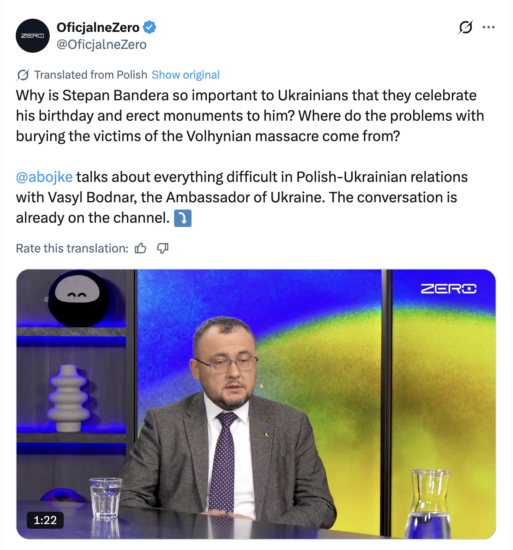
Pressed by the interviewer on whether he could explicitly make such a statement, Bodnar responded unequivocally: he would not. In his view, historical judgments must be grounded in documented proof, not shaped by ideological narratives. He suggested that certain interpretations promoted in Poland treat figures such as Shukhevych and Stepan Bandera as criminals by default, rather than as subjects of rigorous historical inquiry.
The ambassador called for joint work on archival materials and expressed Ukraine’s readiness to engage in dialogue about crimes committed on both sides of the modern Polish–Ukrainian border. Only such an approach, he argued, can provide societies with an honest picture of the past, free from simplifications and political constructions.
Bodnar’s remarks echo earlier statements made by his predecessor, Andrii Deshchytsia, who recently voiced similar doubts about Shukhevych’s classification as a war criminal, also in an interview on Kanał Zero. Deshchytsia further defended Stepan Bandera, portraying him primarily as a figure associated with Ukraine’s struggle for independence and denying his personal involvement in mass killings in Volhynia.
Roman Shukhevych and Stepan Bandera are widely regarded in Polish historical scholarship as figures complicit in wartime atrocities committed against Polish civilians during the Second World War. He was also a member of Ukrainian nazi collaborationist SS units, including Battalion Ukrainische Gruppe Nachtigall, responsible for the 1941 Lviv pogrom.
Shukhevych, as a senior commander of the Ukrainian Insurgent Army (UPA), bore command responsibility during the period of mass killings of Poles in Volhynia and Eastern Galicia in 1943–1944, actions that historians in Poland describe as ethnic cleansing with genocidal characteristics.
Bandera, as the ideological leader of the radical wing of the Organisation of Ukrainian Nationalists (OUN-B), helped shape the political framework and nationalist doctrine that legitimised violence against Poles, even if he was not personally present at the crime scenes, making both men central and deeply controversial figures in the historical assessment of wartime crimes against the Polish population.
Photo: X/@ekonomat_pl
Tomasz Modrzejewski