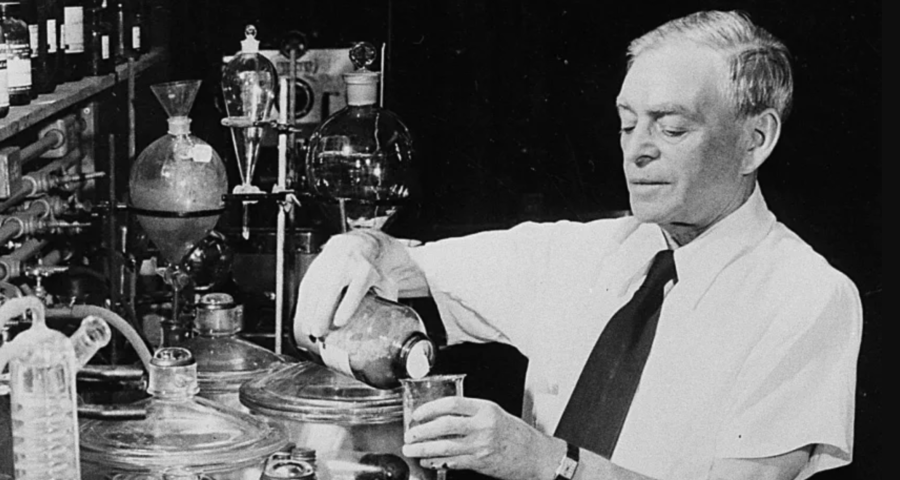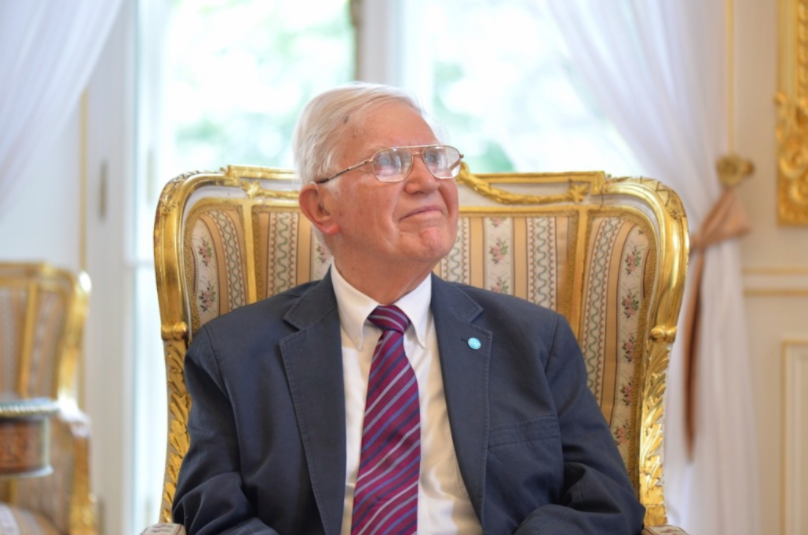
Zbigniew Pełczyński passed away on 22 June 2021 at the age of 95. He was a globally renowned professor of political philosophy associated with the Pembroke College at the University of Oxford. He is credited with opening up British universities, particularly Oxford and Cambridge, to students from post-communist countries.
Test of character during the Second World War
Zbigniew Pełczyński was born in 1925 in Grodzisk Mazowiecki. During the Second World War, he was a member of the Home Army (Armia Krajowa). As an 18-year old he fought in the Warsaw Uprising and, as a result, was imprisoned by the German army in a camp near Bremen. He was liberated by the Allies and joined the First Armoured Division of General Maczek, under the command of the British Army. Pełczyński received the privileges of a British Army veteran, which allowed him to obtain a university scholarship. After the war, he emigrated to Great Britain to study economics and political science at St. Andrews University in Scotland. He was later offered a grant to study political philosophy and political science at the University of Oxford.
Opening doors for Polish students at the University of Oxford and beyond
In 1956 Pełczyński completed his PhD at the Queen’s College in Oxford on the works of the political philosopher Georg Hegel and became a Fellow of Pembroke College. As a professor of political science, he taught hundreds of students who later developed to be globally influential thought leaders, politicians and members of academia. Some of Pełczyński’s most famous students included the former US President, Bill Clinton, Prime Minister of Hungary, Victor Orbán and the former Minister of Foreign Affairs, Radosław Sikorski.
Pełczyński was passionate about creating new opportunities for Polish scholars in Great Britain. In 1982 he established the Oxford College Hospitality Scheme, which allowed Polish scholars to spend time at Oxford with permission from the Communist government. Since 1982, over 140 Polish citizens visited the university facilities as part of the scholarship scheme. Pełczyński made regular visits to Poland and actively developed other scholarship programmes. Thanks to Zbigniew Pełczyński over 1300 students from Central and Eastern Europe received various scholarships to study at Oxford and beyond. In 1982, he convinced George Soros, a Hungarian-American founder of the Open Society Foundations, to offer scholarships to Hungarian as well as Polish students and establish the Batory Foundation in Poland.

Building social capital in Poland
While Great Britain became his second home, Pełczyński never forgot about the foundational work that had to be done in Poland. In the 1990s, Dr Pełczynski regularly provided advice to the Polish government, following the democratization of post-Communist Poland. He served as an Advisor to the Constitutional Committee of the Polish Sejm as well as an Advisor to the Chief of the Chancellery of the Prime Minister of Poland. He was also a consultant of the European Economic Union and OECD for governmental and administrative reforms in Poland. In 1989 he was awarded the Commander’s Cross of the Order of Polonia Restituta. Moreover, in 1993 he received an Order of the British Empire for his contribution to improving British-Polish relations.
In 1994 Zbigniew Pełczyński embarked on one of the most ambitious projects in his career when he founded the School for Young Social and Political Leaders, later renamed to School for Leaders. The main aim of the organisation, which to this day has had over 4000 Polish graduates, is to create “social capital based on leadership”. The school promotes open debate and the development of leadership skills. Members of the School for Leaders are active within various political and civil society institutions in Poland and across Europe.
“For over 27 years, we have been working for the development of conscious, value-based leadership. We seek out and support female and male leaders in various areas of public life: in non-governmental organisations, local government institutions and political parties and organisations. We believe that it is people with leadership qualities who drive change, drawing others with them.” (Extract from the mission statement of the School for Leaders)
Pełczyński led the School for Leaders until his death earlier this year.
In 2017, Pełczyński initiated the idea of a Congress of Polish Student Societies in the UK. This year’s XVth edition will take place at Oxford and open with a speaker panel commemorating his achievements.
Author: Marta Kąkol
Photo: Twitter @Politics_Oxford