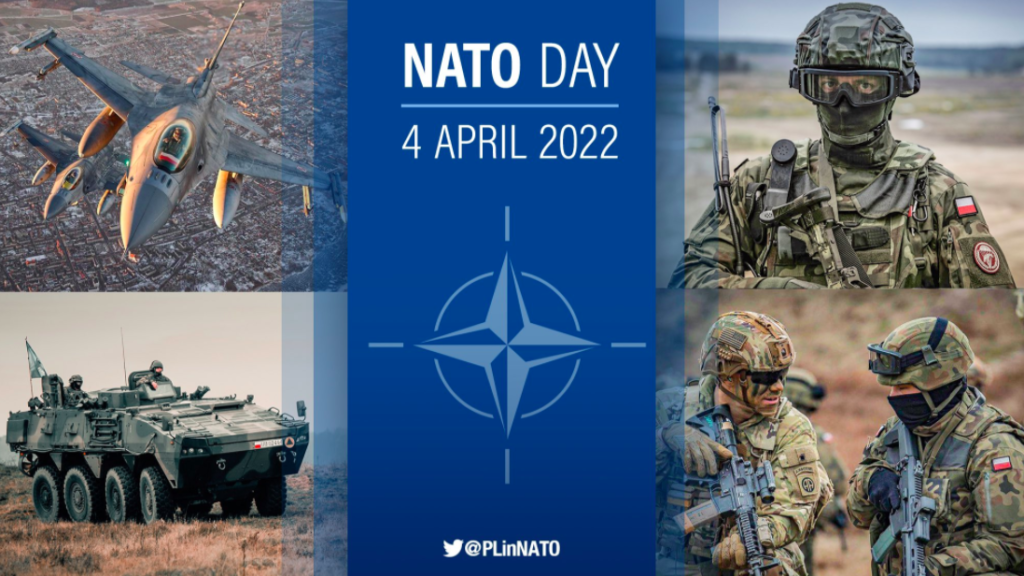
When the North Atlantic Treaty Organisation (NATO) was established in 1949, Europe was just starting mourning millions of casualties of WWII and slowly starting to rebuild itself. NATO’s primary aim was to reconstruct the security of Western Europe and North America following years of destruction and mayhem.
NATO counted initially only 12 members (USA, Belgium, Canada, Denmark, France, Netherlands, Italy, Iceland, Luxembourg, Norway, and Portugal and the UK).
https://twitter.com/PLinNATO/status/1510922594521915395?s=20&t=adv3zebFBq9VFFAhatCQOQ
With the passing decades, many new countries were added to this list. Greece and Turkey joined the organisation in 1952, followed by Germany (1955) and Spain (1982).
In 1999, a key step was taken in the context of today’s invasion of Ukraine by Russia as Poland, the Czech Republic and Hungary joined the Transatlantic Alliance.
The following enlargement of 2004 included Bulgaria, Estonia, Latvia, Lithuania, Romania, Slovakia, and Slovenia.
Since then, 4 other countries joined NATO, namely Albania (2009), Croatia (2009), Montenegro (2017) and eventually North Macedonia (2020).
The ongoing war between Ukraine and Russia has been a powerful reminder of the importance of a security strategy of the West in the midst of growing threats coming from third countries such as Russia.
Since Russia’s military mobility on the Ukrainian border began to increase last November, NATO has increased its military build-up on its eastern flank, in Poland, Romania, Bulgaria, Hungary, and Slovakia.
NATO’s headquarters are located in the Belgian capital, Brussels, where each member state operates with permanent representations led by an ambassador. The latter’s role is to defend the interests of the country his or her country, to conduct consultations and to participate in the decision-making process.
The Article 5 of the organisation’s charter is often referred to in the media nowadays as it stipulates that if a NATO ally falls victim to an armed aggression, every other member of the alliance is expected to take action in support of the attacked country.
Leaders of NATO countries meet at regular summits every two years. As it could be observed in the last few weeks, it also happens that irregular summits are organised in the case of exceptional events, such as the current war in Eastern Europe. The following regular summit is to take place in Madrid on the 29th and 30th of June.
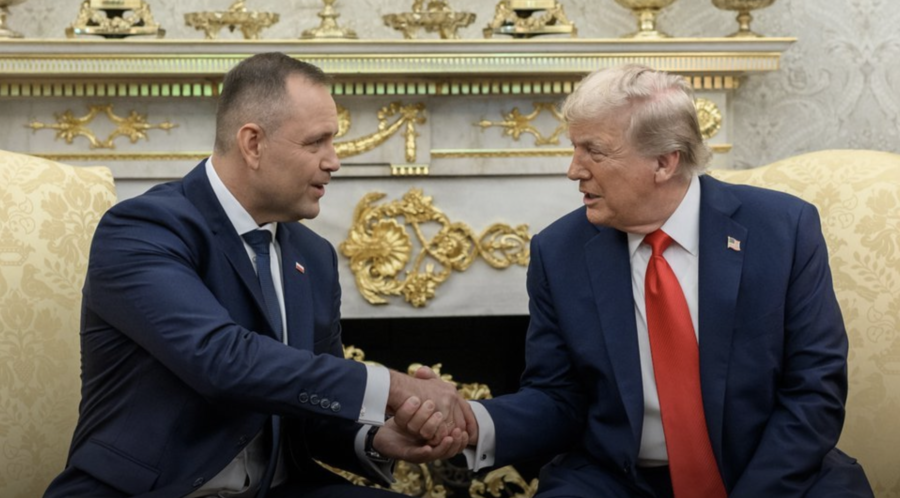
Image: Twitter @PLinNATO
Author: Sébastien Meuwissen