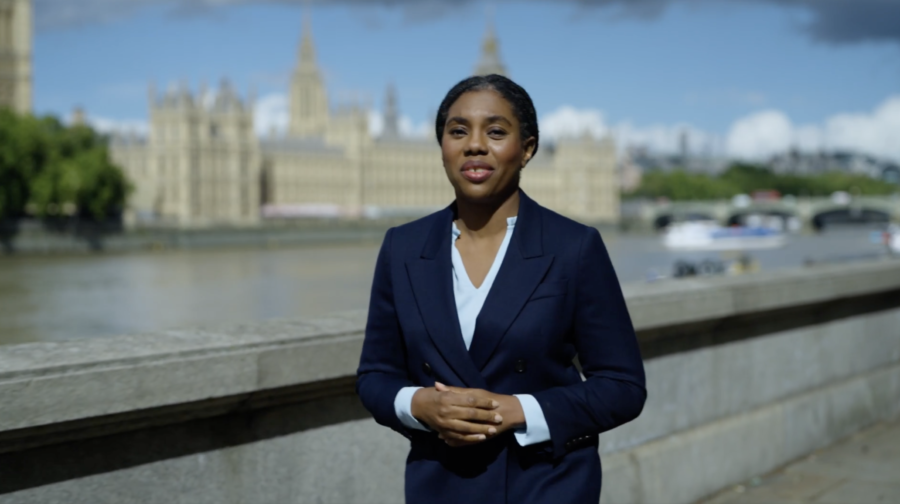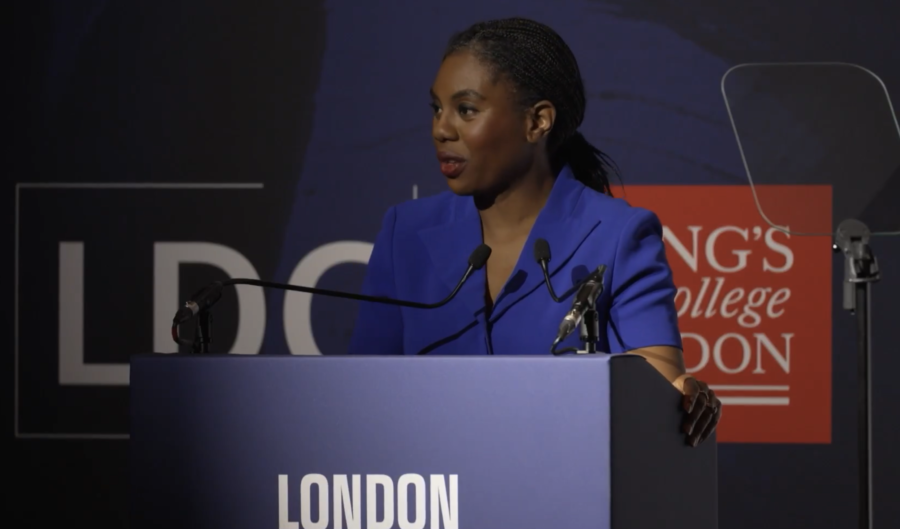
During the second day of the London Defence Conference, a striking theme emerged in the keynote address delivered by Kemi Badenoch, leader of the British opposition. In a speech notable for its candour and strategic urgency, Poland was repeatedly invoked as a model of seriousness, resolve, and forward-thinking defence policy, an increasingly rare combination in contemporary Europe.
Badenoch highlighted Poland as a “positive point of reference” for three principal reasons. First, she emphasised Warsaw’s willingness to allocate substantial financial resources to national defence. In recent years, Poland has committed to one of the highest defence spending levels within NATO, signalling a clear understanding of the evolving security environment in Europe.
Secondly, she pointed to Poland’s large-scale procurement of modern military equipment, particularly tanks and armoured systems. These acquisitions are not merely symbolic; they represent a tangible enhancement of operational readiness and deterrence capability on NATO’s eastern flank.

Thirdly, and perhaps most importantly, Badenoch underscored Poland’s seriousness of purpose, its readiness to defend its values and sovereignty. In her framing, Poland embodies a strategic culture that combines political will with military preparedness, a combination she implied has been eroded elsewhere.
Alongside Poland, Finland was cited as another exemplary state. Finland’s long-standing tradition of territorial defence, societal resilience, and its recent accession to NATO reinforce its position as a credible and capable security actor. The pairing of Poland and Finland in Badenoch’s speech was telling: both countries share a proximity to Russia and a historically informed awareness of geopolitical risk, which has translated into robust defence policies.
Beyond the formal address, Poland’s reputation reportedly resonated in informal discussions throughout the conference. Participants frequently referred to the country with a degree of respect that suggests a broader shift in European perceptions. Poland is no longer viewed merely as a recipient of security guarantees but increasingly as a contributor to and even a shaper of regional defence norms.
A particularly provocative element of Badenoch’s speech was her announcement of an intention to end the prosecution of military veterans through domestic and international legal mechanisms. To achieve this, she proposed rejecting the jurisdiction of the European Court of Human Rights in Strasbourg.
This declaration marks a significant departure from established British legal orthodoxy and signals a willingness to reconsider the balance between legal accountability and operational effectiveness. While debates in Poland have often focused on the perceived overreach of the Court of Justice of the European Union, Badenoch’s remarks draw attention to what she characterised as the “paralysing” influence of Strasbourg jurisprudence on military decision-making.
Perhaps the most arresting moment of the speech came with Badenoch’s stark assessment of the United Kingdom’s current military position. Despite acknowledging the high competence of British armed forces and intelligence services, she argued that flawed political decisions have left the country “militarily the weakest it has been in 400 years.”
According to Badenoch, this situation is the cumulative result of continuous defence spending cuts between 1989 and 2022, a period she memorably described as a “conspiracy of stupidity.”
The phrase encapsulates her broader critique: that successive governments failed to adapt to a changing strategic environment, prioritising short-term fiscal considerations over long-term security imperatives.
Badenoch’s address at the London Defence Conference represents more than a critique of past policy; it is a call for strategic recalibration. By elevating Poland and, to a lesser extent, Finland as models, she implicitly challenges the United Kingdom and its allies to rethink their approach to defence.
In an era marked by renewed great-power competition and heightened uncertainty, the examples of Warsaw and Helsinki suggest that credibility in defence rests not only on capability, but on clarity of purpose. Whether Badenoch’s proposals will translate into policy remains to be seen, but her speech has undoubtedly reframed the conversation.
Photo: X/Conservatives
Tomasz Modrzejewski