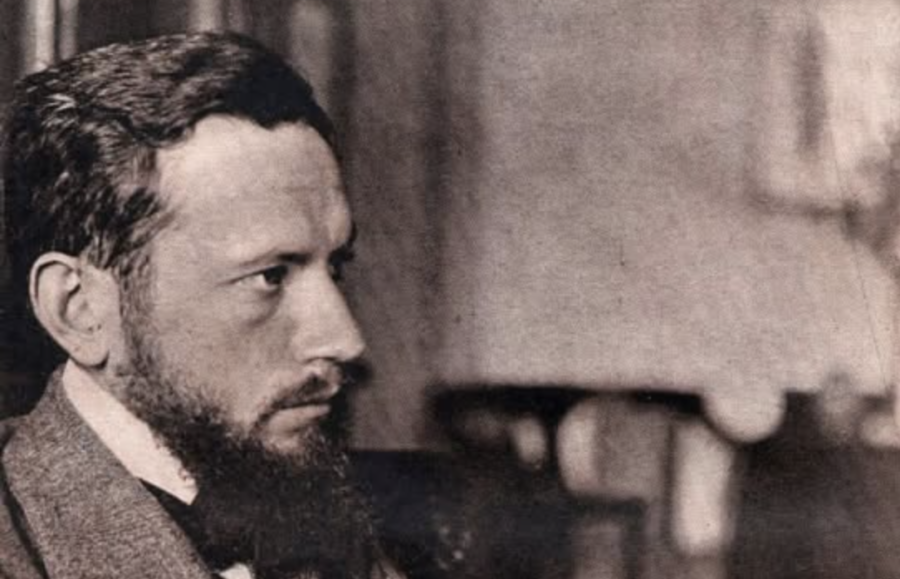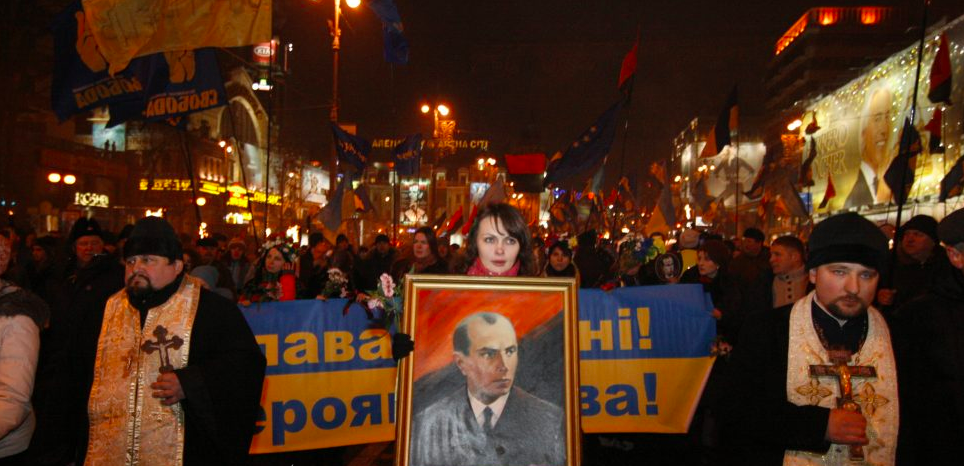
The town council of the Western Ukrainian town of Tyvriv (Tywrów – Vinnytsia Oblast) liquidated a street name commemorating Ukrainian nationalistic leader and war criminal Stepan Bandera. Statues of the latter can still be seen in several places across Western Ukraine, despite the available evidence of the atrocities he’s responsible for.
In June, the local council of Tyvriv decided to get rid of two street names, one honouring Stepan Bandera and the other the Galician army, a nationalistic military formation which actively collaborated with Nazi Germany in the first half of the 1940s. Back then, many Western Ukrainians, unfortunately, perceived Adolf Hitler as a partner susceptible to help in the establishment of an independent Ukrainian state.
https://twitter.com/WyrzykowskiP/status/1582848729664880640?s=20&t=HBs1WeEOcg77vl1p0ECqjg
The date of the decision to get rid of Bandera street bears symbolic meaning. Indeed, since 2014, the 10th of October is celebrated as a national holiday commemorating the alleged founder of the Ukrainian Insurgent Army (UPA) following a decision by then President Petro Poroshenko. This year marks the 80th anniversary of the establishment of this criminal organisation.
Although Tyvriv’s council’s recent initiative is an encouraging step forward, a lot of work remains to be done when it comes to the education of Ukrainians about their history, especially when it comes to the mid-20th century. During this period, thousands of Ukrainian citizens perpetrated atrocious crimes against their neighbours from ethnic minorities such as Poles and Jews, among others.
Read also:
https://www.britishpoles.uk/polish-banned-lions-in-lviv-have-finally-been-freed/
According to a survey conducted in August by the Juliusz Mieroszewski Center for Dialogue, less than 15% of Ukrainians acknowledge the responsibility of the UPA for the Volhynia-Małopolska genocide, while twice as many believe that the fault resides “on both sides”. The study also reveals that 8% of Ukrainians believe it was actually Poles who murdered Ukrainians in the 1940s.
Since Russia invaded mainland Ukraine in February of this year, Polish authorities reassured that any Ukrainian seeking help or refuge in Poland will receive it. Since then, tonnes of aid have already been provided by Poles to their neighbours, which considerably warmed Polish-Ukrainian relations.
Poland has taken in over 7 million refugees fleeing Russia’s invasion of Ukraine so far, according to data provided by the Polish Border Guard agency.
Image: 112.ua
Author: Sébastien Meuwissen