Last minute intervention preserves the historical significance of the Nobel laureate’s establishment. Advocates are now pushing for its official recognition and protection.
France’s Ministry of Culture has intervened just in time to halt the demolition of a significant symbol of France’s scientific and medical history. However, activists emphasise that the battle is not over yet.
The last-minute suspension followed a petition and appeals to President Emmanuel Macron and government officials.
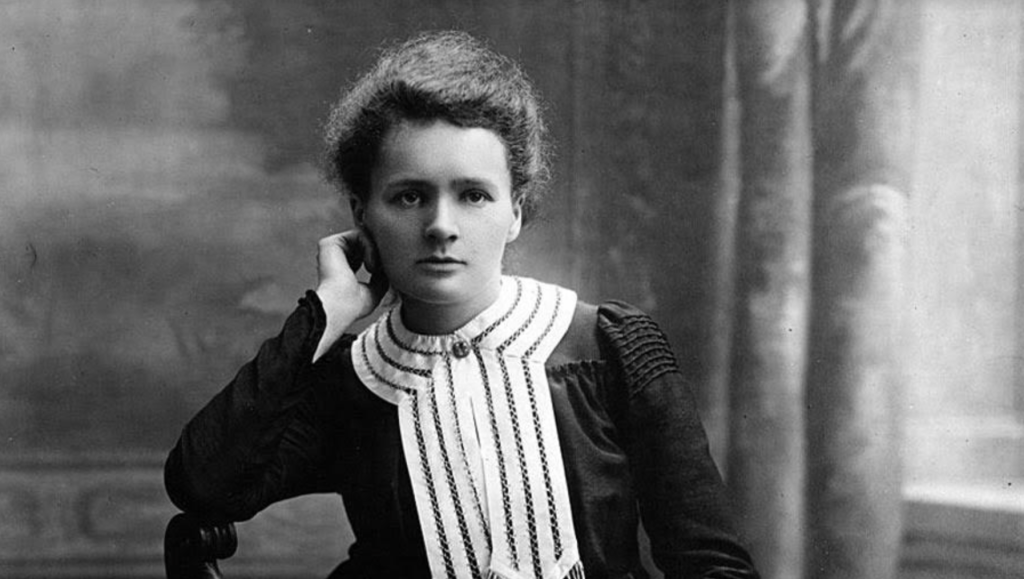
The structure, known as the Pavillon des Sources was constructed in Paris in 1914 as an integral part of Marie Skłodowska-Curie’s laboratory. Originally slated for demolition on Monday, January 8, the city hall had authorised its destruction in March 2023, along with the trees planted by the Nobel laureate. The planned demolition aimed to decontaminate the area where it stood, with the intention of erecting a new building in its place.
Baptiste Gianeselli, who spearheaded the campaign to stop the demolition, warned against the consequences of its proceeding. Gianeselli stated – „If Emmanuel Macron doesn’t understand that it’s not just a historic building but one of the last symbols of Marie Curie, the most illustrious woman of our era, it would be a very serious mistake.(…) It’s unthinkable. The whole site should be classified as historic. Buildings linked to Louis Pasteur were listed in 1981, but not those linked to Marie Curie. The whole site should be protected.”
France’s Minister of Culture, Rima Abdul Malak, announced that the demolition has been suspended following discussions with the Curie Institute, the property owner, to „allow sufficient time for exploring potential alternatives.”
Claudine Monteil, an expert in women’s rights, history, and a former French diplomat who has authored works on Marie Curie, concurred. She affirmed that Curie was a „worldwide icon … an inspiration for women everywhere.”
„This is world heritage. I think they don’t realise what it means symbolically. Marie Curie is the most famous woman scientist in the world and is a reference and inspiration. The Curie Institute does not need to destroy these historic buildings. It has space elsewhere.”
In 1909, a collaboration between the Pasteur Institute and the University of Paris was established to construct a research facility for Marie Curie. The Pavillon des Sources, constructed of brick and stone, served as Curie’s workspace for the preparation of radioactive materials essential for her experiments. This pavilion was part of the Radium Institute, later renamed the Curie Institute, consisting of three structures: the Curie Pavilion, now a museum housing her laboratory, and the Pasteur Pavilion, which accommodated the biology laboratory.
The institute evolved into a prominent global hub for the study of radioactive substances and played a crucial role in advancing the application of radiation in cancer treatment. Amidst the First World War, Curie pioneered the development of mobile X-ray units deployed for diagnosing injuries on the battlefield.
Piotr Wilczek, Polish Ambassador to the UK expressed delight – „A triumph for heritage preservation! Marie Curie’s Paris lab, where the Polish-born Nobel laureate pioneered groundbreaking research, gets a reprieve from demolition. Let’s keep the legacy of this extraordinary scientist alive! „
Author: Patrycja Bodzek-Kurzyńska
Photo: Media Library – Embassy of France