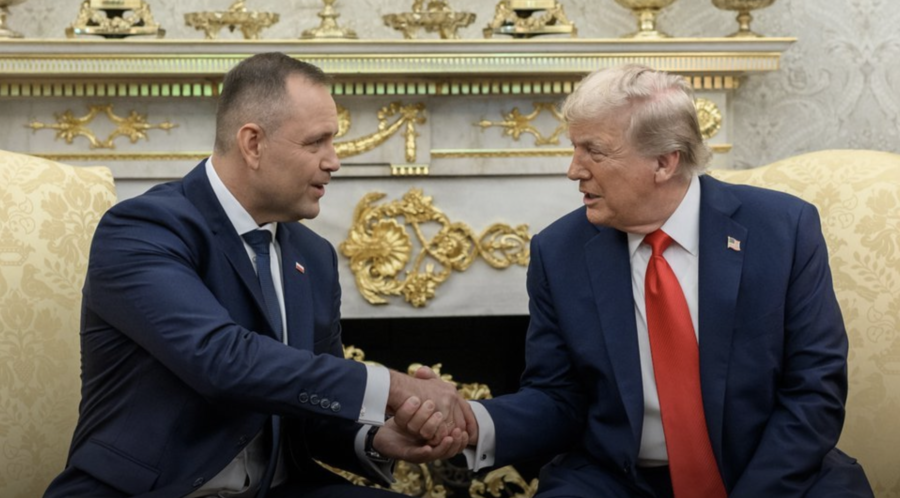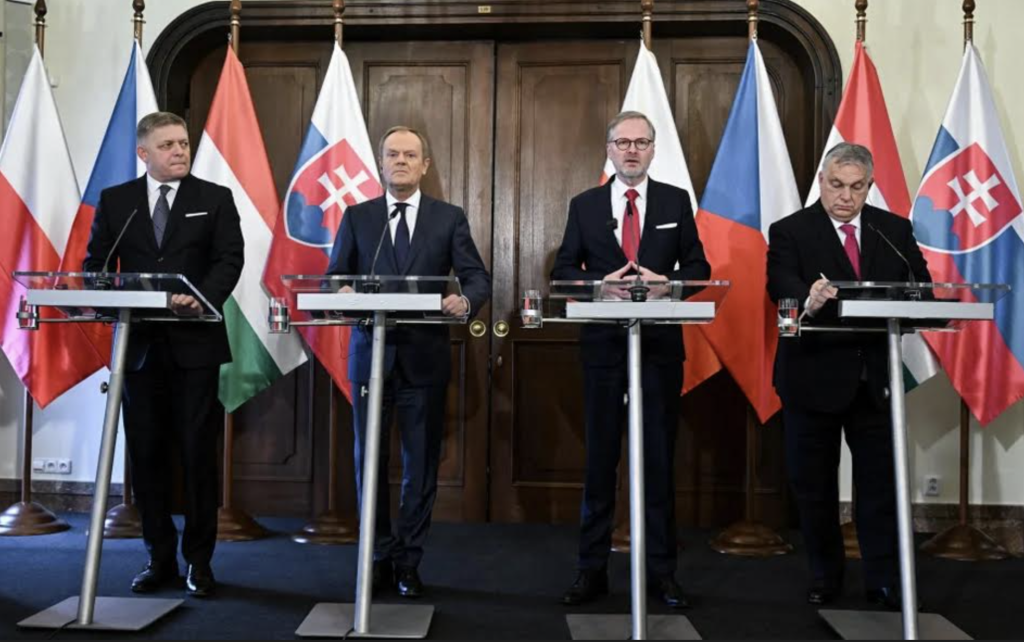
Leaders of Poland, Czechia, Slovakia, and Hungary met for a summit of the Visegrád Group (V4) in Prague on Tuesday. The four acknowledged their disagreements on Ukraine but reaffirmed their commitment to continued cooperation despite earlier concerns about potential disruptions.
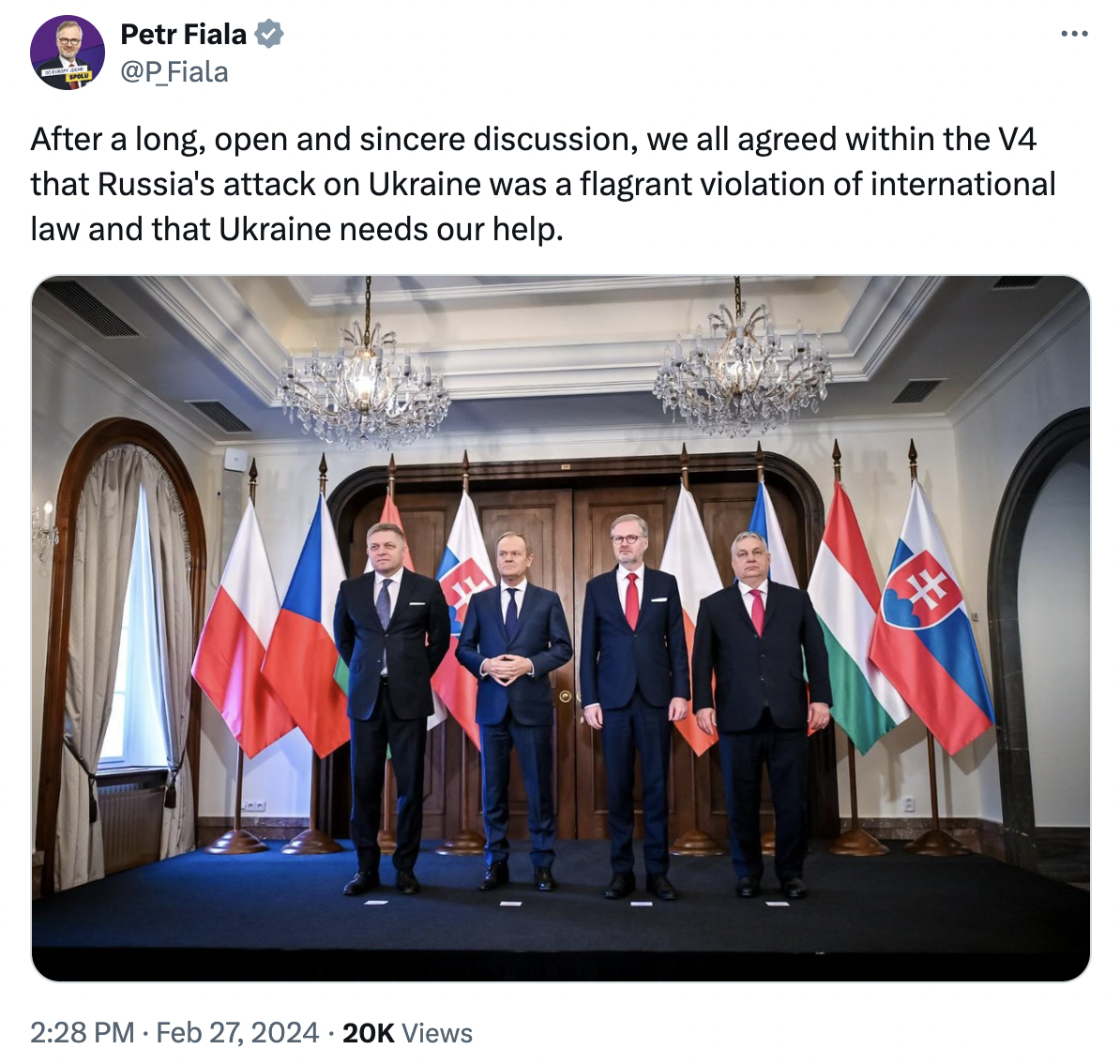
Czech PM Petr Fiala highlighted differences in views on the causes of Russian aggression against Ukraine and the types of assistance they are willing to provide but emphasised unanimous agreement on condemning Russia’s actions and supporting Ukraine. While Hungary and Slovakia oppose military aid, they are open to other forms of support such as humanitarian and financial assistance.
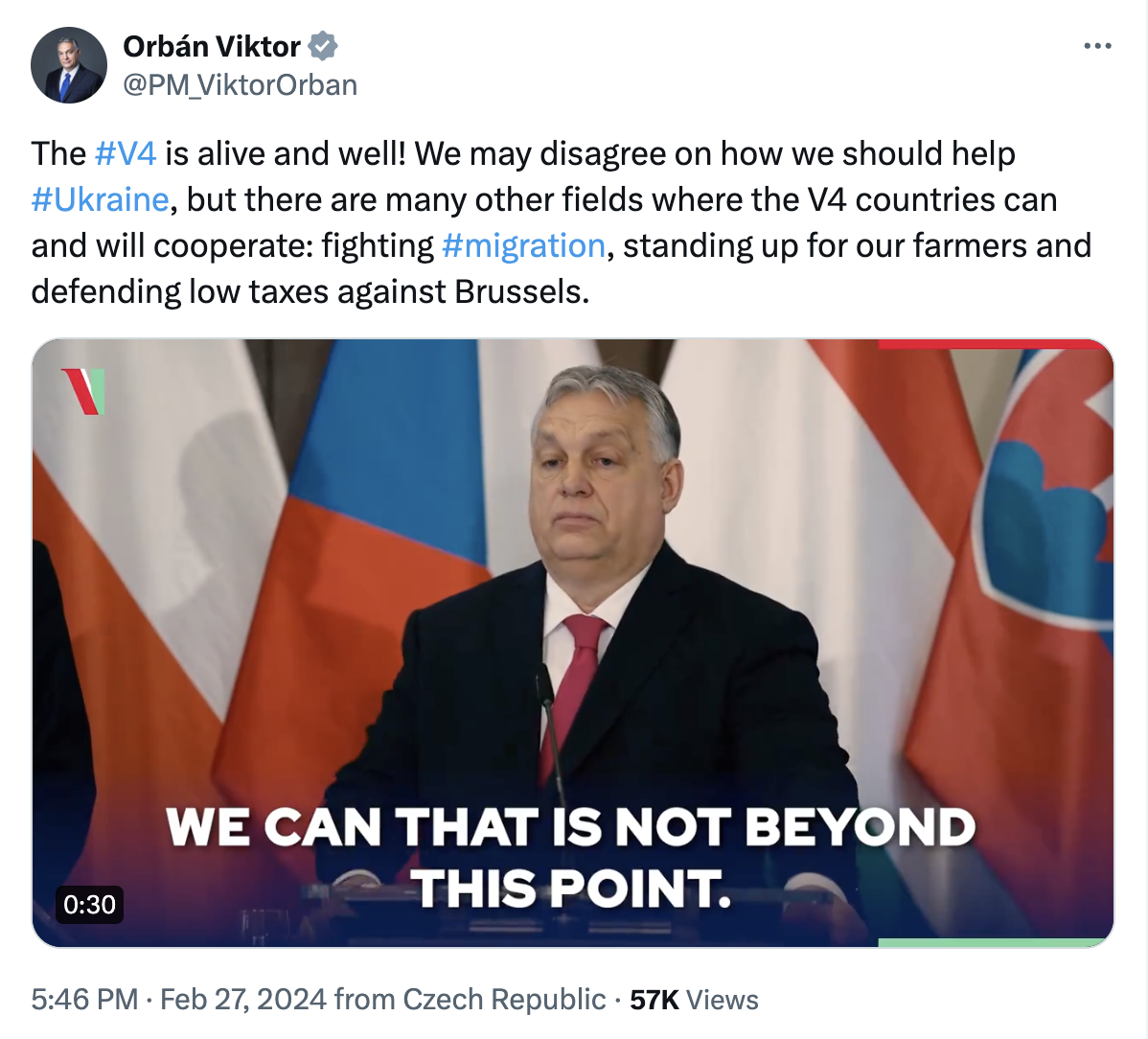
Slovakian PM Robert Fico described the meeting as challenging but emphasised the importance of looking towards the future, noting that while differences may persist, the V4 will remain a significant regional bloc. Hungarian PM Viktor Orbán stressed the importance of finding common ground amidst differences, noting that despite challenges, the V4 is better positioned to represent their collective interests within the EU.
Czech PM Petr Fiala had previously postponed a V4 meeting during the Czech Republic’s presidency, citing developments within the European Council, particularly regarding Hungary’s initial opposition to aid for Ukraine. Fiala stressed the importance of dialogue despite disagreements, highlighting the potential negative consequences of not engaging in discussions.
Polish PM Donald Tusk also expressed reservations before the meeting, raising doubts about the V4’s relevance and highlighting concerns about ambiguous signals from Hungary and Slovakia regarding their stance on Russia. Tusk vowed to address these concerns directly with Viktor Orbán, emphasising the need for unified support for Ukraine within the EU and NATO frameworks.
Both Orbán and Fico oppose military aid to Ukraine, preferring peace talks and criticising EU sanctions against Russia. Fico was critical of proposals suggesting the deployment of Western troops to Ukraine, stressing the need to avoid actions that could escalate tensions.
Despite ideological differences, the V4 leaders have historically cooperated on issues affecting the region, such as agriculture, migration, and workers’ rights. However, tensions have escalated since the election of Petr Fiala’s government in 2021, which includes liberal parties critical of Hungary’s conservative policies. The election of Donald Tusk in Poland also strained relations, as the new government aims to align with EU policies.
The Visegrád Group, commonly referred to as V4 was formed in 1991 to promote cooperation and advance mutual interests in areas such as politics, economy, and culture. The group takes its name from the Visegrád Castle in Hungary, where the initial discussions took place. Over the years, the V4 has evolved into a platform for regional dialogue and collaboration, allowing member states to coordinate their positions on various issues within the European Union and internationally.
Image: X (@rzeczpospolita)
Author: Sébastien Meuwissen