Sanah’s latest endeavour leaves its listeners with a rictus of wonderment. After a couple of listenings, we realise that we have a top-tier artist, ready to aesthetically grow up and conquer the global scene, but still embedded in the same folky image from the last three years.
Kaprysy is a rare energetic vision of creative impulse from a young pop prophet, whose sweeping music is almost staggering at this point, as every song sounds like an instant radio hit. However, her new record, at least ideologically, seems quite reductive, as it once again relays, at its core, Sanah’s interest in linking traditional dialect and music with modern storytelling. We all have seen (and heard) it before, so the freshness of Sanah’s sound is no longer everlasting.
Anyway, it takes courage to choose so many samples of various popular tunes, use them as the foundations of your new songs, and then claim them as a part of your own music. In a way, we can say that Sanah conquers these tracks, as it also takes skill not to fail in this creative venture. For instance, Słodkiego miłego życzę uses the game-changing sample from Lorde’s Royals and spiritually sounds like a lost composition by Taco Hemingway. Pańskie łzy to woda, in collaboration with Vito Bambino, designs itself around Agnieszka Osiecka’s and Adam Walaciński’s Ballada o pancernych. Another one is Wiśta wio! with its rural lyrics relying on its choruses’ flow through the melody line of Amy Macdonald’s soothing This Is The Life, while the pre-choruses in Mleczna droga (for example, 0:30-0:40) remind us of Sound of The Shire from The Lord of the Rings (5:30-5:45, which technically fits the album’s sylvan undertone).
All of it is amplified by an eclectic range of various genres, full of rhythmic melodies, folk sounds, vibrant pop and dancing disco. This is why listening to Sanah’s bright new music feels like leaving a dim cul-de-sac on a drizzly day.
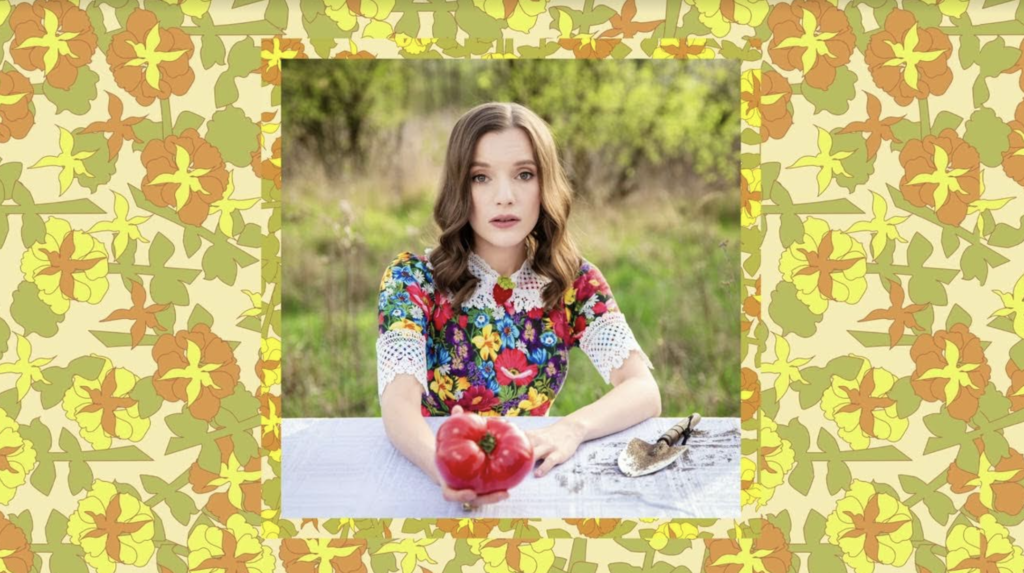
Sanah’s lovelorn sentiments emanate throughout most of the lyrics, proving she is someone between the Polish equivalent of both Charlie XCX and Taylor Swift. Besides, it’s an open secret that she’s an apt songwriter, who is somewhat (unfortunately, at least for me) subjected to her folky, visual narratives. This is probably the main issue of this album: its versatility is, indeed, truly remarkable, but the artist’s visual exuberance could be the main turn-off for many people. Sanah might be forgetting that at this point she doesn’t need to use all those flashy tropes to make her musical presence even more attractive. Ultimately, her aesthetics are discussable and might feel slightly cheap, but this is what currently sells in Polish pop culture.
Just imagine what might happen if Sanah will – finally! – abandon this hedonistic alter ego for a less stylised musical personae. As controversial as it might sound, one can admit (here: the author) that Sanah suffocates her musical versatility under the veil of this (almost) childish smile of a frivolous, homely pop artist. Yes, it’s an image that sells well and maybe this is why her PR team doesn’t want to let it go. There is an undeniable revolution only ready to be unleashed; a talent not fully polished, confined under this flamboyant, probably (?) staged creation. Seeing the real Sanah would be a benison, which we both need and deserve as her listeners.
4/5 stars
Author: Jan Tracz