There are a few Poles who are known virtually across the globe for the important role they played in history and sometimes even that of the world. These include outstanding composers such as Frederyk Chopin or Saints such as John Paul II or Faustina, and sportsmen like Robert Lewandowski.
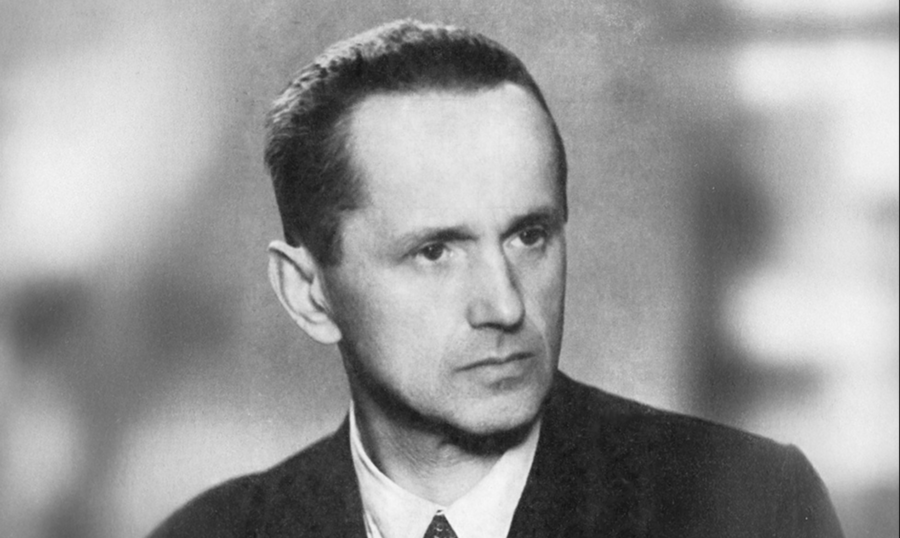
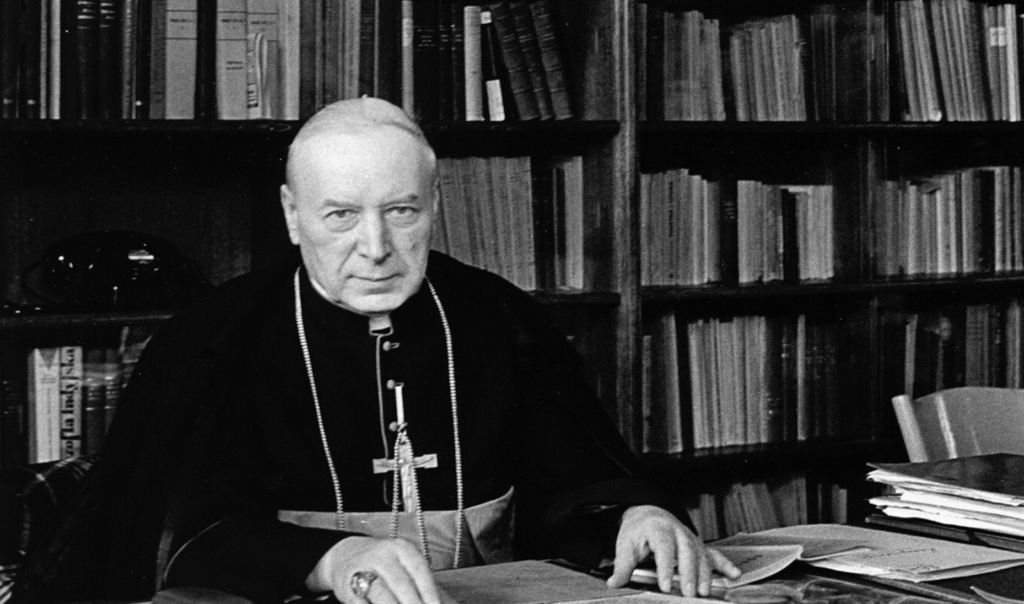
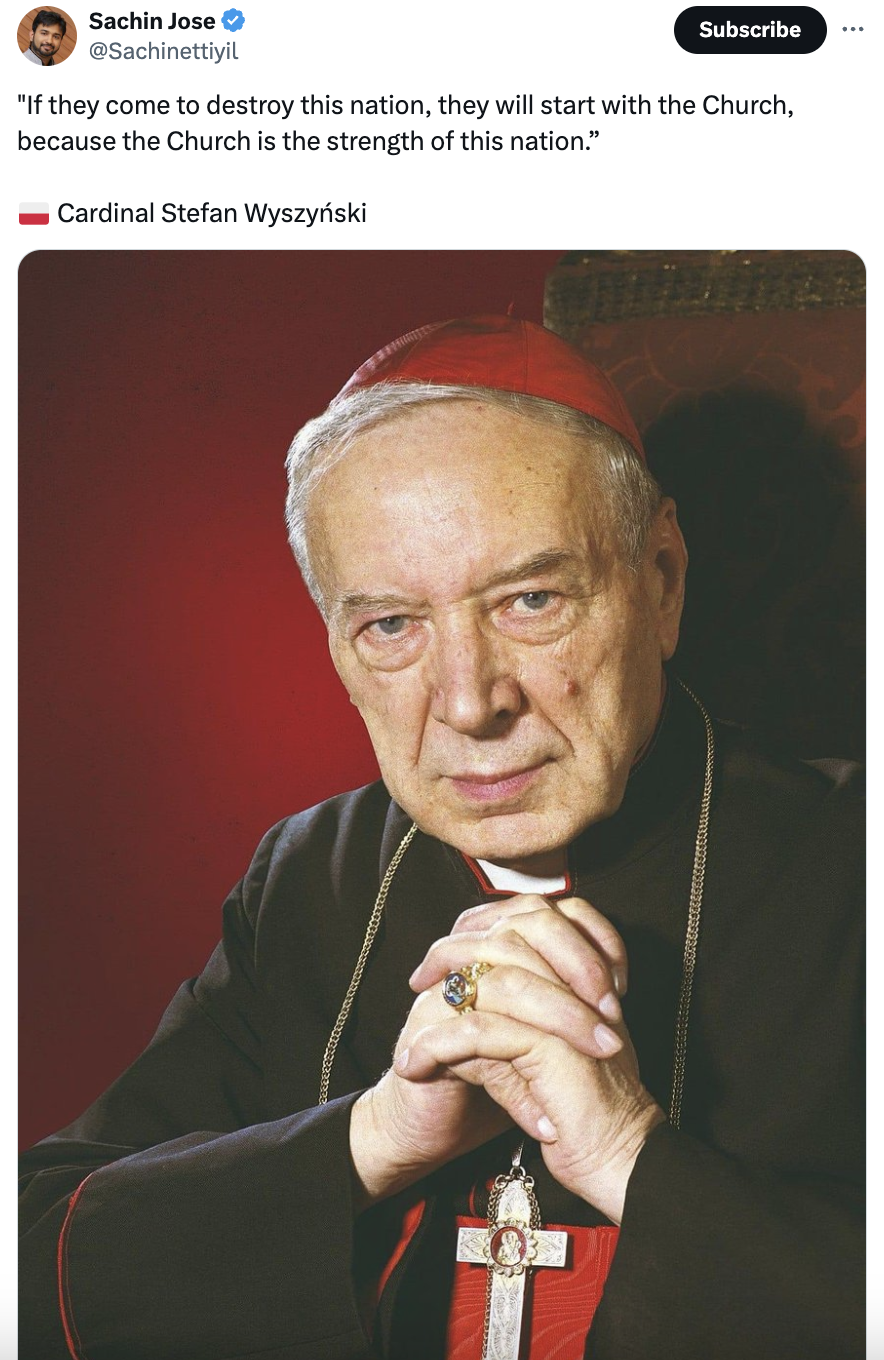
Nevertheless, there is one man who is much less known to the public, especially outside of Poland, despite having had a decisive impact on the history of Central Europe in the second half of the 20th century. This man is Cardinal Stefan Wyszyński.
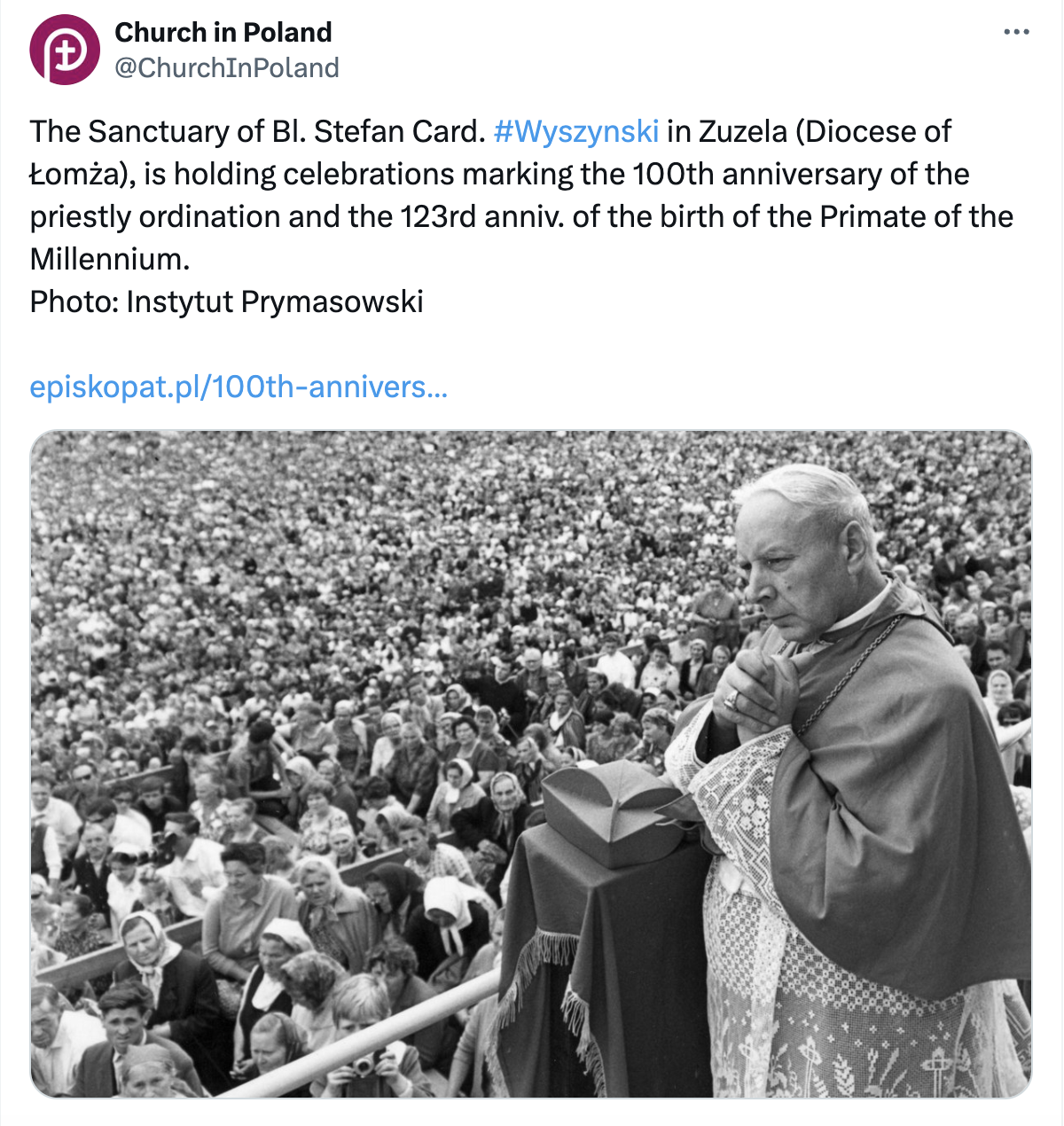
Commonly referred to as the “Primate of the Millennium” for reasons which we will explain below, he remains the symbol of Polish Catholic and patriotic resistance to Soviet Communist rule. Before outlining the most important episodes of his rich life, let’s have a glance at the origins.
Stefan Wyszyński was born on 3 August 1901 on the Bug River in Zuzela (Eastern Poland). Back then, this currently easternmost part of Poland had been under Russian occupation for over a century. His upbringing was characterised by an attachment to tradition and patriotism. Shortly after the end of WWI, young Wyszyński decided he wanted to give his life to God. At the age of merely 23, that is in 1924, he was ordained a priest.
Across the 1920s and 1930s, Father Wyszyński was an active proponent of what is sometimes referred to as “Catholic dynamism”, namely a broad involvement in public life by Catholics. Although he did what he could to be perceived as a spiritual figure rather than a political one, his involvement in public affairs was undeniable.
During WWII, Wyszyński faced the risk of being arrested by the Germans, especially given his numerous writings criticising the fascist ideology. In the spring of 1944, he was sworn in as a chaplain of one of the Home Army Warsaw Districts. He even took part in the Warsaw Uprising alongside his fellow freedom fighters.
Once WWII finally ended, Poland found itself under Communist rule. The Polish clergy (from which about 20% had just been exterminated by the Germans) was about to face a new wave of persecution, this time from the Moscow-led godless dictatorship. It was in this difficult period of the mid-1940s that Poles needed spiritual guidance and new leadership. It’s worth underlining that no less than 22,000 members of the Polish intelligentsia were shot in the back of the head only a few years before in what is commonly referred to as the Katyn massacre, orchestrated by Stalin’s NKVD.
In 1946, Father Wyszyński was ordained Bishop of the Lublin Diocese by the Primate of Poland, Cardinal Hlond, in the symbolic place of Jasna Góra. The Bishop became Poland’s youngest ordinary. In his sermon, he stressed the historical bond between the Polish nation and the Catholic Church, spoke in favour of overcoming violence with faith and love, and about the need to fight for every human’s dignity.
As mentioned above, Poland was in a state of decay then. After the death of Cardinal Hlond in November 1948, Pope Pius XII appointed Wyszyński as Archbishop of Gniezno and Warsaw, and Primate of Poland. Several historians believe that this decision would have been a direct request of Primate Hlond on his deathbed.
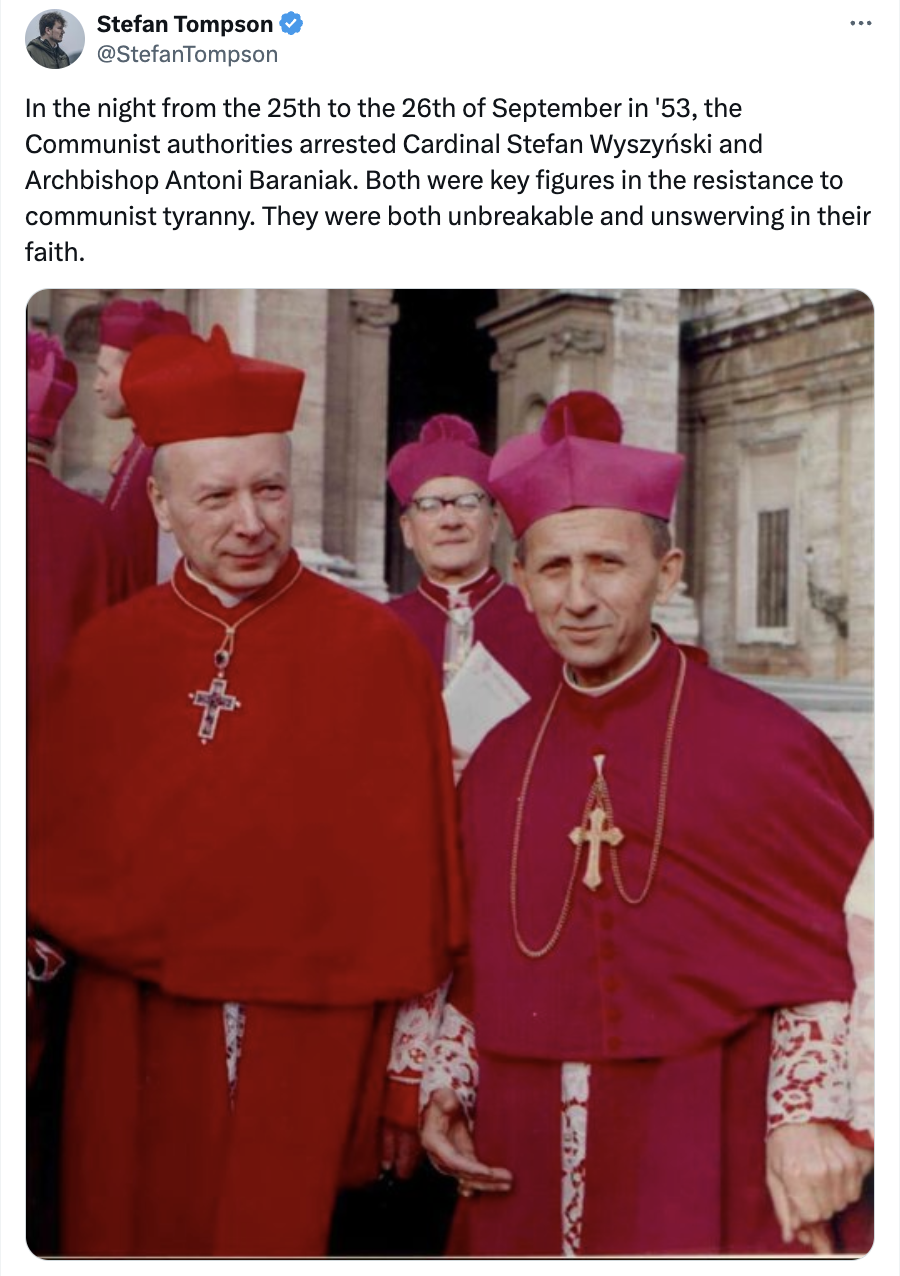
the 1950s, the Polish church faced increasing discrimination from the Communist authorities. Wyszyński – who became a Cardinal in 1952 – was imprisoned several times and even subjected to humiliating torture. In the meantime, Polish anti-Communist resistance grew more robust, leading to the Polish October 1956.
The key role of Stefan Wyszyński as a leader of Poland’s resistance toward Communism was to be observed in the following years. The whole nation was preparing for the long-awaited millennium of Poland’s baptism. The millennium was preceded by the Great Novena, celebrated for nine consecutive years between 1957 and 1966. The initiator of the millennium of the baptism of Poland was Cardinal Wyszyński. He was also an important figure behind the famous Letter of Reconciliation of the Polish Bishops to the German Bishops in which the Polish clergy – in the name of the Polish nation – “forgave and asked for forgiveness” for the recent tragedies perpetrated (by the Germans in the overwhelming majority of cases, editor’s note) two decades before during WWII.
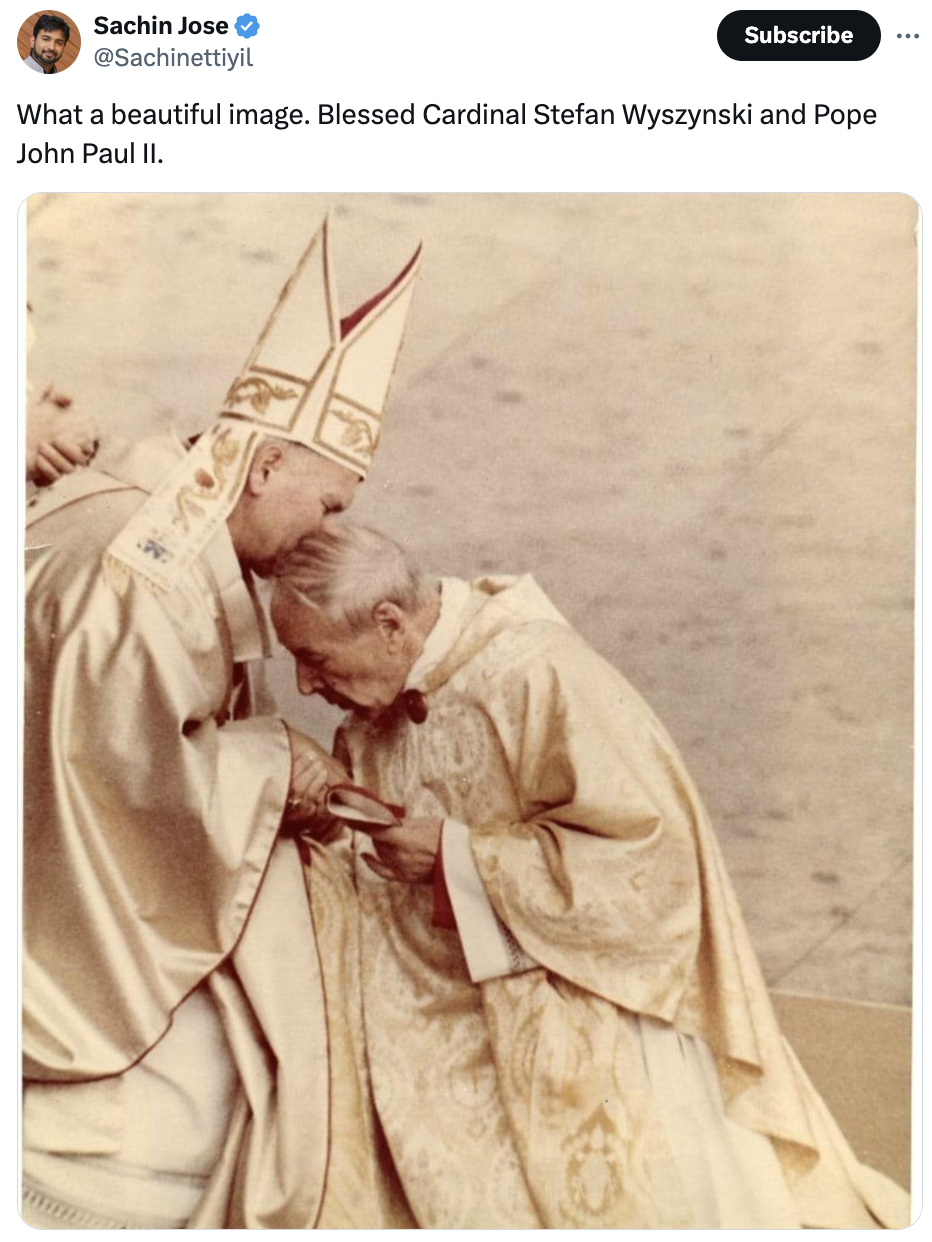
The “Primate of the Millennium” remained the most recognisable figure of Poland’s Catholic Church up until 1978, when Karol Wojtyła became Pope John Paul II. Both men were without a doubt the two most prominent and influential figures of the Polish Church at the time, up until Wyszyński’s death on 28 May 1981. This was just a few weeks after the legendary Solidarity movement organised its massive strikes initiated in Gdańsk.
Many observers view Cardinal Wyszyński as one of the people who had the most significant influence on John Paul II. At the screening of a documentary about Wyszyński’s life, the manager of EWTN for Central Europe Iwo Bender stated that “without Cardinal Wyszyński, there would be no John Paul II”.
The legacy of this great man remains alive until this day. Pope Francis named him Venerable in December 2017. He was then beatified on 12 September 2021.
Image: IPN
Author: Sébastien Meuwissen