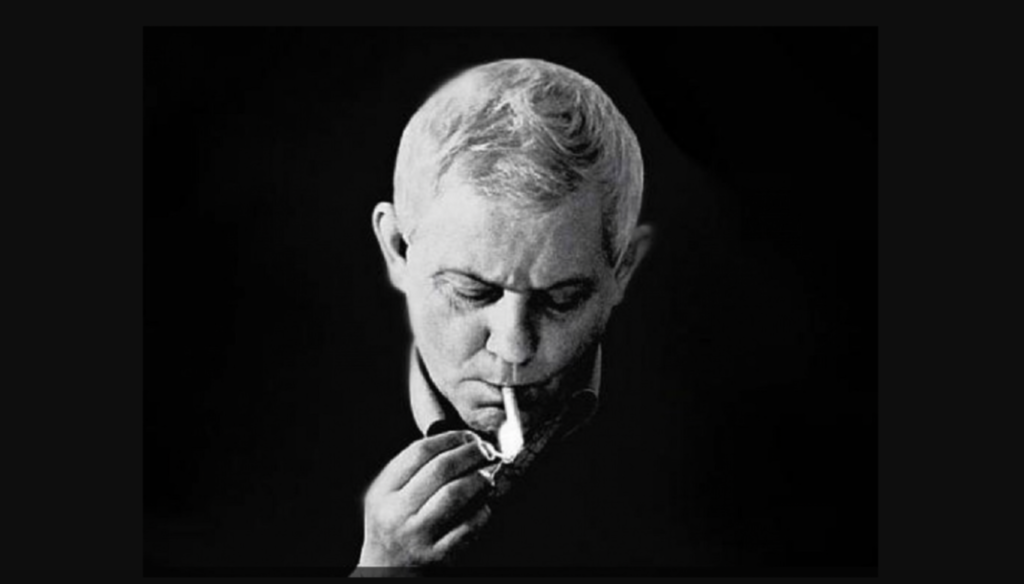
Zbigniew Herbert was famous for his outstanding poems that created an imaginary bridge between Poland during the war period and the classical world of ancient Rome and Greece.
Zbigniew Herbert was born in Lviv, on 29 October 1924. His parents migrated to the city from the Habsburg Austria’s capital – Vienna. His father worked as a director of a local bank. He attended a conspiracy school that allowed him to study in the future. He left Lviv in 1944, before it was recaptured by the Soviet army, and moved to Kraków, where he studied economics at the Trade Academy. After that, he left for Toruń where he graduated from law at the Nicolaus Copernicus University.
At that time Herbert’s family resettled to Sopot on the Baltic coast, where he worked as a clerk in a bank and did other, part-time jobs. He finally decided to move to Warsaw where he lived in very poor conditions.
Herbert wanted to live from writings but at the same time, to remain outside of the official literary societies that served the communist and Stalinist propaganda. To do that he was forced to write under nicknames. He published in various newspapers as a theatre and poetry commentator. Due to political unrest after Stalin’s death, he was forced out of writing and earning money as a paid blood donor. Eventually, he had to take other jobs unrelated to his literary activities.
Herbert’s situation changed in 1956 after the end of the forced socialist realism in literature. He was able to publish his first book called Struna Światła (The String of Light), which was a collection of his previous poems.
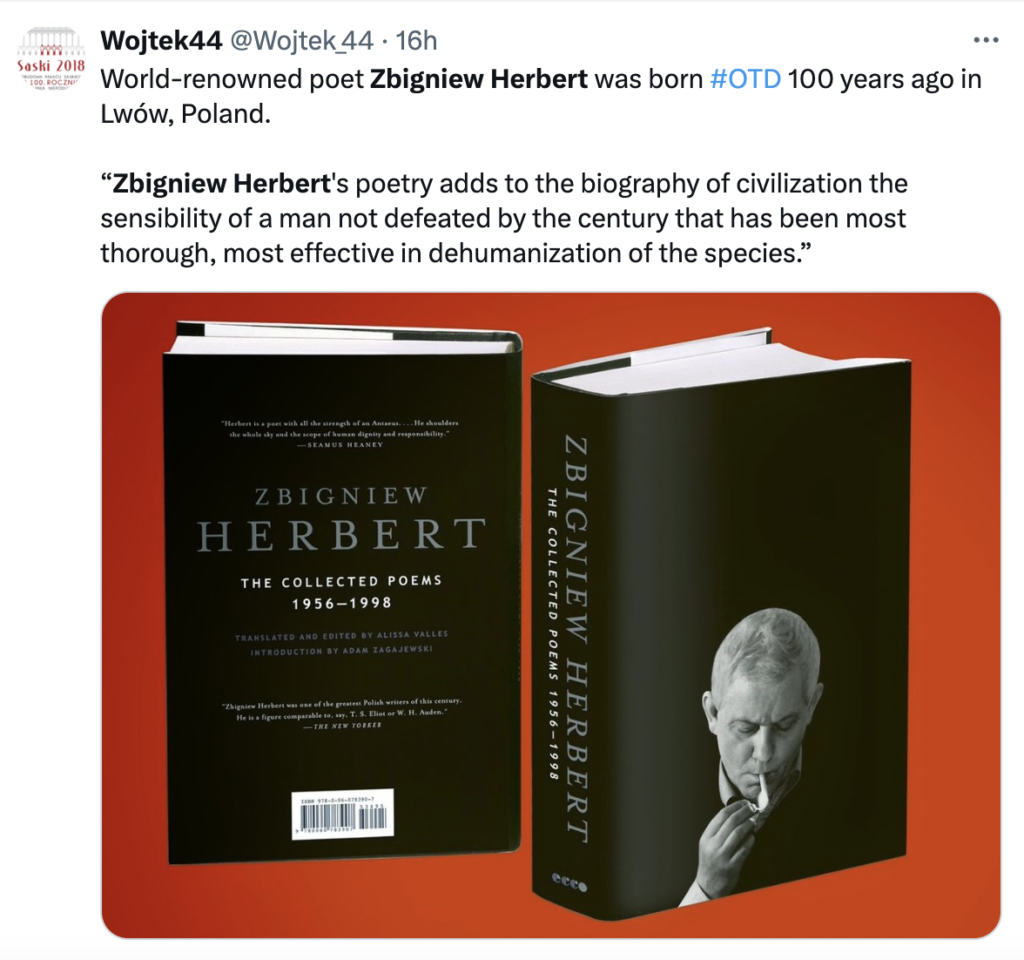
After the success of his first book, he was able to receive an apartment in Warsaw and a stipend of 100 dollars that allowed him to travel outside of Poland. He went to France via Vienna, (May 1958-January 1959), visited England (January-March 1959), and Italy (June-July 1959). He returned to Poland in May 1960. Because of his very modest financial resources, his health suffered during those trips, but the time spent in Mediterranean countries fueled Herbert’s imagination and resulted in the publishing of the famous book, called Barbarzyńca w Ogrodzie (Barbarian in the Garden).
In the next years, Herbert also travelled to the West where he visited Germany, England and the USA. During his trip to America, his books and poems were published in English which made him one of the most important modern poets of the time in the Anglo-Saxon literary world. He also spent a year between 1971-1972 as a visiting professor at the Los Angeles State University. In 1972, he became a member of the praesidium of the Polish Writers’ Union and became involved in opposition activities initiated by his community including various forms of protests against communist censorship. He later left Poland again in 1975-1981 and lived mainly in Germany, Austria and Italy.
Herbert returned to Poland at the beginning of 1981 to support the birth of the opposition Solidarity movement. His works became known as manifestos of anticommunist resistance, and Herbert himself became a symbolic figure of uncompromising defiance. His poems were also popularised in songs by Przemysław Gintrowski and Jacek Kaczmarski, the famous bards of the Solidarity movement.

Herbert emigrated again but returned to Poland in 1991 after a few years in France and a trip to Israel. He became a fierce critic of the remaining, post-communist institutions and people responsible for hampering the democratic processes and the removal of the communist censorship laws and people responsible for enforcing them in public life.
Zbigniew Herbert died in Warsaw on 28 July 1998. He rests at the Powązki Cemetery On 30 July 1998, the President of the Republic of Poland, Aleksander Kwaśniewski, awarded him the Order of the White Eagle, which was accepted by his widow only after President Kwaśniewski left office.
Until today Herbert’s legacy remains a bridge between the love for European antiquity and modern poetry. His life proved a possibility of remaining true to his convictions despite unpopularity and persecution from those serving communist rule in Poland. Therefore Herbert’s biography could also constitute a lens in which many literary figures of the Cold War period seem less bright because of their involvement in communist movements.
The 100th anniversary of Zbigniew Herbert’s birthday
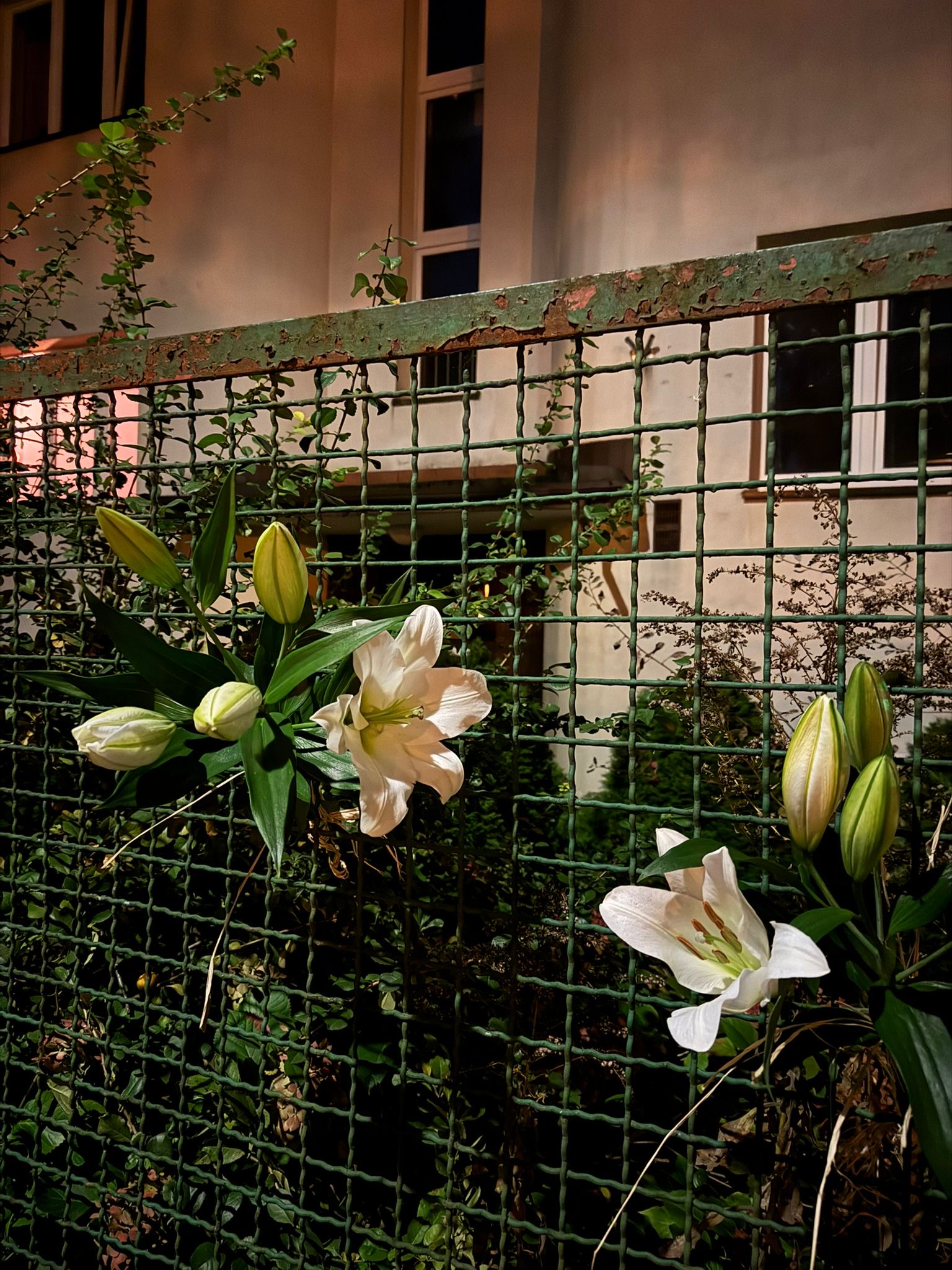
The fame of Herbert brings many Varsovians to visit the street he lived on during the time he spent in Warsaw, Promenada 21.
The local inhabitants leave flowers on the fence to show their spiritual connection and to honour the artist.
The Foundation of Zbigniew Herbert, headed by the poet’s wife dr Maria Dzieduszycka prepared a series of events called “Stulecie Herberta” (“Herbert’s Centenary”) that include poetry competitions, debates and other events commemorating the poet’s legacy.
To participate in that events and learn more you can visit the Foundation’s website in English by clicking here.
Source: Stulecie Herberta, British Poles
Tomasz Modrzejewski
Photo: IPN, British Poles