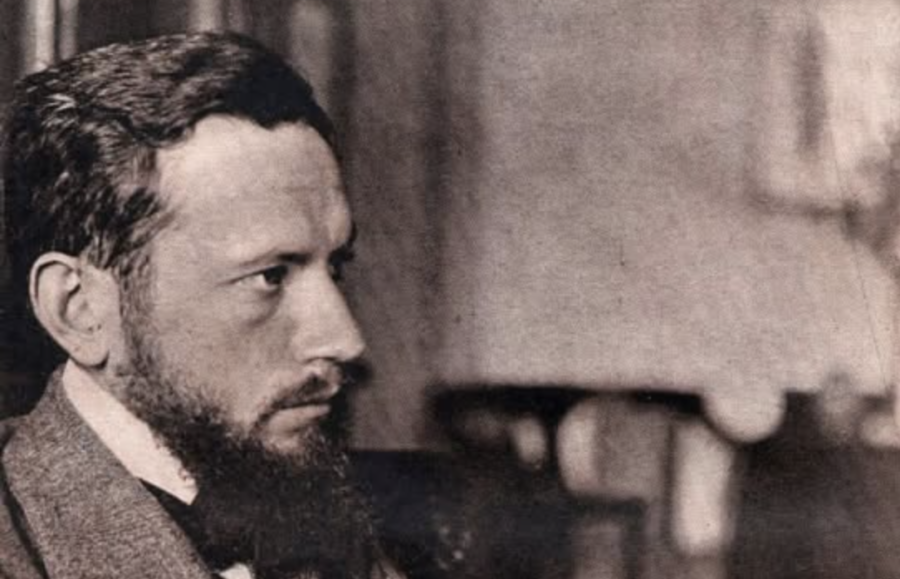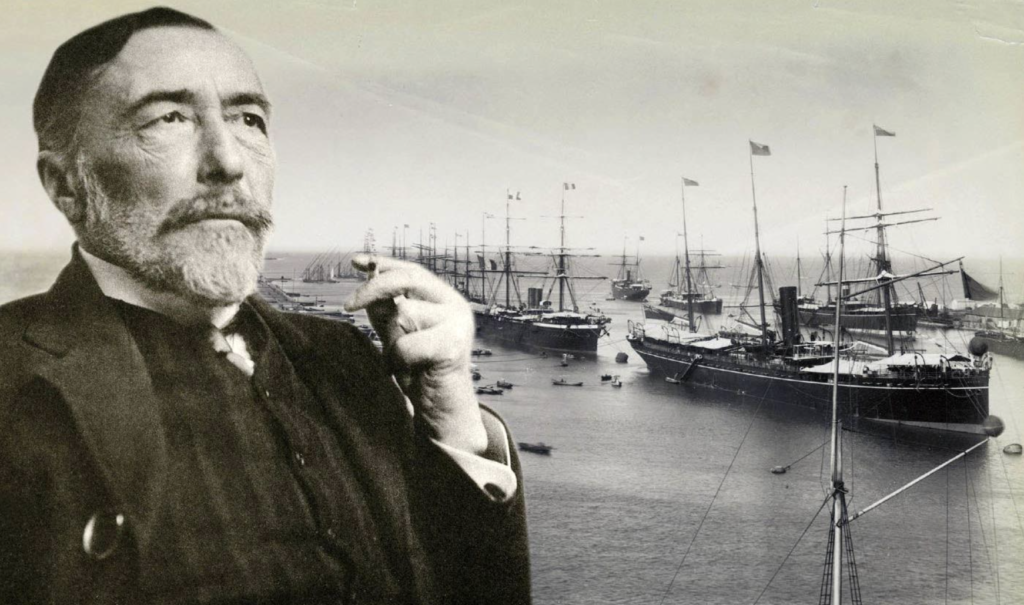
The life of Joseph Conrad or Józef Teodor Konrad Korzeniowski was a great story. When he was a young boy he lived through a deportation to Siberia, and the death of his parents. He almost died in a suicide attempt in his twenties. Finally, when he reached England with no English skill, he could learn it and become a sea captain.
Józef Korzeniowski was born in Berdyczów on 3 December 1857 to a patriotic and artistic family. His Father, Apollon Korzeniowski, a drama writer, poet, and journalist, prepared a special poem for his son’s birth.

To a son born in the 85th year of Moscow captivity
“Child-son, sleep without trepidation. In this dark world, You are homeless and landless(…) Child-son, say to yourself: you are without land, without love, without homeland, without humanity, while Mother Poland remains in the grave.”
Korzeniowski spent his childhood traveling with his father, first moving to Warsaw, where his father, Apollon, was imprisoned for his patriotic activities. Then during his trip to the Russian city of Perm, he shall serve his time as a deported political criminal from Poland along with his parents.
When the January Uprising of 1863 started in Poland most of Conrad’s closest family died either as soldiers or as a result of Tsarist Russia’s repression in its aftermath.
After the most severe repression stopped Joseph was allowed to leave his home in Poland and try to find himself a job he dreamed of in the French navy. He quickly left to join his uncle in Marseille.
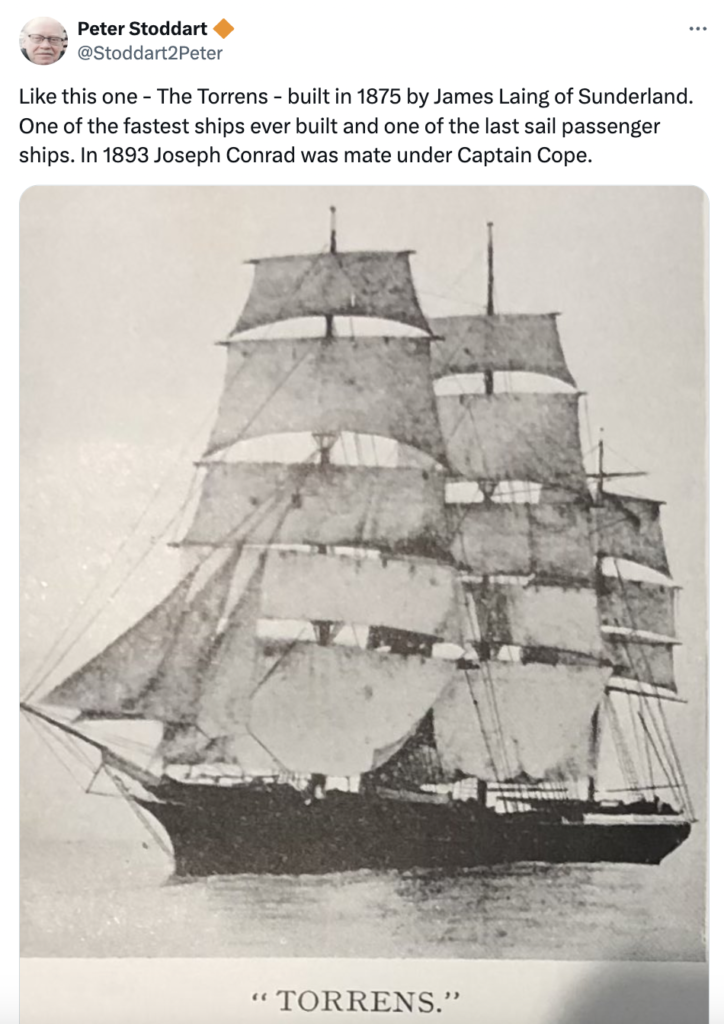
When Joseph Conrad reached 17 years old he started to serve as a steward on a French ship Saint Antoine. On its boards, he was able to travel to Martinique, South America and the Caribbean.
Korzeniowski was unable to continue his career in the French Navy due to a problem with his Russian citizenship. After engaging in arms trafficking and an unsuccessful gambling in Monte Carlo, losing all his money he chose his new destination – Great Britain.
“When I speak, write or think in English, the word ‘Home’ always means for me the hospitable shores of Britain,” he later wrote in his letter to a friend in Poland.
His first ship is the ‘Duke of Sutherland’ a large steamer sailing across the Cape of Good Hope to Australia.
On his return, he passed the exam for second officer, by faking his training period length. As a third officer, he sails to Australia.
The most important year for his sailing career and his relation with Britain was 1886 when he was granted British citizenship and passed his captain’s exam. From that time on Conrad calls himself “a Polish nobleman dipped in English tar”.
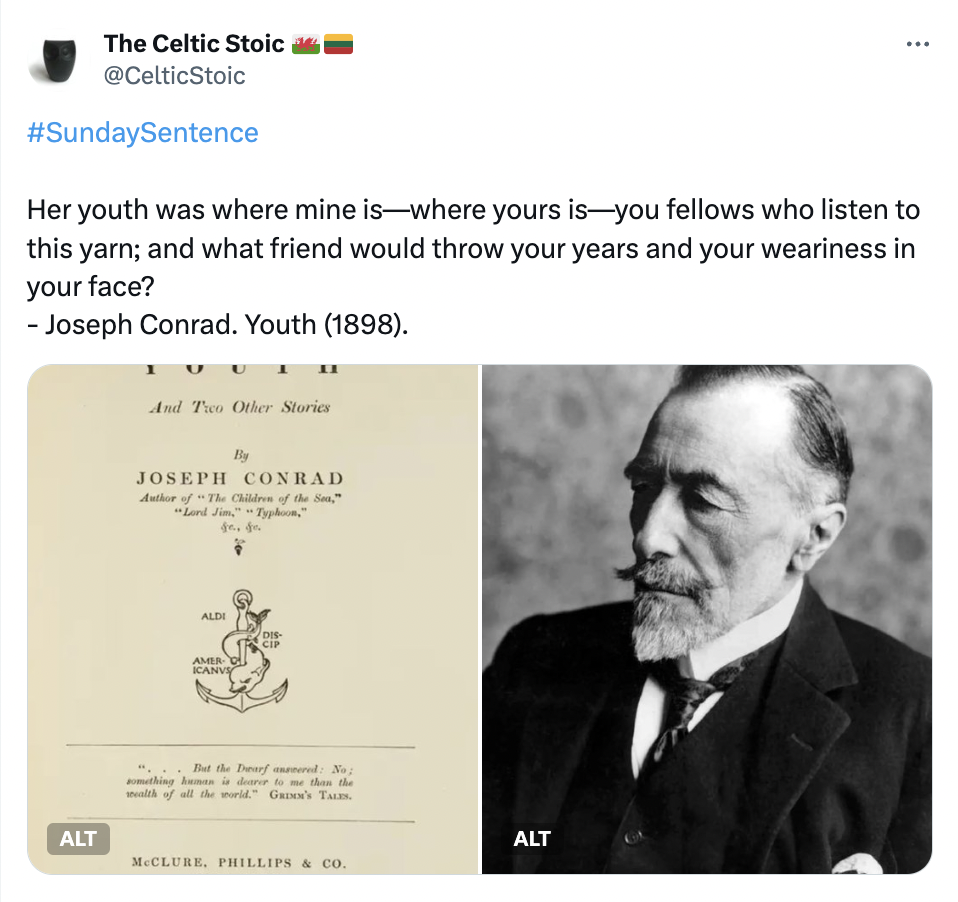
The most important part of his artistic life was his trip to Congo and the later death of his uncle and sponsor Tadeusz Bobrowski in 1894.
It was at that time that he chose his new name Joseph Conrad, derived from his Polish names Józef and Konrad.
A year later he published his first book called The Almayer’s Folly, which he dedicated to his late uncle Tadeusz Bobrowski.
In his books, Joseph Conrad explores the themes from his trips into the unknown lands of the time and the dark mysteries of human nature awakened by external factors.
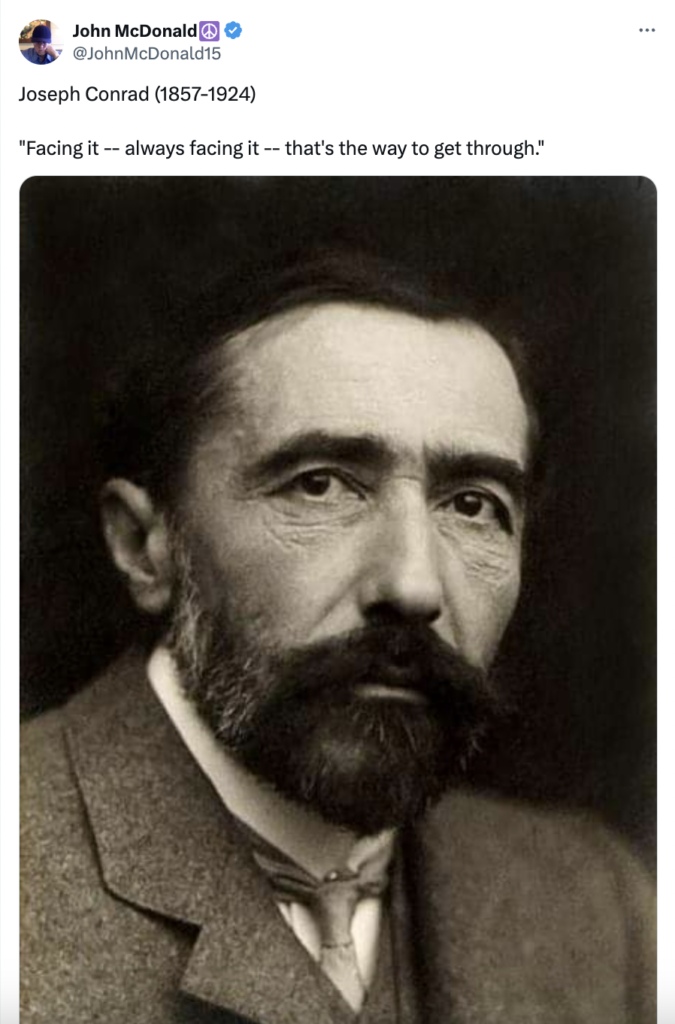
His most important one, the Heart of the Darkness, will later become a mirror for the post 2 World War era colonial conflicts across the world.
It will also be perpetuated by the Francis Ford Coppola adaptation, the Apocalypse Now movie which was the most important US movie about the Vietnam war and its impact on Western society.

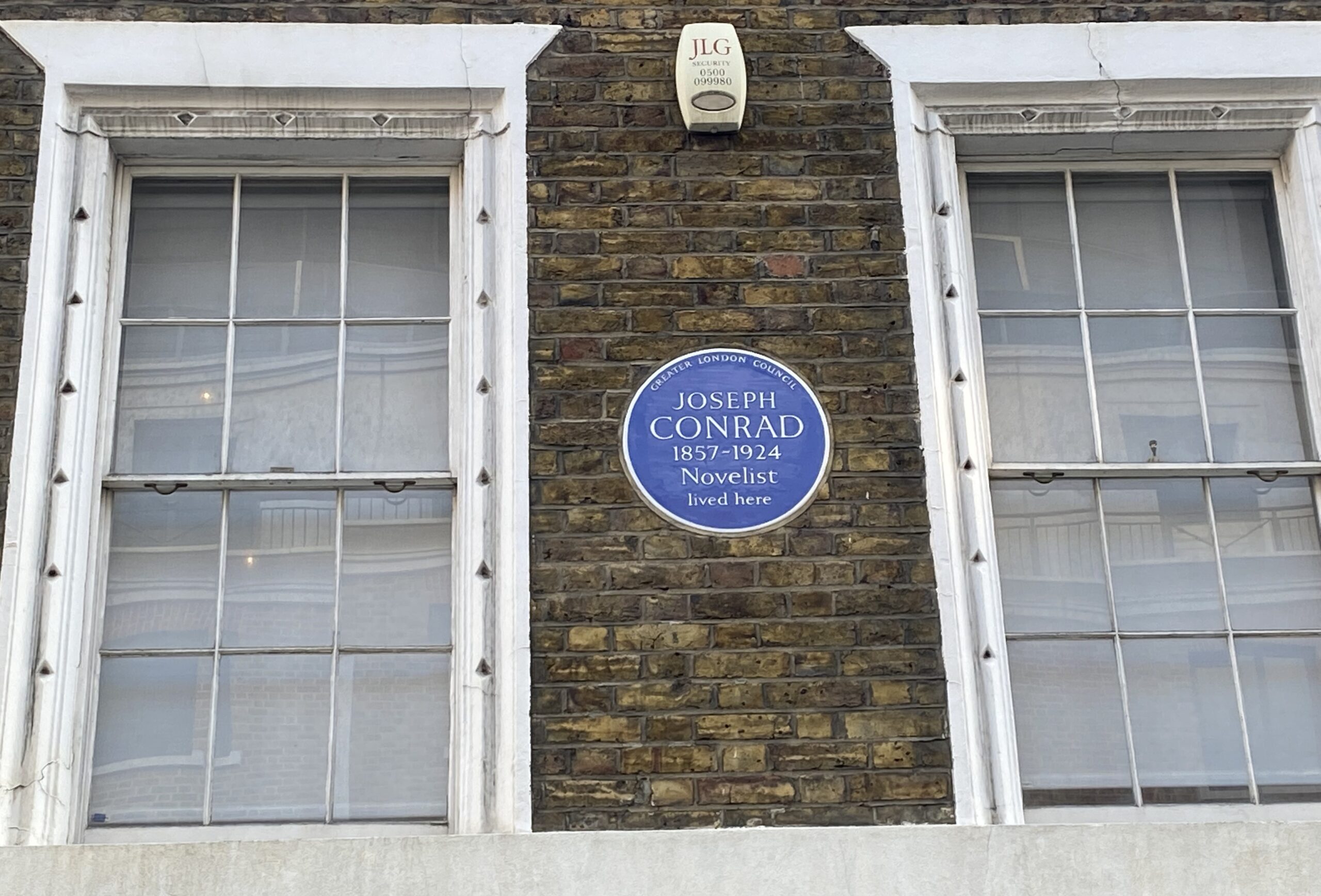
In 1924 British Prime Minister Stanley Baldwin, on behalf of King George V, offered him a noble rank, but Conrad refused the honour. Conrad resided at 17 Gillingham Street in London during the early 1890s. A blue plaque commemorating his time there was erected in 1984 by the English Heritage. The property, located near Victoria Station, was listed for £1.7 million in December 2021. You can read more in our article Historic London house once occupied by Joseph Conrad lists for 1.7 million GBP.
Conrad died in Kent on 3 August 1924 of a heart attack. At the moment of his death, Joseph Conrad Korzeniowski was 76 years old. He was interred at Canterbury Cemetery, under a misspelled version of his original Polish name, as „Joseph Teador Conrad Korzeniowski”
Source: Dzieje.pl
Photo: @marynista
Tomasz Modrzejewski