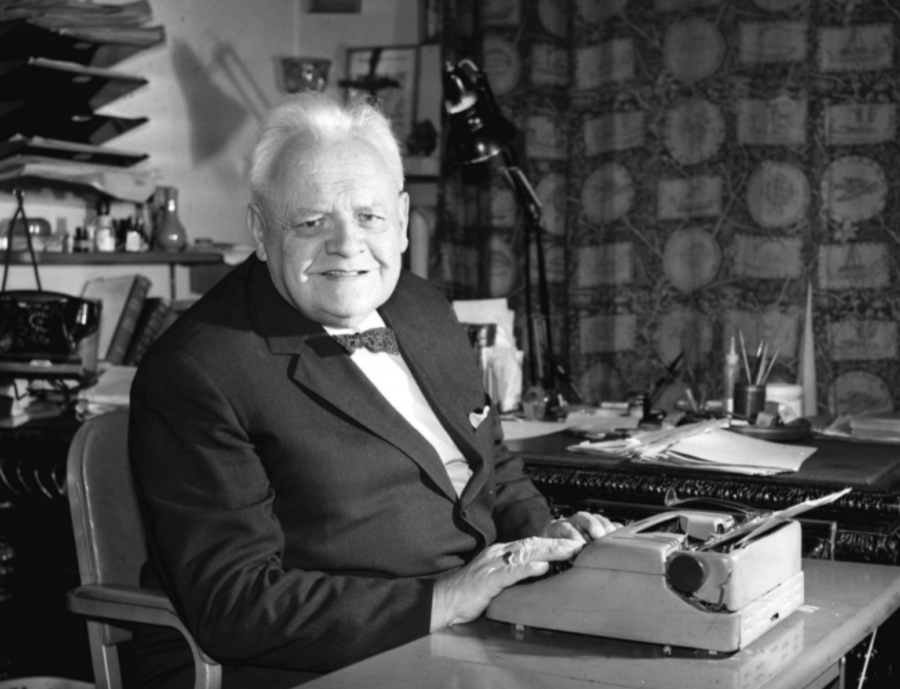
Melchior Wańkowicz was famous for his storytelling skills that he mastered and shared in writing. His amazing books “On the Trail of Smętek”, “Hubalczycy” and “Battle of Monte Cassino” helped Polish people experience places and events sometimes distant from their homes but close to their hearts.
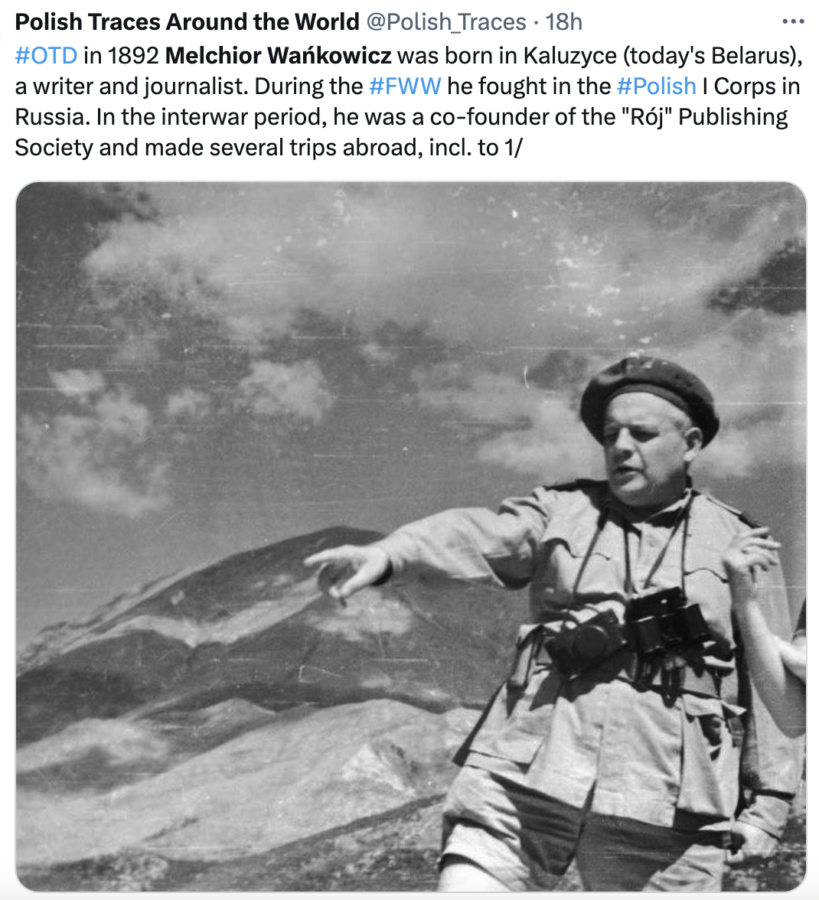
Wańkowicz was born on 10 January 1892 in Kałużyce, near Mińsk in today’s Belarus. He attended secondary school in Warsaw. Until 1905, he was forced to study in Russian.
Only after the Russo-Japanese War of 1904-1905 and following political unrest across the Russian Empire was a school strike that partitioning power allowed the use of Polish in schools. During his early years, Wańkowicz was an activist of underground patriotic circles.
During the World War 1, Wańkowicz avoided conscription into the Russian army thanks to falsified documents describing him as unfit for military service.
He was involved in helping Poles living in Russia, and in 1917 joined General Józef Dowbor-Muśnicki’s First Polish Corps that operated mostly in Polesie. During his service, he also got involved in politics and even tried to remove General Muśnicki from his post.
In 1920, he fought in the Polish-Bolshevik War and was awarded the Cross of Valour for his merits in battle.
In the 1920s, he founded the Publishing Society ‘Rój’, one of the most active publishing companies that operated in interwar Poland.
He published his first reportages between the wars. In 1926, he published a collection entitled ‘In the Churches of Mexico’, which was based on a three-month journey through the country.
At that time he also published other authors within his company, one of them being the famous Polish spy and soldier Sergiusz Piasecki. Thanks to his outstanding writing talent Piasecki was able to draw the interest of the ‘Rój’ company which helped him to shorten his criminal sentence and relocate to Warsaw.
In 1936, he published his most important reportage written during the interwar period: “On the Trail of Smętek”. It was a unique record of a journey he spent together with his very young daughter to Germany’s East Prussia which at the time included Masuria and Warmia.
In that book, Melchior Wańkowicz described the dramatic conditions and repression against the Polish population living under German rule.
Interestingly because of “the author’s open hostility”, the Gestapo banned the publication of Wańkowicz’s book in Germany. After the outbreak of the Second World War, already during the September campaign, the Germans desperately tried to find and arrest Wańkowicz as an intellectual who was able to inflict serious troubles on the Nazi German propaganda.
In 1945, a copy of the German translation of “On the Trail of Smętek” was found, and published by the East German Association with the notation ‘Streng vertraulich’ (top secret). It was intended to be distributed only to trusted Nazi activists and leaders to familiarise them with “Polish methods of national struggle”.
Just before the outbreak of the World War 2, he published a book called “Sztafeta”, which documented the successes of the independent Second Republic on the example of investments in the Central Industrial District (Centralny Okręg Przemysłowy, COP).
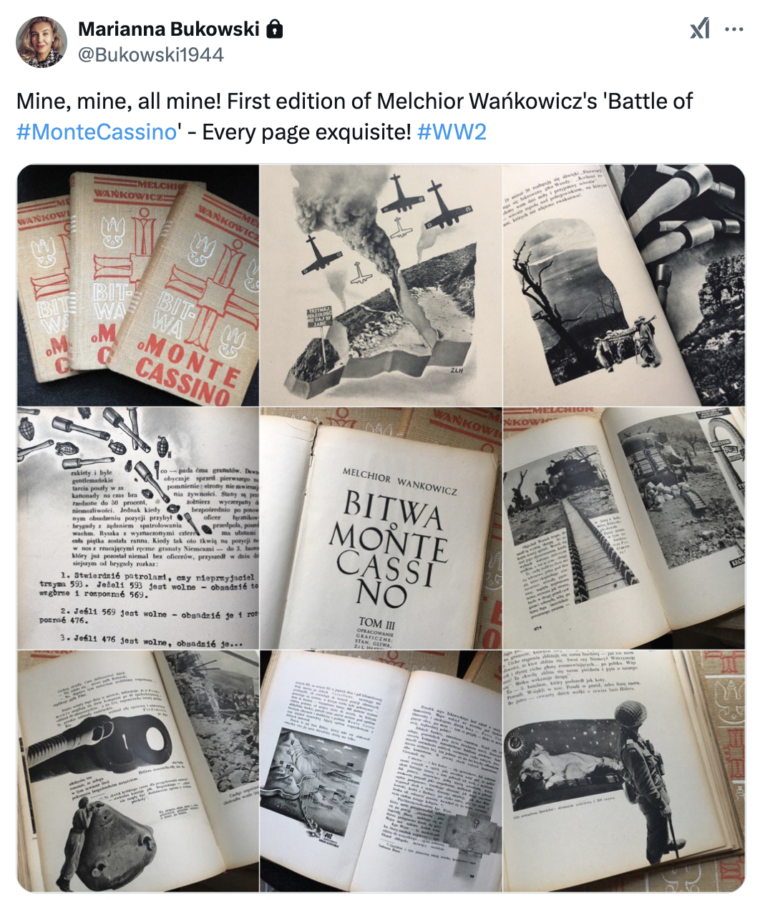
During the World War 2, he became a war correspondent for General Władysław Anders’ Second Polish Corps and travelled with its soldiers through Palestine and Italy. He spent two weeks of the Battle of Monte Cassino on the front line, wanting to personally experience the conditions of the fighting soldiers. He described the events of May 1944 in his best-known book, “The Battle of Monte Cassino”.
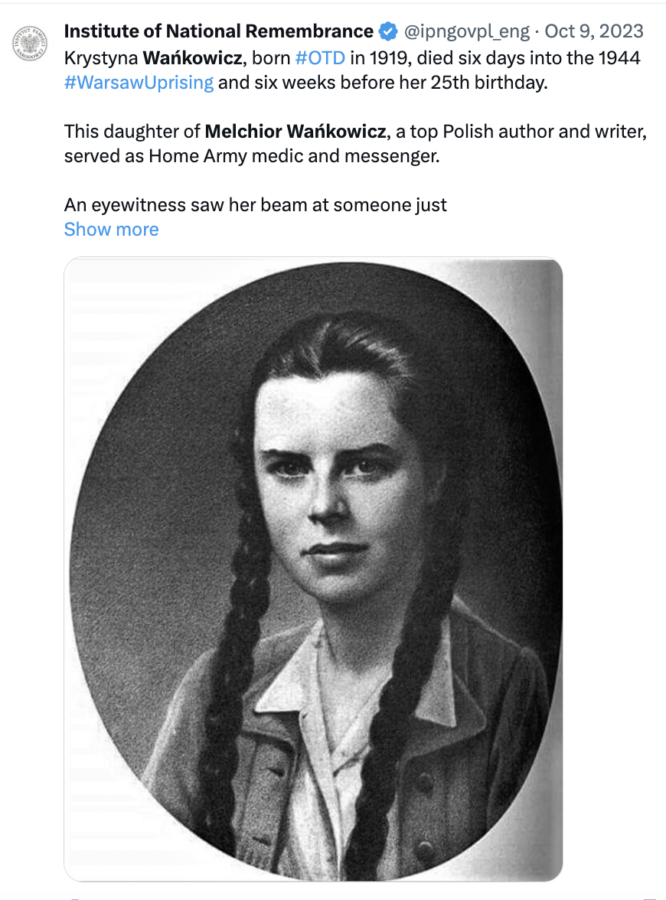
In 1944 Wańkowicz suffered a terrible loss – his daughter Krystyna Wańkowicz who served as liaison officer of the Home Army during the Warsaw Uprising. She was killed on the sixth day of the Uprising of 6 August 1944.
Immediately after the war, Wańkowicz did not return to Poland. He lived and travelled across the world and stayed in different countries.
Wańkowicz spent his first post war years in London, working for Polish newspapers printed in Britain, the „Wiadomości” and „Dziennik Polski”. In 1949 he relocated to the United States.
He travelled in the United States, Mexico, and Canada. He decided to return from exile after 20 years, in 1958. Tickets ran out for the writer’s first lecture at the famed Sala Kongresowa in Warsaw.
In 1964, Wańkowicz was one of the signatories of a famous protest known as the “Letter of the 34”, addressed to the then authorities of the People’s Republic of Poland demanding changes in its cultural policy, and embracing freedom of speech and publishing.
After that demonstration, the authorities began a campaign against the signatories, including Wańkowicz. He was accused of sharing information that harmed Poland’s image abroad and active collaboration with Radio Free Europe, which often criticised the communist leadership.
The writer was held in custody for five weeks, until the end of his trial on 10 November 1964. He was sentenced to three years imprisonment. Due to his age and health, Wańkowicz was released home shortly after the trial.
Many people in Poland and abroad protested against his persecution.
Given the public reaction, the authorities dropped the sentence, but his name was finally cleared years later. In 1990, after the fall of the dominant role of the communist party, the Polish Supreme Court overturned the sentence and acquitted the writer posthumously.
The master of Polish reportage, Melchior Wańkowicz died on 10 September 1974 and was buried at Warsaw’s Powązki Cemetery.
Source: Polskie Radio
Photo: X @Historia_PR
Tomasz Modrzejewski