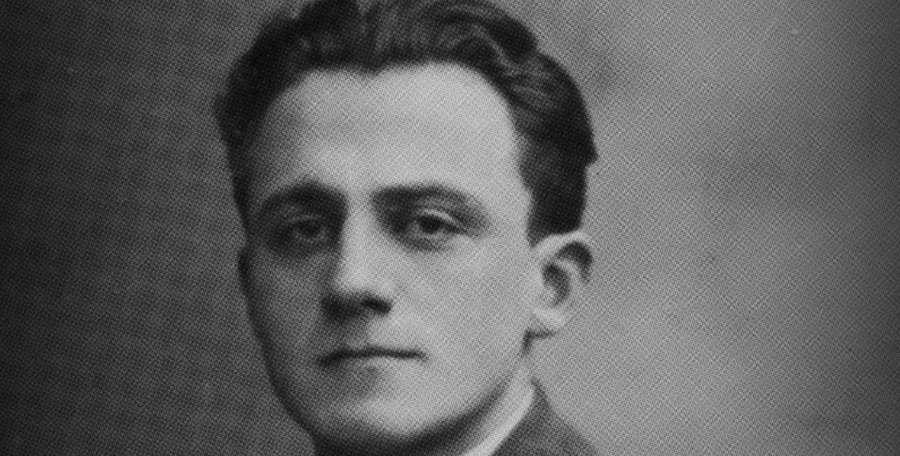
Born on 2nd December 1876 in Syłgudyszki, Lithuania, Mieczysław Jałowiecki was an agronomist, diplomat and Polish statesman. Owing to his excellent education, extensive foreign contacts, and proficiency in several languages, he was appointed in January 1919 as the General Delegate of the Ministry of Provisions in Gdańsk and the representative of the Polish government in the city. He operated under the auspices of the American Food Mission and was, at that time, the highest-ranking Polish government representative in Gdańsk. His responsibilities included overseeing the reception of ships carrying American food aid at the port of Gdańsk, which was then transported to Poland. He also established a passport office that issued visas for travel to Poland.

Jałowiecki was born to a prominent Polish aristocratic family, also related to the Rurykid dynasty and therefore with some ties to the Russian Tsar dynasty. He and his father worked in developing the railway system during the time of the Russian Empire’s economic book in the early years of the XX century.
Mieczysław Jałowiecki was descended from the Ruthenian princes of the Pieriejasławski-Yalowiecki family.
As he wrote in his memoirs: “Our family belonged to the Rurykovichs, and that meant a lot in Russia. However, we felt we were Poles, and this was very disturbing in Russia.”
Due to his father’s background and great merit, Mieczysław managed to obtain a thorough education – he graduated from the Imperial Lyceum in St Petersburg, among other places, and went on to study in Riga, Halle and Bonn, exploring the fields of economics, chemistry and agronomy.

During his studies in Riga, Jałowiecki became a renowned member of the 2nd oldest Polish student fraternity, Korporacja Akademicka Arkonia (established in 1879). In his book “Gaudeamus”, Jałowiecki described the colourful and joyful picture of his studies in the great port city of the Romanov empire.
During his stay at the university, he also painted scenes from his everyday life as well as the most important events such as balls and fraternity duels.

He worked, among others, as attaché at the Russian embassy in Berlin, counsellor at the Ministry of Agriculture in St Petersburg, director of the Russian-Baltic Society, and was also briefly on mission in the UK.
The most important task for Jałowiecki was the service of the reborn Polish state in 1918.
Jałowiecki’s unofficial mission in Gdansk was to acquire real estate and movable property in the Gdańsk area. This operation was conducted in secrecy, with the Polish delegate acting in a private capacity.
Jałowiecki understood that expanding Polish property holdings along the Motława River would bolster Poland’s position in negotiations concerning the political future of Gdańsk. He was among the first to recognise the strategic importance of Westerplatte to Poland’s national interest.
Owning Polish property at the entrance to the port of Gdańsk carried considerable strategic and political significance.
In 1919, he acquired the former guesthouses on Westerplatte, using a figurehead to conceal Poland’s involvement in the transaction. In the following months, additional movable property was purchased on the peninsula, as well as within the harbour and the town.
Although he was not able to buy land on the Westerplatte peninsula, his actions had an important role in acquiring the site as the Polish ammunition storage accepted by the League of Nations.
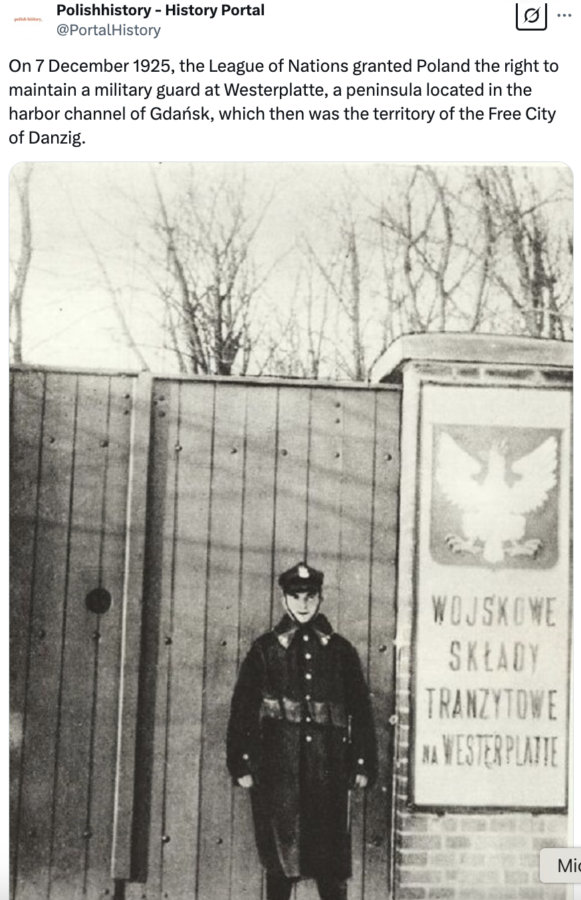
In 1924, he was honoured with the Commander’s Cross of the Order of Polonia Restituta in recognition of his service to his homeland.
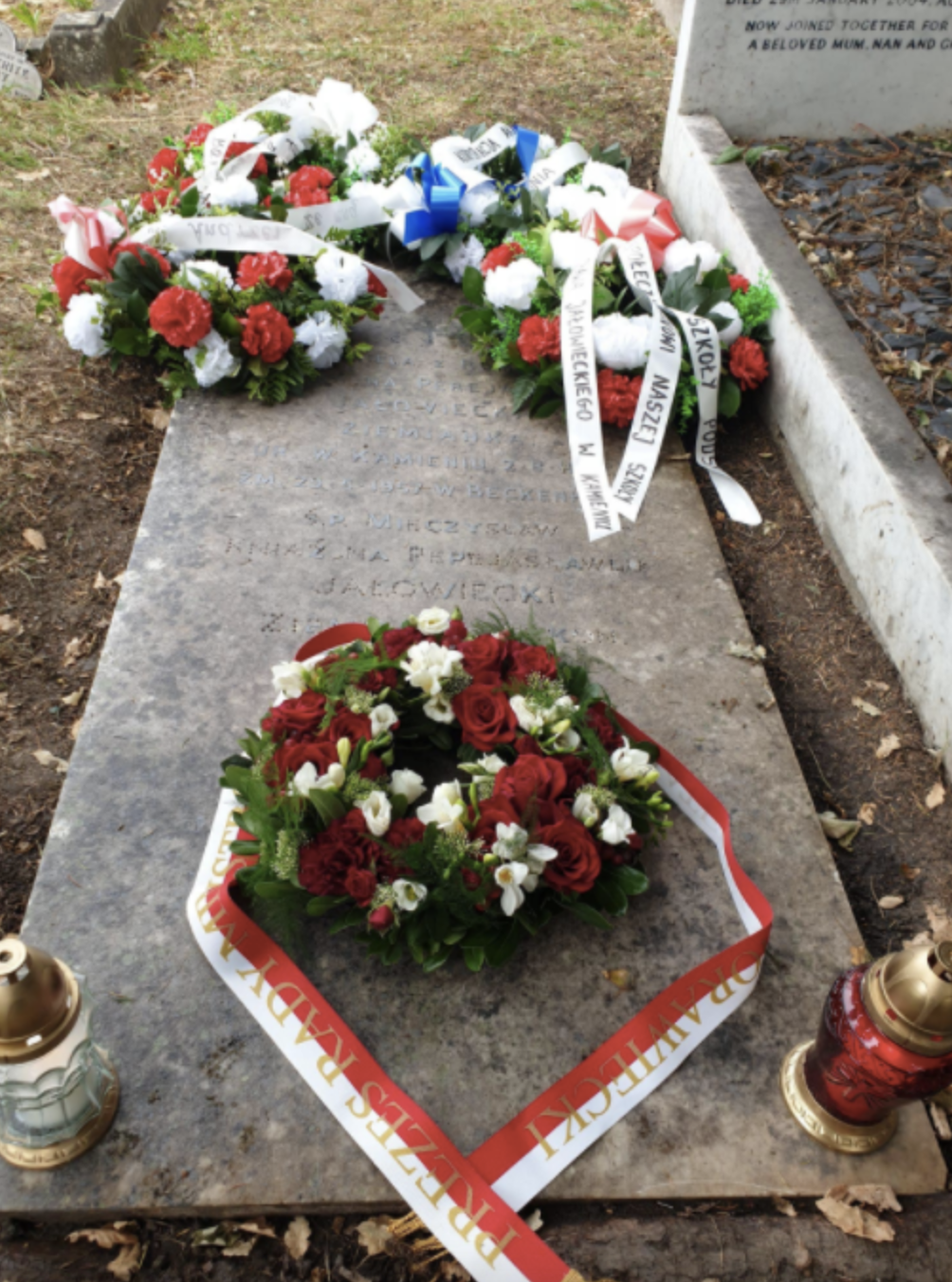
In 1939, he relocated to the United Kingdom. He passed away on 10th March 1962 in Beckenham, near London, where he was laid to rest.
In the first days of the World War 2 the Westerplatte that Jałowiecki obtained for Poland became one of the most fierce and important resistance points for Polish resistance against German invasion.
The grave of Mieczysław Jałowiecki was found in London’s Elmers End Cemetery in Beckenham by Tomasz Muskus.
On the initiative of the Polish Prime Minister and a special Minister of Memory Sites, Wojciech Labuda, Mieczysław Jałowiecki’s remains were moved and reburied at the Gdańsk Srebrzysko Cemetery in Poland.
On 5 December 2023 Mieczysław Jałowiecki became the patron of the Gdańsk main railway station.

Source: Dzieje.pl, arkonia.pl
Photo: @ResearchTeacher, Polskie Miejsca Pamięci, @PKP_SA, Tomasz Muskus
Tomasz Modrzejewski