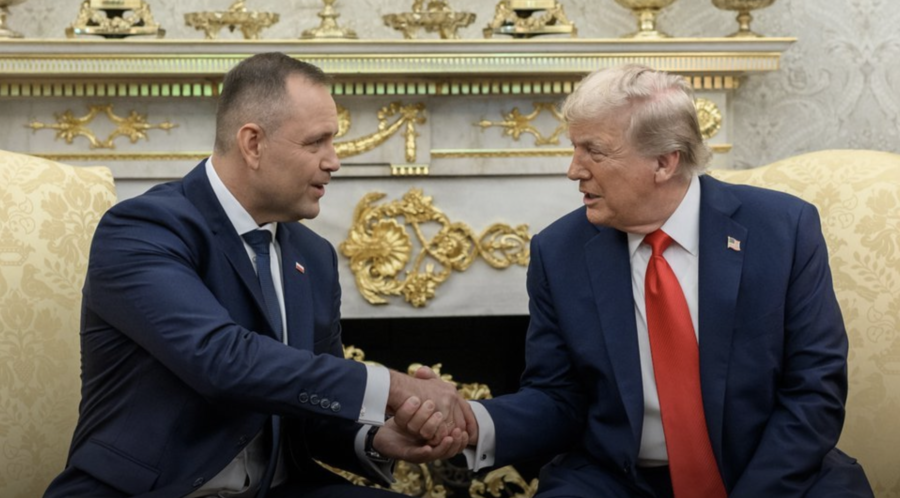
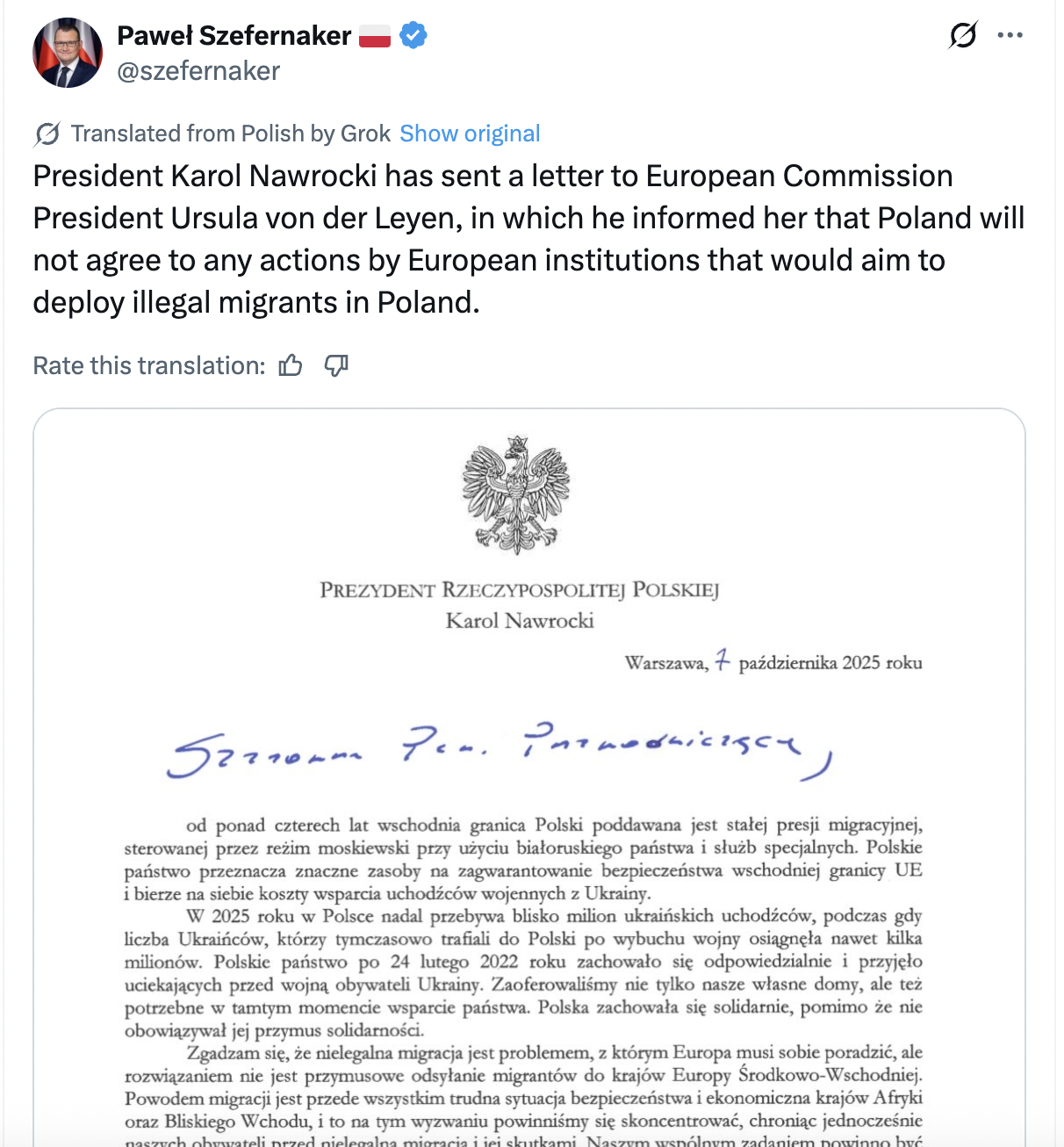
Poland has once again drawn a firm line against the European Union’s migration pact. In a letter to European Commission President Ursula von der Leyen, President Karol Nawrocki declared that Warsaw would reject any attempt to impose the relocation of migrants onto Polish territory. He emphasised that protecting national security and safeguarding the country’s eastern frontier, which is under constant pressure from Belarus and Moscow, remains a top priority.
The letter, dated 7 October and made public by presidential aide Paweł Szefernaker, reiterated Nawrocki’s longstanding stance: Poland will not accept compulsory quotas.
Marcin Przydacz, head of the Presidential Office for International Policy, explained that the timing of the intervention was linked to the Commission’s annual October deadline for outlining migration strategies.
“Poland will not accept any decisions that threaten its security. Simply put, it will not take in migrants,” Przydacz told the media.
The government has echoed similar sentiments. Interior Minister Marcin Kierwiński confirmed during the Munich Migration Summit that Poland supports cooperation on EU asylum policy, but insisted relocation rules are unacceptable. The Polish parliament has also voiced its objections: in July, the Sejm adopted a resolution rejecting the pact in its current form as unfair to border states.
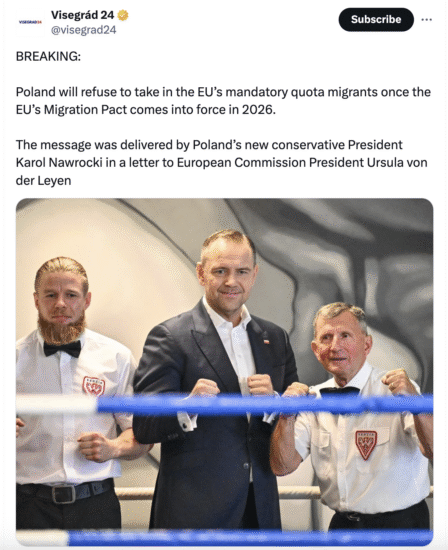
The EU migration pact, approved by ministers last year despite opposition from Poland, Slovakia and Hungary, introduces a mechanism of “mandatory solidarity”, annual relocation of 30,000 migrants across the bloc. Member states that refuse would have to pay €20,000 per case or offer alternative support.
For Warsaw, however, the principle remains clear: solidarity cannot come at the expense of sovereignty or security.
Tomasz Modrzejewski