When King Harold Godwinson fell on the battlefield near Hastings on 14 October 1066, the future of England changed forever. William the Conqueror’s victory not only ushered in Norman rule but also cast Harold’s children into the margins of history. The fate of his sons, once potential rulers, became uncertain as they fled England in the chaos that followed their father’s death. Two of them attempted to resist Norman control from exile in Ireland, only to be defeated twice. A third, Magnus, disappeared entirely from English and Scandinavian chronicles around 1069. Many historians assumed for generations that he had died in obscurity during these turbulent years. Yet growing evidence suggests that Magnus may have escaped persecution, reinventing himself far from home, at the very centre of early medieval Polish politics.
Late in the eleventh century, a certain Magnus appears at the court of the Piast rulers in Poland. He is not described as a minor figure or ordinary soldier of fortune. Instead, he held one of the highest provincial offices available: count of Wrocław, governing the strategically important region of Silesia. His position indicates considerable prestige and trust, and raises the question of why a foreigner, if he were one, would be granted such authority by Prince Władysław Herman.
Scholars increasingly argue that his background must have been extraordinary. A man with royal blood displaced by conquest would be a perfect candidate.
Magnus quickly became entangled in the volatile politics of the Piast dynasty. In 1093, he supported Prince Zbigniew, the elder son of the reigning monarch, whom his father’s powerful adviser had sidelined, the ambitious palatine Sieciech.
By taking Zbigniew into his protection and acknowledging his rights as a legitimate heir, Magnus challenged Sieciech’s influence and helped spark a conflict that shook the realm.
Władysław Herman, influenced by Sieciech, launched a military operation against Wrocław in response to what he saw as a noble rebellion. The confrontation ended with a negotiated settlement rather than bloodshed, and Zbigniew was formally recognised as the ruler’s firstborn son. Yet Magnus paid the price for involvement: he was likely removed from his office and forced into the political background.
According to some art historians, the figure of Magnus is presented in the famous Jan Matejko’s paintings showing the moment of allowing the migration of Jews into Poland by Prince Władysław Herman. He is believed to be placed as a man sitting just to the right of the prince.
Even so, his story did not end there. In 1109, years after he fell from favour, Magnus resurfaces as the heroic defender of Mazovia. Gallus Anonymus, the earliest chronicler of Polish history, celebrates how he and a small group of warriors repelled a large Pomeranian raiding force, reportedly killing hundreds in battle. For a moment, Magnus stood again as a protector of the land, a valiant leader capable of turning disaster into triumph. And then, once again, silence. No later mention in the chronicle, no recorded reward for his deeds. It is generally assumed that he died not long after the battle, leaving his origins and legacy unresolved.
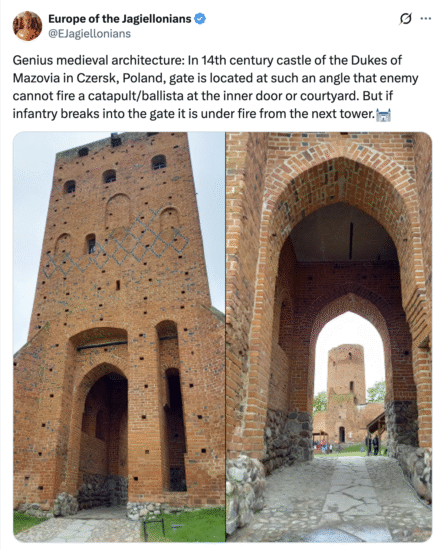
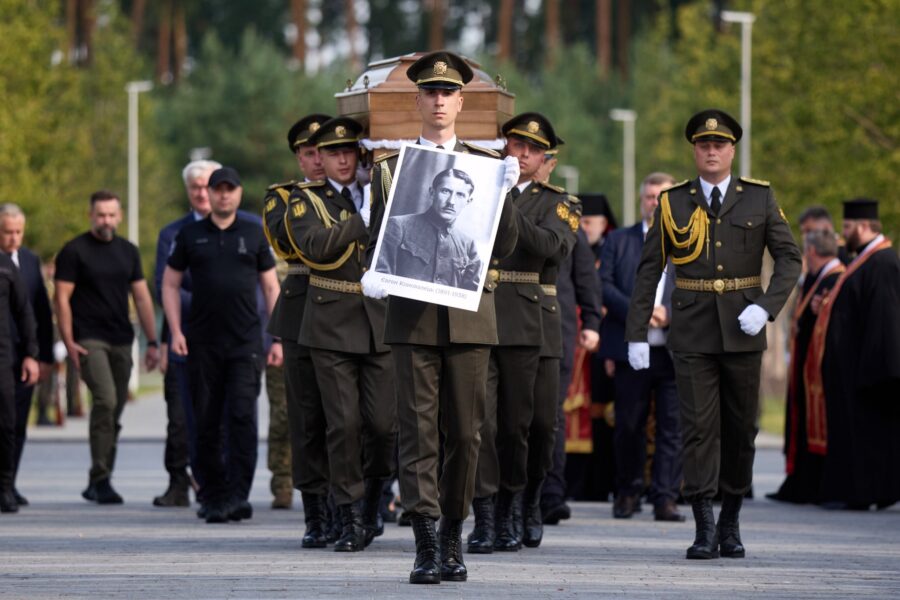
The mystery surrounding Magnus gained new life in 1966 when archaeologists uncovered a richly furnished grave at Czersk near the ruins of a medieval church.
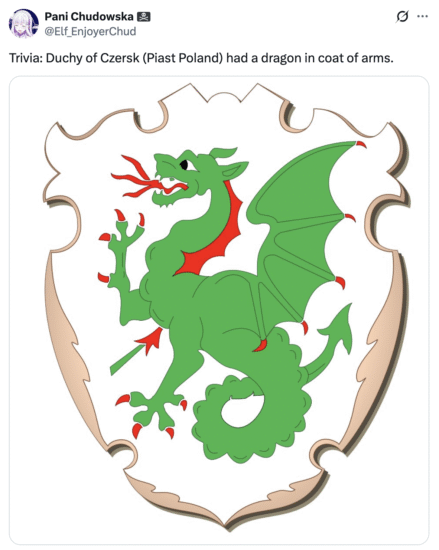
The burial dates from precisely the period when Magnus lived, and the remains belonged to a man in his late fifties or early sixties, matching expectations of his age at death. Most significantly, isotope and artefact analysis suggested Scandinavian ancestry and a life story involving long-distance movement.
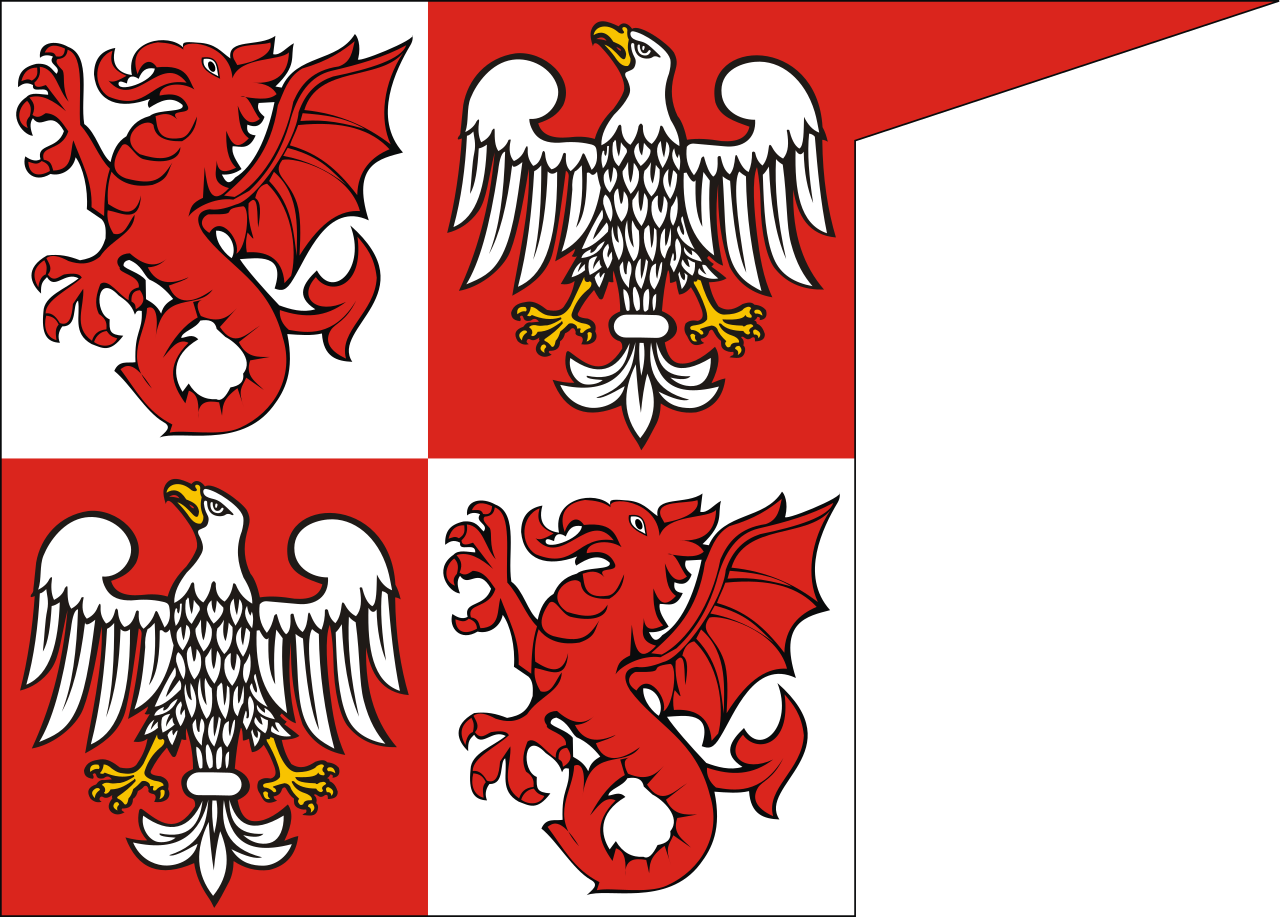
The location near the settlement of Magnuszew, whose name perhaps preserves a memory of an influential figure of that name, seemed to fit perfectly. For a time, optimism flourished: had the grave of Harold Godwinson’s lost son finally been found?

The theory linking Magnus to the Piast court fits within a broader network of political and family ties connecting Poland and the Scandinavian rulers involved in the struggle for England. The Piasts were engaged in alliances across the Baltic since the 10th century onward, particularly through Mieszko I’s daughter Świętosława (in Swedish: Sigrid Storråda), better known in Scandinavian sources as Sigrid the Haughty. She married first King Eric the Victorious of Sweden and later King Sweyn Forkbeard of Denmark. Through these unions, she became the mother of Cnut the Great, the ruler who conquered England in 1016 and established a North Sea empire. This made the Polish Piasts close relatives of the very dynasty that had earlier seized control of England from the Anglo-Saxon kings.
These dynastic links continued to influence politics in the 11th century. When Harold Godwinson’s children sought aid after the Norman Conquest, they turned to Denmark, where their mother’s family ties still held weight. It is therefore plausible that one of Harold’s sons could have travelled through Danish territory into Central Europe, ultimately entering Polish service. The presence of Scandinavian warriors, envoys and exiles in Piast lands was not unusual at the time. Against this backdrop, the hypothesis that a dispossessed English prince might have found a new role among his distant maternal relatives and their political partners gains a stronger historical context.
More recent scientific investigations, conducted between 2013 and 2016, have produced a more cautious picture. The body belonged to a man from outside Mazovia but likely from somewhere in Western or Central Europe rather than distant England or Scandinavia. Crucially, there is no definitive proof that the grave belonged to Magnus at all. The possibility remains open, but uncertainty persists.
Nonetheless, the idea that Magnus was the exiled English prince bears considerable historical weight. It provides a plausible explanation for his rapid rise within the Piast court. It clarifies why he strongly supported the rights of a displaced heir like Zbigniew – a young man deprived of his status, just as Magnus had been.
It also fits neatly with known political alliances of the era, including efforts by the Danish king Sweyn II Estridsen to restore Harold’s sons to their homeland. Perhaps Magnus arrived in Poland as a diplomatic envoy, seeking military aid against William the Conqueror. When the mission failed, he may have found a permanent refuge among the Piasts.
Alternative theories remain attractive to many historians. Some propose that Magnus descended from an old Silesian dynasty that had once rivalled the Piasts, retaining enough prestige to be placed in high office despite later subjugation. Others claim he might have been part of the Turzynit family or connected through legendary genealogy to prominent Polish clans such as the Zarembas or Powałas.
A particularly bold hypothesis suggests he was the son of the Norwegian king Magnus II Haraldsson. None of these proposals, however, carries the same dramatic force or international significance as the English royal theory.
As with many figures from the early Middle Ages, firm evidence is elusive. There are no surviving records of Magnus’s marriage or children, though later genealogists tried to link him to powerful Polish houses in order to anchor their lineage in noble antiquity. But it is precisely the gaps in his story that make him compelling.
Magnus stands at the crossroads of multiple histories: English, Danish, and Polish. His life, whether royal or merely remarkable, reflects a world in which exiled princes could become generals, where borders were permeable, and where destiny could be rewritten far from home.
Today, the question remains tantalisingly open: did the last male heir of the defeated Anglo-Saxon dynasty live out his days not in ruin and obscurity, but as a respected commander in a rising Slavic state? The chronicles whisper hints but provide no conclusion. Archaeology offers clues but no certainty. Yet the fascination endures, and every discovery invites us to imagine the lonely prince who crossed the sea, lost his birthright, and earned a place in the political and military history of medieval Poland instead.
Magnus remains one of Europe’s most evocative historical enigmas, suspended between legend and fact, waiting for one more piece of evidence to restore his rightful place in the history of the European kings and nobles.
Source: National Geographic Poland
Photo: X/@Kpl1969
Tomasz Modrzejewski