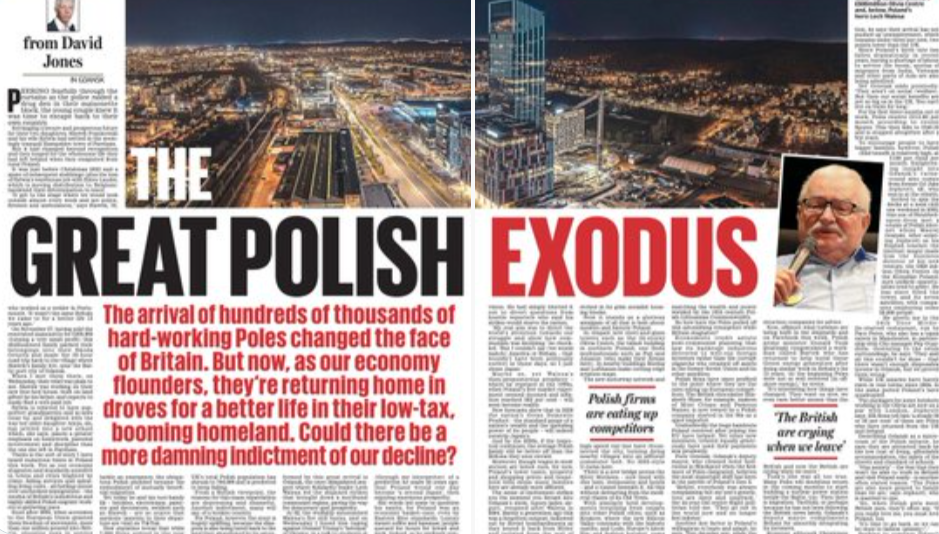
When Sławek Frankowski and his wife Sylwia first arrived in Britain 15 years ago, they believed they had found stability, opportunity and safety. Like hundreds of thousands of Poles who followed EU enlargement in 2004, they settled, worked hard and raised a family. Today, however, they are back in Poland, part of a growing reverse migration that is quietly reshaping both countries. The Daily Mail describes those stories as the “Great Polish Exodus,” in an article by David Jones.
Their decision crystallised in late 2022. Living in Fareham, Hampshire, the couple watched police raids, emergency sirens and a spate of stabbings become a regular backdrop to daily life. Sylwia lost her job when her employer moved operations abroad. “It wasn’t the Britain we came to for a better life,” Sławek, a welder by trade, told the Daily Mail, which first reported their story. Within weeks, they sold their maisonette, loaded their car and drove 22 hours back to northern Poland, near Gdańsk.
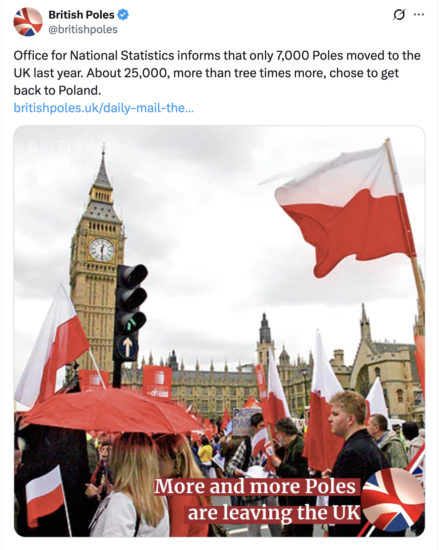
They are far from alone. According to recent migration figures cited by the Daily Mail, while around 7,000 Poles moved to the UK last year, some 25,000 returned to Poland a net outflow of 18,000. Britain’s Polish population, once well above one million, has fallen to around 750,000 and is expected to decline further.
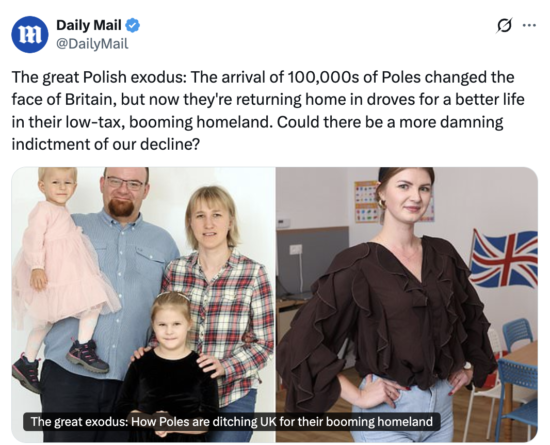
From a British perspective, this exodus is often framed as a worrying verdict on national decline: stagnant wages, rising crime, strained public services and mounting living costs. The Polish plumber, once a symbol of industrious migration, has become a scarcity and, increasingly, a nostalgic meme on social media.
Yet from the Polish side, the story looks very different. What draws people back is not simply disillusionment with Britain, but Poland’s own dramatic transformation. Cities such as Gdańsk, once a decaying shipyard town synonymous with communist-era hardship, now present a striking image of modern prosperity. The Daily Mail describes a city of glass towers, multinational headquarters and revitalised waterfronts, where companies such as Amazon, Boeing and Lufthansa operate alongside Polish firms that are expanding across Europe.
The scale of the economic turnaround is hard to overstate. Forecasts suggest that Poland’s GDP will surpass Japan’s within the next year, and that by the 2030s, average Polish households may be better off than their British counterparts. While wages remain lower in absolute terms, lower taxes, cheaper housing and reduced household bills mean that disposable income often goes further.
This resurgence has historical resonance. Speaking in Gdańsk, former Solidarity leader and president Lech Wałęsa again reflected, quoted by the Daily Mail, on his once-ridiculed prediction that Poland would become “a second Japan”. What sounded absurd in the 1980s, amid shortages and hyperinflation, now appears to be reality.
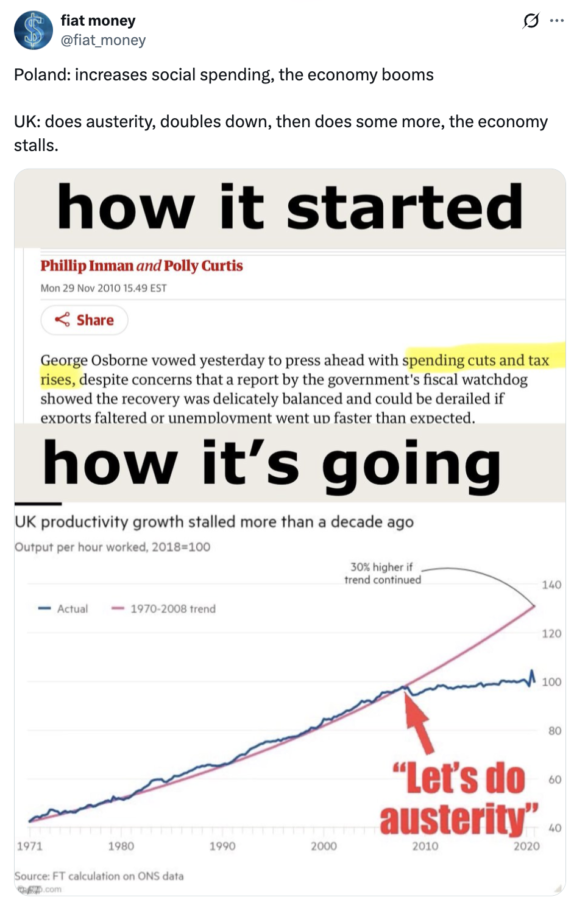
Local leaders attribute Poland’s success to pragmatic post-communist reforms, foreign investment handled without oligarchic capture, and a generational shift in mindset. Piotr Grzelak, Gdańsk’s deputy mayor, told the Daily Mail that younger Poles are confident, mobile and no longer feel inferior to Western Europe. Migration, he argues, is tightly linked to work rather than welfare: unemployment in the city remains below three per cent, despite a significant inflow of Ukrainians, Belarusians and Asian workers.
For returnees, quality of life matters as much as economics. Frankowski’s daughter has settled into a school that her parents see as more disciplined and academically demanding. Grandparents are nearby. Streets feel safer. Housing is attainable. The Polish state even offers grants to young entrepreneurs, support that would be unthinkable in many British cities.
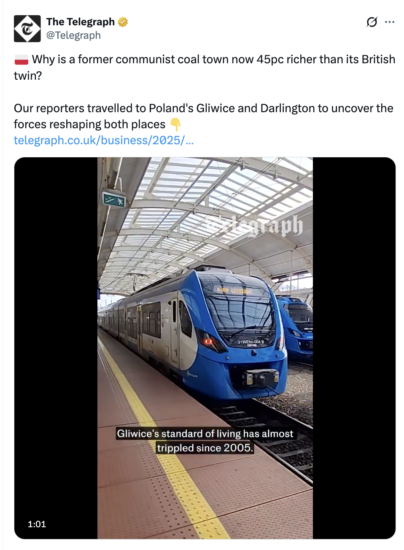
The contrast is starkest when placed side by side. In Sunderland, a city with its own proud industrial heritage, the Daily Mail found shuttered shops, high child poverty and limited prospects for young people. In Gdańsk, by contrast, construction cranes dominate the skyline and returning migrants are actively recruited for offshore wind, infrastructure and energy projects.
None of this suggests that Poland has solved all its problems. Rising rents, labour shortages and demographic decline remain pressing challenges. But the direction of travel is clear enough to persuade tens of thousands of former migrants that their future now lies east, not west.
As one British-based Polish tradesman told the Daily Mail, without a fundamental change in Britain’s economic and political climate, the trickle of departures could yet become a flood. For many Poles, the promise they once sought abroad is finally being realised at home.
Source: Daily Mail
Graphic: British Poles
Tomasz Modrzejewski